Getting visitors to a website is an important part of digital marketing, but attracting traffic does not always result in business enquiries. Many businesses invest in SEO, paid advertising and social media campaigns to bring people to their websites, yet a significant challenge remains: converting those visitors into potential customers.
A visitor might explore a service page, read about a company and even show interest in its offerings but leave without completing an enquiry form. This does not necessarily mean the visitor was uninterested. Sometimes, small problems with website navigation, content, trust or the enquiry process create enough hesitation to prevent them from taking the next step.
Understanding these issues can help businesses improve their websites and make it easier for potential customers to connect with them.
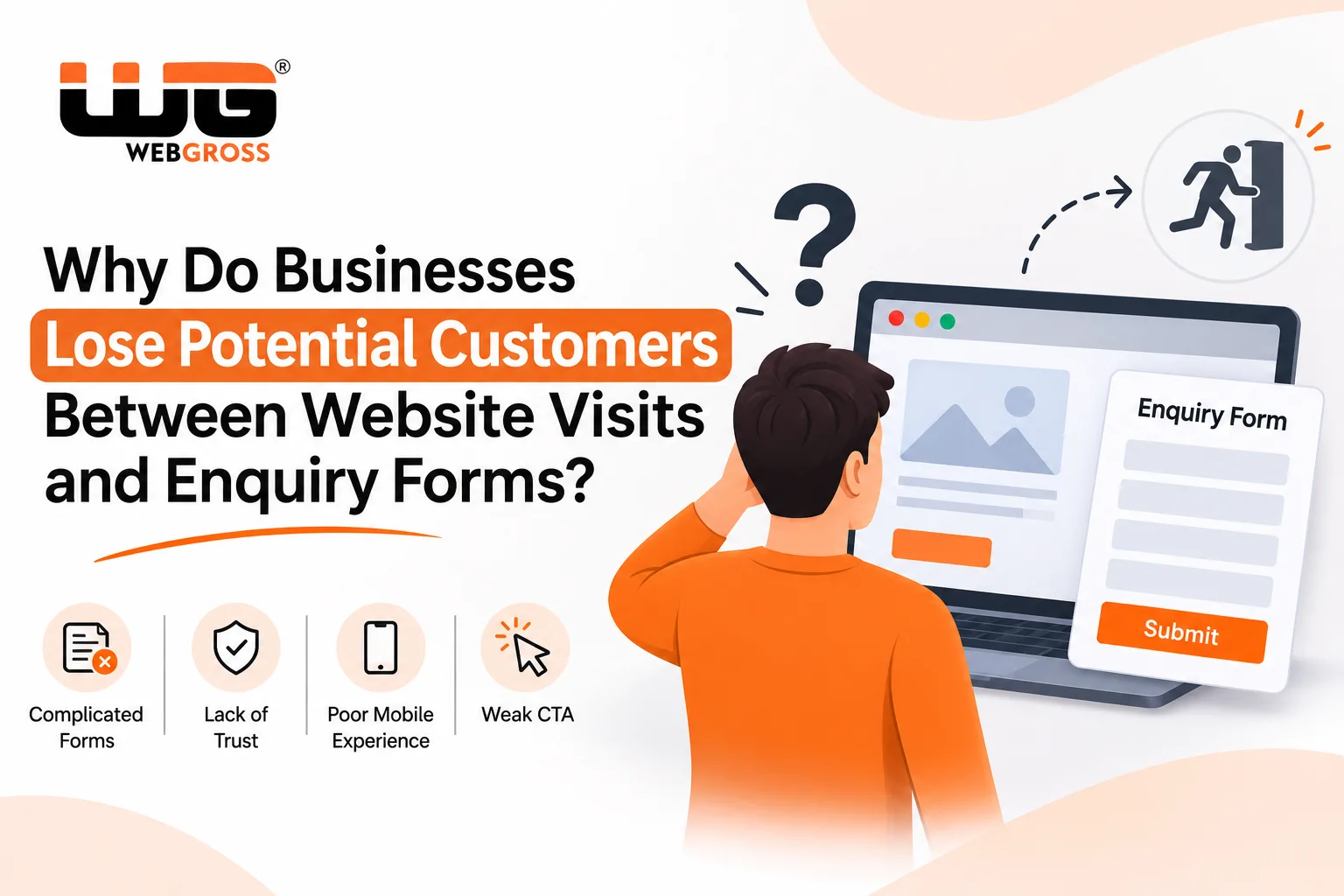
1. Complicated Enquiry Forms Create Unnecessary Barriers
One common reason visitors leave a website is an enquiry form that asks for too much information. Businesses sometimes include several fields because they want to understand a customer's requirements before making contact.
However, a lengthy form can discourage someone who simply wants to ask a question or request basic information.
For example, asking for a name, phone number, email address, company details, budget, location and a detailed project description all at once may feel like too much effort.
Businesses should keep enquiry forms simple and request only the information necessary to begin a conversation. Additional details can be collected during the follow-up discussion.
2. Unclear Website Content Makes Customers Hesitate
Visitors need to understand what a business offers before deciding whether to contact it. If service pages contain vague descriptions, complicated language or excessive promotional statements, potential customers may struggle to identify the actual value of the offering.
A website should clearly explain its services, who they are intended for and what problems they help solve.
For instance, instead of simply stating that a company provides digital marketing solutions, its website should explain its SEO, social media marketing, content writing or advertising services.
Clear and informative website content helps visitors find relevant information and make more confident decisions.
3. Lack of Trust Signals Can Affect Enquiry Decisions
Before sharing their contact details, visitors often want some reassurance that they are approaching a reliable business.
If a website provides very little information about the company, its experience or its work, potential customers may hesitate to submit an enquiry.
Businesses can address this by presenting genuine customer testimonials, relevant case studies, project examples, business information and clear contact details.
These elements help visitors understand who they are dealing with and provide useful context before they make contact.
Trust should be built through genuine information rather than exaggerated claims or unsupported promises.
4. Poor Mobile Experience Can Drive Visitors Away
Many customers browse business websites using smartphones. If a website is difficult to navigate on a smaller screen, visitors may leave before reaching the enquiry section.
Small text, misplaced buttons, slow-loading pages and forms that are difficult to complete can negatively affect the overall experience.
Businesses should ensure that their websites adapt properly to different screen sizes. Enquiry buttons should be easy to find, forms should be simple to complete and important information should remain accessible without unnecessary scrolling.
A smooth mobile experience makes it easier for interested visitors to take action whenever they discover a business.
5. Missing or Weak Calls to Action Create Confusion
Even when visitors find a service useful, they may not know what to do next if the website does not provide clear direction.
A call to action guides visitors towards the next step, whether that means requesting a consultation, asking for a quotation or discussing a project.
Buttons such as "Get a Free Consultation", "Discuss Your Requirements" or "Request a Quote" can communicate the intended action more clearly than generic labels.
Businesses should place relevant calls to action near important service information and at appropriate points throughout their website.
6. How Can Businesses Improve Their Website Enquiry Process?
Improving enquiry generation requires businesses to examine the complete visitor journey rather than focusing only on website traffic.
Start by reviewing important service pages, checking whether the information answers customer questions and identifying unnecessary steps in the enquiry process.
Website analytics can help identify pages where visitors frequently leave. Businesses can also test different form layouts, button placements and page content to understand what makes the experience easier.
A well-planned digital marketing strategy should connect website design, SEO, content and user experience. Each element should help visitors move naturally from discovering a business to understanding its services and making contact.
Conclusion
Losing potential customers between website visits and enquiry forms is not always a traffic problem. It can often be connected to unclear information, complicated forms, poor mobile experiences or a lack of trust.
Businesses that regularly evaluate their website experience can identify these barriers and make meaningful improvements to their enquiry process.
At Webgross, we understand the importance of connecting website development, SEO and digital marketing to create a stronger online presence.
Want to turn more website visitors into genuine business enquiries? Connect with us today and explore website development and digital marketing solutions designed around your business goals.