
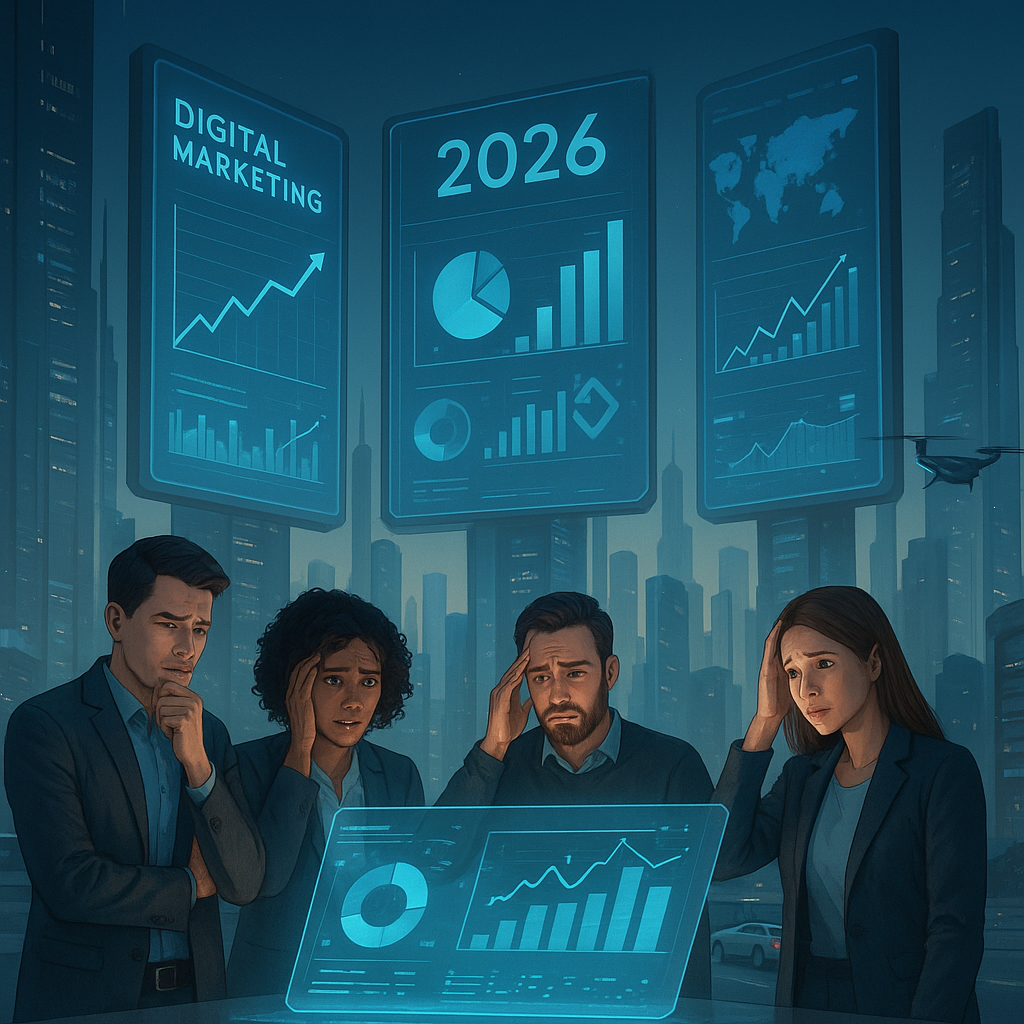
Setting the Stage: A Digital Marketing Crossroads
In 2026, digital marketing stands at a pivotal juncture. With innovations like AI-driven personalization, immersive metaverse campaigns, and hyper-automated customer journeys, the field is evolving faster than ever. Yet, despite access to unprecedented tools, many digital marketeers are stumbling over fundamental missteps that undermine their success. This paradox—greater technological prowess accompanied by recurring errors—frames the landscape of 2026.
Consider this: a recent survey by the Digital Marketing Institute revealed that over 62% of marketers failed to meet their ROI targets in 2025, attributing underperformance largely to strategic misalignments and implementation mistakes. This article explores the most common pitfalls in adapting to the year's critical changes, drawing on data, expert insights, and real-world examples.
"The technology is only as good as the strategy behind it. Many digital marketeers forget that innovation demands thoughtful execution." — Karen Liu, Chief Marketing Officer at NexaTech
How Did We Get Here? A Brief Historical Context
Digital marketing has always been a dynamic field, but the past decade has accelerated change exponentially. The early 2020s marked the rise of AI content creation and predictive analytics, while 2024–2025 saw the mainstream adoption of metaverse platforms for brand engagement and the embedding of blockchain for transparent ad tracking.
Yet, each wave of innovation brought new challenges. The industry’s growing reliance on data-driven methods sometimes bred overconfidence in automation, leading to less human oversight. Moreover, as privacy regulations tightened globally, marketers had to recalibrate data strategies constantly.
These trends set the stage for 2026’s defining shifts:
- Complete AI integration: From audience segmentation to campaign optimization, AI systems now run end-to-end processes.
- Immersive brand experiences: Augmented and virtual reality marketing campaigns have become mainstream.
- Privacy-first personalization: Zero-party data and contextual marketing are replacing third-party cookies.
- Cross-platform orchestration: Seamless customer journeys across social, metaverse, and IoT touchpoints.
Yet, despite these advances, many marketers repeat errors that cost them market share and credibility.
Core Analysis: The Most Common Mistakes Undermining 2026 Success
Delving into the data, several recurring mistakes emerge, each tied to the complexity of the new marketing environment.
1. Overreliance on AI Without Strategic Guardrails
AI’s pervasiveness is undeniable. Gartner estimates that by 2026, 87% of digital marketing workflows incorporate AI automation. However, blind trust in AI algorithms often leads to misaligned messaging and poor customer experiences.
Many marketers fail to set clear KPIs or monitor AI outputs critically. For example, automated content generation sometimes produces tone-deaf or factually inaccurate material, damaging brand trust.
2. Neglecting Human-Centered Creativity
While automation optimizes efficiency, it cannot replace emotional resonance. Marketers who ignore the human element in favor of data-driven tactics risk alienating audiences. According to a Forrester report, campaigns integrating authentic storytelling outperform purely AI-driven campaigns by 30% in engagement.
3. Mismanaging Data Privacy and Consent
2026’s privacy regulations—such as the EU’s Digital Privacy Act and California’s CPRA 2.0—have raised the bar on consent and data usage transparency. Yet, many marketers still misuse data or overlook zero-party data strategies, leading to compliance risks and consumer backlash.
4. Fragmented Cross-Channel Strategies
With customers interacting across social networks, virtual worlds, and IoT devices, seamless experience orchestration is vital. However, marketers often operate in silos, resulting in inconsistent messaging and lost conversion opportunities.
5. Failing to Adapt to Metaverse Marketing Nuances
The metaverse is no longer a niche platform. Brands are expected to create immersive, interactive experiences. Yet, many campaigns mimic traditional ads, missing the mark on engagement. According to industry estimates, less than 20% of metaverse marketing campaigns in 2025 achieved meaningful ROI.
"Marketers need to think beyond banners and clicks in the metaverse. It’s about authentic, participatory experiences." — Jamal Ortega, VR Marketing Strategist
Current Developments Shaping Digital Marketing in 2026
This year, several breakthroughs and trends have intensified the pressure on digital marketeers to evolve.
- AI Explainability Tools: New platforms now offer transparency into AI decision-making, helping marketers identify biases and errors in real time.
- Data Sovereignty Platforms: Solutions enabling users to control and monetize their data have become popular, shifting the power balance.
- Metaverse Marketing Agencies: Specialized agencies have emerged, offering expertise in designing immersive brand experiences tailored to virtual economies.
- Real-Time Multichannel Attribution: Advances in analytics allow marketers to track customer journeys across physical and digital spaces with unprecedented precision.
Yet, despite these tools, adoption hurdles remain. A 2026 survey by the Interactive Advertising Bureau (IAB) found that 42% of marketers cite skill gaps as a major barrier to leveraging new technologies effectively.
Expert Perspectives: Industry Voices on Common Missteps
Leading voices in digital marketing emphasize that technology alone cannot guarantee success. According to Maya Chen, Head of Digital Strategy at BlueWave Group, "The biggest mistake is treating tech as a silver bullet rather than a catalyst for strategic thinking and creative innovation." She highlights the importance of continuous learning and cross-functional collaboration.
Similarly, according to an interview published in TheOmniBuzz’s Avoiding the Pitfalls: How Common Web3 Mistakes Erode Crypto Confidence, experts emphasize that mistakes in emerging technologies often stem from underestimating complexity and overestimating readiness.
"Digital marketing’s evolution demands humility. We must acknowledge what we don’t know and be agile enough to course correct." — Dr. Samuel Rogers, Professor of Marketing Technology
Case Studies: Lessons from 2026 Campaigns Gone Wrong
Examining real campaigns reveals how common errors manifest in practice.
Case Study 1: A Global Retailer’s AI Content Fiasco
One prominent fashion brand launched an AI-generated social media campaign that failed spectacularly. The content, intended to appeal to Gen Z via slang and memes, instead used outdated references and culturally insensitive phrases, sparking backlash. The company’s lack of AI oversight and insufficient human review were cited as key failings.
Case Study 2: A Tech Startup’s Metaverse Misstep
A startup specializing in smart home devices invested heavily in a metaverse showroom. However, the experience was cluttered and lacked interactive elements, resulting in low engagement and negligible sales impact. Experts attribute this to a failure to understand metaverse user expectations and the absence of immersive storytelling.
Case Study 3: Financial Services Brand’s Privacy Blunder
Despite clear privacy regulations, a large financial firm mismanaged customer data preferences in a targeted campaign. The incident led to regulatory fines and damaged customer trust. The firm had not implemented robust zero-party data collection strategies, a mistake common across the sector.
These cases underline that technology adoption without strategic alignment and ethical considerations is a recipe for failure.
What to Watch: Navigating the Road Ahead
Looking forward, digital marketeers must adopt a multi-pronged approach to avoid these pitfalls and capture new opportunities.
- Invest in Hybrid Skill Sets: Combining technical proficiency with creativity and ethical awareness will be essential.
- Prioritize Data Ethics and Consent: Transparency and respect for user autonomy will build long-term loyalty.
- Embrace Human-AI Collaboration: Rather than replacing humans, AI should augment strategic thinking and creativity.
- Innovate in Immersive Storytelling: Understanding metaverse culture and interactivity will distinguish top brands.
- Integrate Seamless Cross-Channel Experiences: Unified customer journeys across digital and physical realms will enhance brand impact.
Digital marketeers can also benefit from insights in related fields. For instance, TheOmniBuzz’s article on Common Mistakes That Undermine Athletic Performance and How to Overcome Them draws parallels in the importance of disciplined practice and continuous improvement, lessons applicable to marketing skill development.
Ultimately, success in 2026 demands embracing complexity with strategic clarity, ethical responsibility, and creative authenticity.