Off-the-shelf software promises a quick fix. You unbox a solution, plug it in, and hope it meets your business needs. While this approach offers convenience, it often forces you to adapt your processes to fit the software's limitations. But what if your technology could adapt to you? This is the core promise of custom software development creating a tool that is perfectly molded to your unique challenges, workflows, and goals.
For businesses aiming for true technology optimization, the one-size-fits-all model eventually reveals its cracks. Inefficiency creeps in as teams create workarounds, data becomes siloed across incompatible platforms, and growth potential is stifled by rigid, generic features. This article explores why bespoke software engineering is not just an alternative but a strategic necessity for companies serious about achieving scalable business solutions and a distinct competitive edge. We will cover the clear benefits, the innovative technology involved, and how it enables genuine enterprise software transformation.
The Limits of "Good Enough": Why Off-the-Shelf Fails to Scale
Packaged software is built for the masses. It addresses common problems with standard features, which can be a great starting point for small companies or non-core functions. However, as your business grows and your operations become more complex, the weaknesses of these solutions become major obstacles.
- Inflexible Workflows: Off-the-shelf products dictate how you work. If their built-in process doesn't match your company's proven methods, your team is forced to change, often losing efficiency.
- Unnecessary Features and Costs: You often pay for a bundle of features you will never use, while the one specific function you desperately need is missing. This bloat can slow down systems and complicate user training.
- Integration Challenges: Getting a generic application to communicate seamlessly with your other essential systems can be a nightmare. Poor integration leads to manual data entry, errors, and a fragmented view of your business operations.
- Scalability Roadblocks: Can your licensed software handle a 10x increase in users or data volume? Many off-the-shelf solutions have performance ceilings that can halt your growth right when momentum is building.
The Strategic Advantage of Bespoke Software Engineering
Custom software development flips the script. Instead of fitting your business into a box, you build the box yourself, ensuring it’s the perfect size and shape. This approach delivers powerful, tangible benefits that drive long-term value.
Precision Alignment with Business Goals
The most significant advantage is a perfect fit. Every feature, every workflow, and every user interface element is designed with your specific objectives in mind. Working with a dedicated team for custom software development in NYC means translating your business logic directly into functional code. This eliminates wasted resources and ensures the final product is a tool that actively helps you achieve your targets, rather than just a program you have to work around.
Unmatched Scalability and Flexibility
Custom solutions are built for your future. A well-architected bespoke application is designed to grow with you. Whether you need to add new features, support a larger user base, or handle massive increases in data, the system’s foundation is engineered for expansion. This creates truly scalable business solutions that won’t buckle under the pressure of success. As your market or strategy shifts, your software can pivot with you, providing a level of agility that packaged software can't match.
Seamless Integration and Centralized Data
One of the hallmarks of enterprise software transformation is creating a unified tech ecosystem. Custom software can be engineered to integrate flawlessly with your existing tools, from CRMs and ERPs to proprietary databases and third-party APIs. This creates a single source of truth, automates data flow between departments, and provides leaders with a holistic, real-time view of the entire organization.
Enhanced Security and Compliance
Off-the-shelf software can be a prominent target for cyberattacks because a single vulnerability can be exploited across thousands of companies. Custom software, with its unique codebase, presents a much smaller attack surface. Moreover, it can be built from the ground up to meet specific industry regulations like HIPAA or GDPR, ensuring your data security and compliance needs are woven into the application's DNA.
Technical Innovations That Define Custom Solutions
Modern custom software is more than just tailored code; it leverages cutting-edge technology to deliver innovative tech solutions that were once unimaginable.
Microservices Architecture for Agility
Instead of building a single, monolithic application, developers can use a microservices architecture. This approach breaks down a large application into a collection of smaller, independent services. Each service handles a specific business function and can be developed, deployed, and scaled individually. This makes the system far more resilient if one service fails, it doesn't bring down the entire application. It also allows for faster updates and easier adoption of new technologies for different parts of the system.
AI and Machine Learning Integration
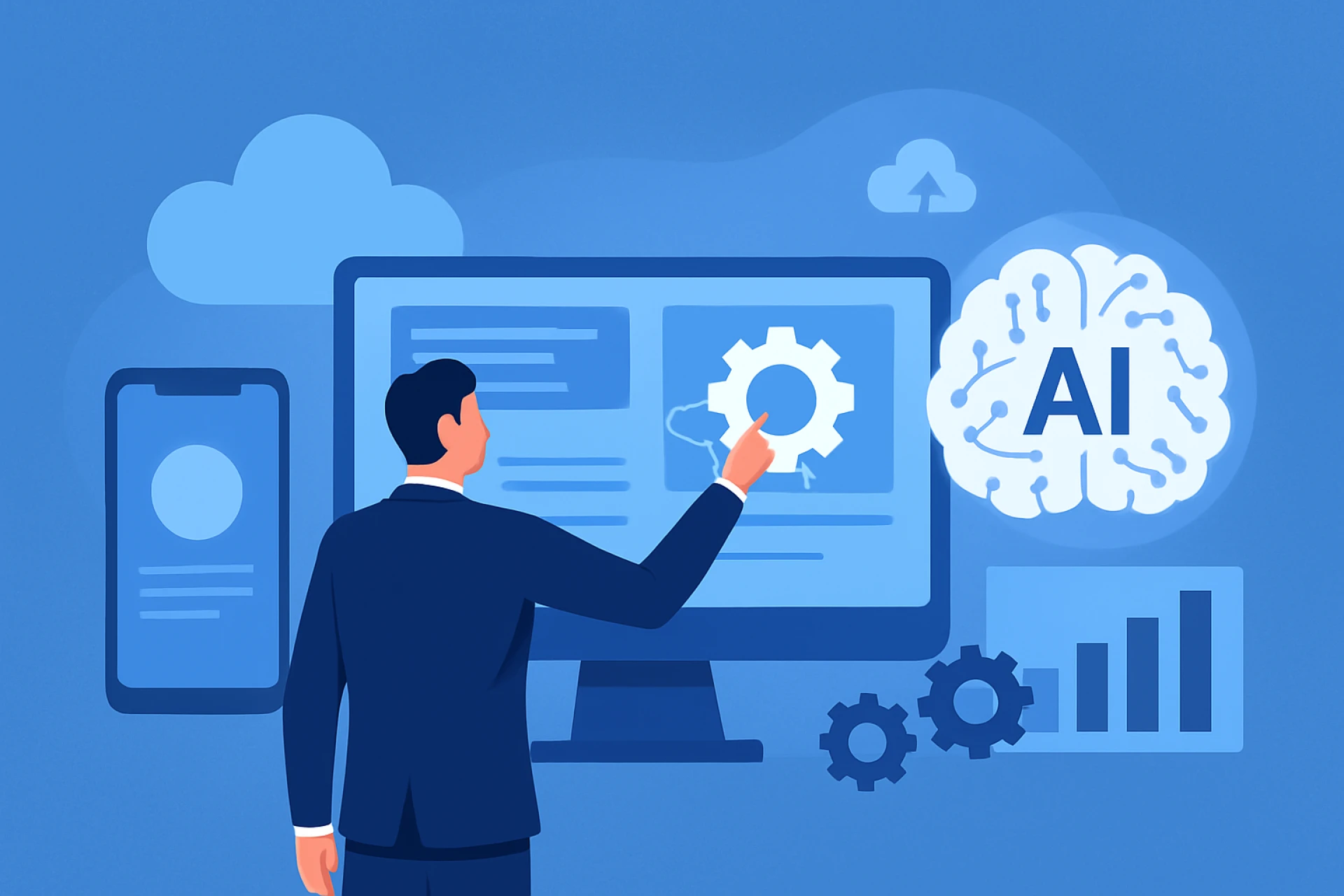
Custom software provides the perfect platform for integrating artificial intelligence. A bespoke solution can be designed to collect and process your unique business data, then use machine learning models to uncover insights, automate complex decisions, and create predictive analytics. For example, a custom e-commerce platform could use AI to deliver hyper-personalized product recommendations far more sophisticated than any off-the-shelf plugin.
Headless CMS and API-First Design
In an API-first approach, the core logic and data of an application are designed to be accessed through an API (Application Programming Interface). This decouples the backend (the "brain") from the frontend (the user interface). This flexibility is immense. You can use the same backend to power a website, a mobile app, an internal dashboard, and even an IoT device, all while maintaining a consistent data source. This is the ultimate form of technology optimization.
Real-World Impact: Custom Software in Action
Consider a mid-sized logistics company in New York City struggling with an off-the-shelf fleet management system. The software couldn't account for unpredictable city traffic, lacked real-time communication with drivers, and required manual data entry for delivery confirmations.
By investing in a custom solution, they built a platform that integrated with live traffic APIs to dynamically reroute drivers. The new system included a custom mobile app for drivers to update their status instantly and capture electronic signatures. The result? Delivery times were cut by 15%, fuel costs dropped, and customer satisfaction soared. This is a clear example of how a custom application addresses specific pain points to deliver measurable ROI.
The Future is Tailor-Made
The trend toward digitalization is not slowing down. As businesses become more reliant on technology, the need for solutions that offer a competitive advantage will only intensify. Generic tools will continue to serve a purpose for basic functions, but the real drivers of growth and innovation will be custom-built.
Investing in custom software development is more than a technology purchase it's a strategic investment in your company's future. It's a commitment to efficiency, scalability, and building a business that operates on your terms. By embracing bespoke software, you are not just keeping up with the competition you are building the tools to outperform them.