What Is Screen Printing?
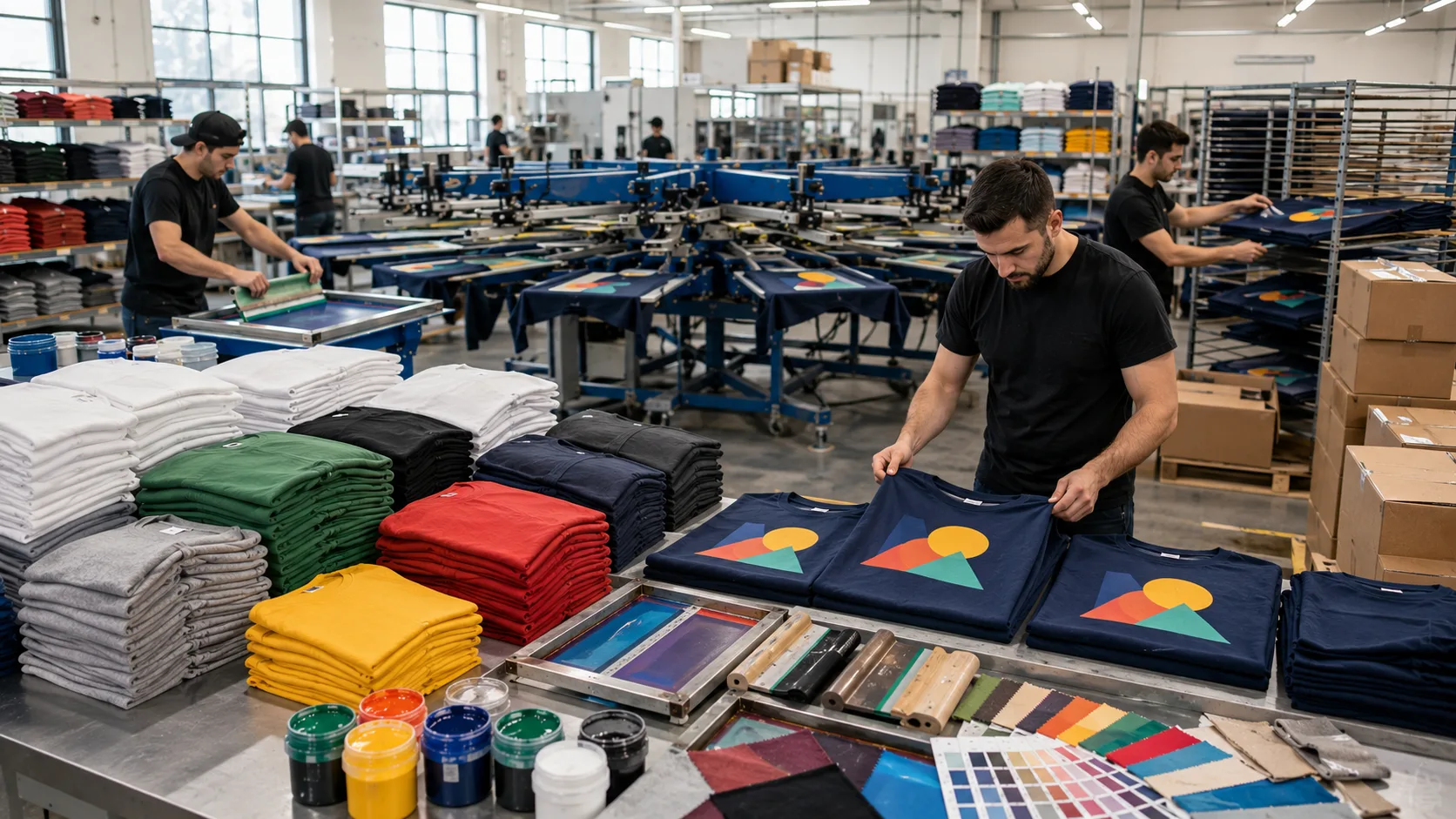
Screen printing is a method that pushes ink through a mesh screen onto fabric, with a separate screen created for each color in a design. Custom screen print shirts have been produced this way for decades, and the process remains one of the most common methods for producing printed shirts in large quantities.
Why This Method Remains Popular for Bulk Orders
Despite the rise of newer methods such as direct-to-garment and direct-to-film printing, custom screen print shirts continue to be a common choice for bulk T-shirt printing. The method scales well once a design is set up, since each additional shirt after the initial setup adds only ink and press time, not a new design file or transfer sheet.
Key Advantages for Bulk Apparel
Cost Efficiency at Scale
Screen printing becomes more efficient as order size grows. Most of the setup work goes into preparing the screens, so a large order spreads that work across hundreds or thousands of shirts, lowering the effort and material used per unit compared with smaller batch methods.
Durability and Print Longevity
Screen printed designs use thick, opaque layers of ink that bond well with fabric fibers, which helps prints resist cracking and fading through repeated washing. This durability is one reason custom screen print shirts remain common for uniforms, team apparel, and promotional items that are expected to hold up over regular use.
Consistency Across Large Orders
Once a screen is set, every shirt printed from it carries the same design, color, and placement. This consistency matters for bulk T-shirt printing, where buyers expect uniform results across every unit in an order, whether it is fifty shirts or several thousand.
Versatility for Fabrics and Designs
Screen printing works on cotton, polyester, and blended fabrics and can produce solid colors, gradients, and specialty finishes such as metallic or glow-in-the-dark ink. This flexibility supports many forms of custom apparel printing, from event shirts to retail merchandise.
Screen Printing Compared to Other Bulk Printing Methods
Direct-to-garment printing applies ink onto fabric using an inkjet-style printer, which works well for small orders or designs with many colors but becomes less efficient at large volumes. Direct-to-film printing offers similar flexibility for full-color designs but relies on a separate film and adhesive step for each shirt. Custom screen print shirts remain a strong option when an order involves a single design repeated across many identical garments, since setup work stays fixed regardless of quantity while per-shirt printing time stays low.
What to Look for in a Provider
When selecting a provider for custom apparel printing, several factors affect the final outcome. Buyers should check whether the printer can match colors accurately, since exact color matching matters for brand consistency. Turnaround time for large orders should be confirmed in advance, along with minimum order quantities and available garment options. Providers such as Kirkwood Trading Company offer bulk T-shirt printing alongside other apparel decoration methods, which can help buyers compare options within a single source before placing a large order.
Conclusion
Custom screen print shirts remain a leading option for bulk apparel because the method balances cost efficiency, durability, and consistent results across large quantities. While newer digital methods offer advantages for smaller or highly detailed orders, screen printing continues to serve businesses, teams, and organizations that need large numbers of identical shirts produced reliably.