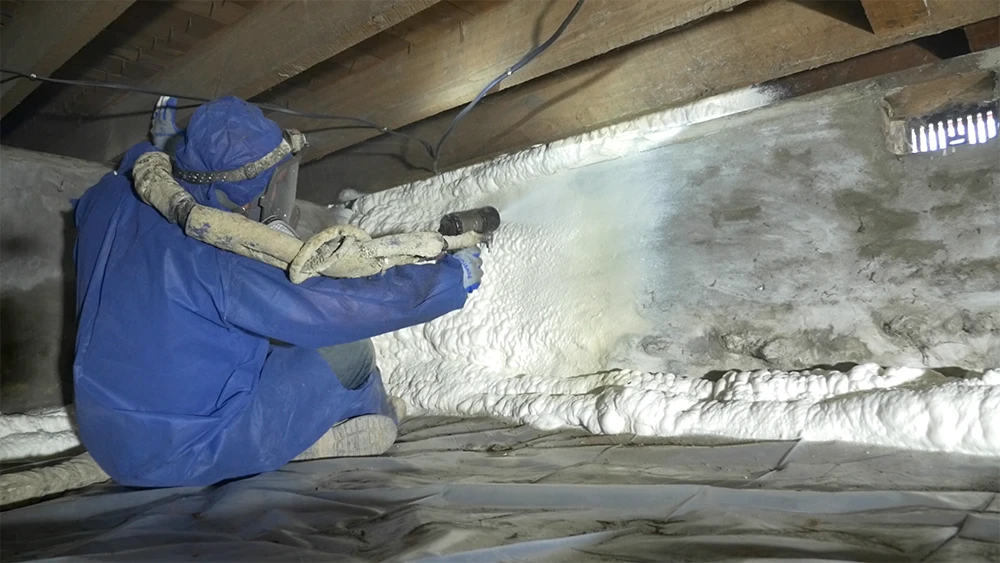
Crawl space spray foam insulation matters because it serves as the single most effective barrier against moisture intrusion, energy loss, and poor indoor air quality in a home. Unlike traditional materials that merely slow down heat transfer, spray foam expands to seal every crack and crevice, preventing the "stack effect" that pulls mold spores, allergens, and humidity from the ground up into the living areas.
While many homeowners focus on windows or attic insulation, the crawl space is often the weakest link in a building's thermal envelope. Neglecting this area allows unconditioned air to compromise the temperature stability of the entire house. Experts in building science understand that treating the crawl space is not just about keeping floors warm; it is about protecting the home's structural integrity and the health of its occupants from the ground up.
The Hidden Dangers of an Uninsulated Crawl Space
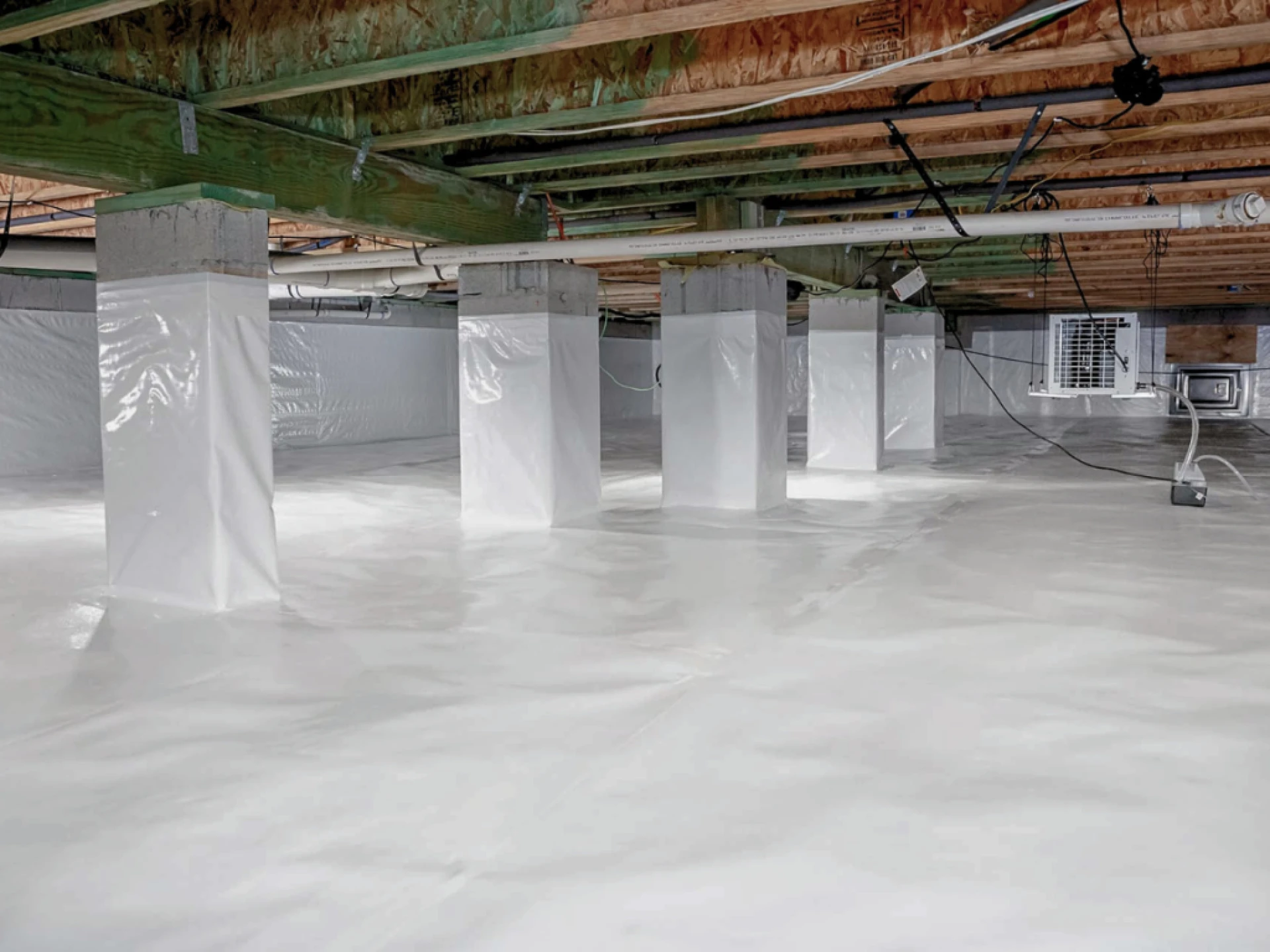
Leaving a crawl space untreated or using old fiberglass batts allows outside moisture to enter the home. The ground releases damp air that spreads into wood and the indoor environment, raising the risk of decay and poor air quality. Wet crawl spaces can support biological growth, weaken wood beams, and corrode metal components, leading to costly repairs. Fixing the problem means fully separating the home from the soil, not just adding ventilation.
Impact on Indoor Air Quality
Studies show that about half of the air on the first floor comes from the crawl space or basement, so any dampness, mold, or dust there can enter the living areas. Sealing the crawl space blocks soil gases, radon, and mold spores, helping keep the air that moves through the HVAC system clean and separate from the pollutants beneath the house.
Understanding the Stack Effect
The stack effect describes the natural physics of air movement within a building. As warm air rises and escapes through the roof, it creates a vacuum that sucks new air in from the lowest point of the house to replace it.
In homes with vented or poorly insulated crawl spaces, this replacement air comes directly from the damp, dirty area beneath the floor. Breaking this cycle requires an air-impermeable barrier that stops the vacuum effect at its source.
Homeowners should inspect their living spaces for warning signs linked to crawl space issues. Cupping hardwood floors, sticking doors, or a persistent musty odor often indicate that humidity from below is infiltrating the main living area.
Prevention of Pest Infestations
Pests such as rodents, termites, and ants thrive in dark, humid environments found in traditional crawl spaces. Fiberglass insulation often provides nesting material for mice and rats, who can easily move through the soft fibers.
Spray foam insulation creates a rigid barrier that is difficult for pests to penetrate and holds no nutritional value for them. By sealing off entry points and eliminating the moisture that attracts insects, the risk of infestation drops dramatically.
How Spray Foam Outperforms Traditional Methods
The industry has shifted away from fiberglass in crawl spaces because it absorbs moisture, sags, and loses its insulating ability over time. Spray foam keeps its shape and performance for the life of the home, sticking firmly to building materials, strengthening the subfloor, and staying in place without gaps no matter how temperatures change.
The Air Barrier Advantage
The primary differentiator between spray foam and other materials is its ability to function as an air barrier. Air leakage accounts for a massive portion of energy waste, and traditional materials cannot stop air movement on their own.
By expanding up to 100 times its original liquid volume, spray foam fills gaps around plumbing pipes, electrical wiring, and rim joists. This complete encapsulation prevents drafts and creates a controlled environment that HVAC systems can manage efficiently.
Comparison of Crawl Space Insulation Materials
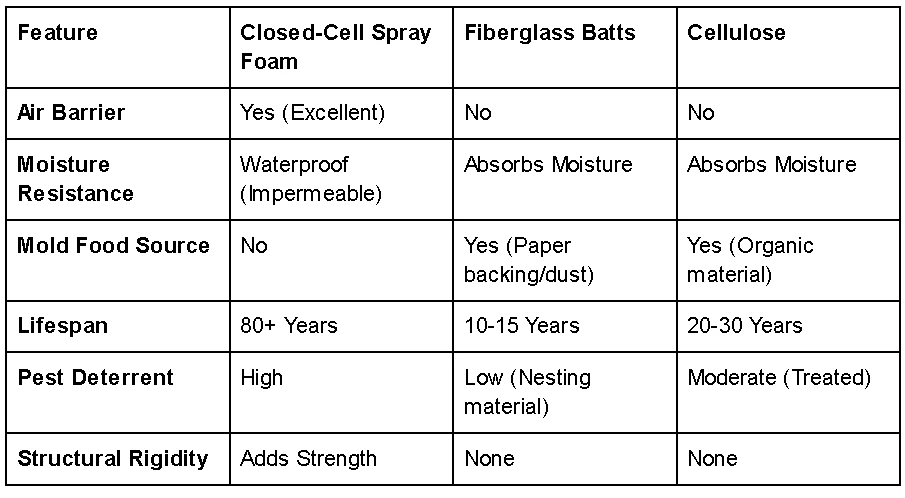
A Note on R-Value
While R-value measures resistance to heat flow, it does not account for air leakage. Spray foam may have an R-value per inch comparable to other materials. Still, its real-world performance is superior because it eliminates air leaks that degrade the effectiveness of fibrous insulation.
Economic and Structural Benefits
Spray foam can pay for itself over time through lower monthly energy costs. The higher upfront price is often offset within a few years because the home uses less power.
- Homes with encapsulated crawl spaces and spray foam often see energy gains of about 15 to 20 percent.
- Buyers and appraisers are placing greater value on energy-efficient features, which can help increase a home's resale price.
Energy Bill Reduction
When the space under the home stays at a stable temperature, the HVAC system runs less often and for shorter periods. This reduces strain on the equipment and cuts energy use.
In warm climates, a cool crawl space blocks rising heat from the ground. During winter, it keeps cold air from moving through the floors and helps maintain steady indoor comfort.
- Helps the thermostat stay steady without extra system cycles
- Reduces energy loss from temperature swings in the home
- Lowers long-term stress on heating and cooling equipment
Moisture and Mold Prevention
Water serves as the enemy of any wooden structure. Typical crawl spaces in humid climates can reach humidity levels above 70%, the threshold at which mold growth becomes aggressive.
Closed-cell spray foam acts as a vapor retarder. It stops moisture from passing through to the wooden subfloor and joists. By keeping the wood dry, the insulation prevents rot and preserves the house's structural framing for decades.
Protecting Wooden Subfloors
Applying spray foam directly to the underside of the roof deck or the crawl space walls (depending on the design) keeps these wooden components dry and stable. This application eliminates the squeaks and bounces often associated with water-damaged floors.
Things to Consider Before Making a Decision
Choosing the proper insulation requires analyzing the building's specific conditions and the local climate. Not all spray foam is identical, and the application method matters just as much as the material itself.
Climate Specifics
In areas like California's Central Valley, where temperatures fluctuate sharply between searing summer heat and damp, foggy winters, the thermal envelope is constantly under stress. Insulation in this region must handle both conductive heat transfer and high humidity loads.
Open Cell vs. Closed Cell
For crawl spaces, closed-cell spray foam is generally the industry standard. It is denser, rigid, and acts as a vapor barrier. Open-cell foam, while an excellent insulator, allows moisture to pass through it, which can be problematic in below-grade applications.
Final Thoughts on Crawl Space Health
The health of a home relies heavily on the condition of its lowest point. Ignoring the crawl space allows energy to escape and pollutants to enter, compromising the comfort and safety of the living environment. Modern building science demonstrates that sealing this area with spray foam provides a permanent solution for moisture management and thermal regulation.
Expert Assistance for Your Home
For residents in the Central Valley looking to secure their home's thermal envelope, finding a qualified applicator is the first step. Supreme Spray Foam Fresno specializes in diagnosing crawl space inefficiencies and applying high-performance insulation solutions tailored to local climate conditions.
Homeowners interested in reducing energy bills and improving air quality can reach their team at (559) 545-0800 or send inquiries to [email protected]. Their technicians handle everything from removing damaged insulation to the final application, ensuring the job meets all safety and building standards.
Common Questions About Crawl Space Insulation
Does spray foam insulation attract termites?
No, spray foam does not attract termites. It does not contain organic sources such as cellulose or paper. However, most building codes require an inspection gap (a viewing strip) to be left at the top of the foundation wall so inspectors can visually check for termite tunnels moving up from the ground.
Can I install spray foam myself?
DIY spray foam kits exist, but they are generally not recommended for large crawl space projects. Professional equipment heats chemicals to precise temperatures to ensure proper chemical reactions. Improperly mixed foam can off-gas odors, fail to cure, or pull away from the surface, leading to costly removal and replacement.
Will my floors feel different after insulation?
Yes, floors typically feel closer to room temperature than the ground outside. In winter, this means the floor feels warmer to the touch. Additionally, the subfloor often feels more solid and less "bouncy" due to the structural rigidity provided by closed-cell foam.
Do I need to remove old insulation first?
Yes, all old fiberglass or cellulose must be removed before applying spray foam. The surface must be clean and dry for the foam to adhere correctly. Leaving dirty, urine-soaked, or moldy insulation in place would trap contaminants against the subfloor, preventing the foam from forming an effective seal.
Is it better to insulate the ceiling or the walls?
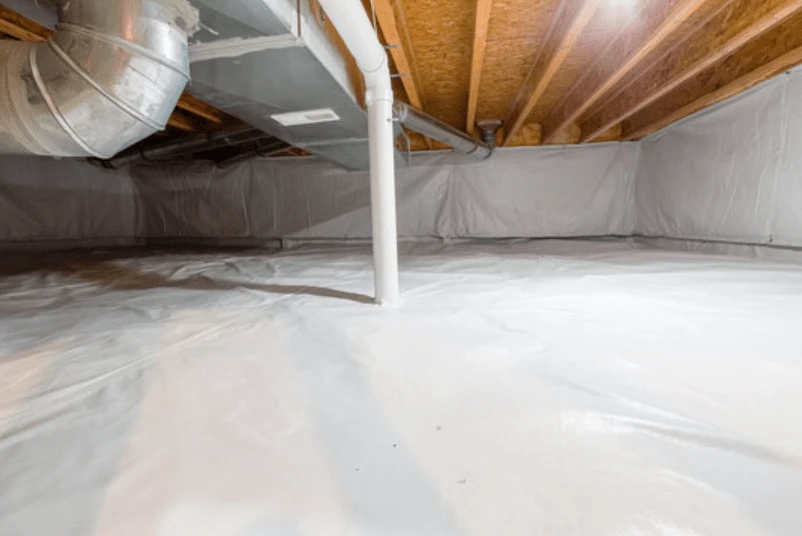
This depends on the strategy. If the goal is "encapsulation," contractors seal foundation walls and the ground, bringing the crawl space into the house's conditioned envelope. If the crawl space remains vented, they typically insulate the underside of the floor (the crawl space ceiling). Encapsulation is generally considered superior for moisture control and energy efficiency.
Reviewer: Emma Robinson contributed her knowledge from 8 years of working in the spray foam industry. Her review helped shape this content, grounded in what contractors and homeowners actually value.