Building an off-grid property in the Mojave Desert from raw land has become increasingly expensive and slow. Between utility interconnection delays, well-drilling permits, and commercial solar equipment costs, developing a self-sustaining acreage compound from scratch often costs far more than acquiring an existing, permitted facility.
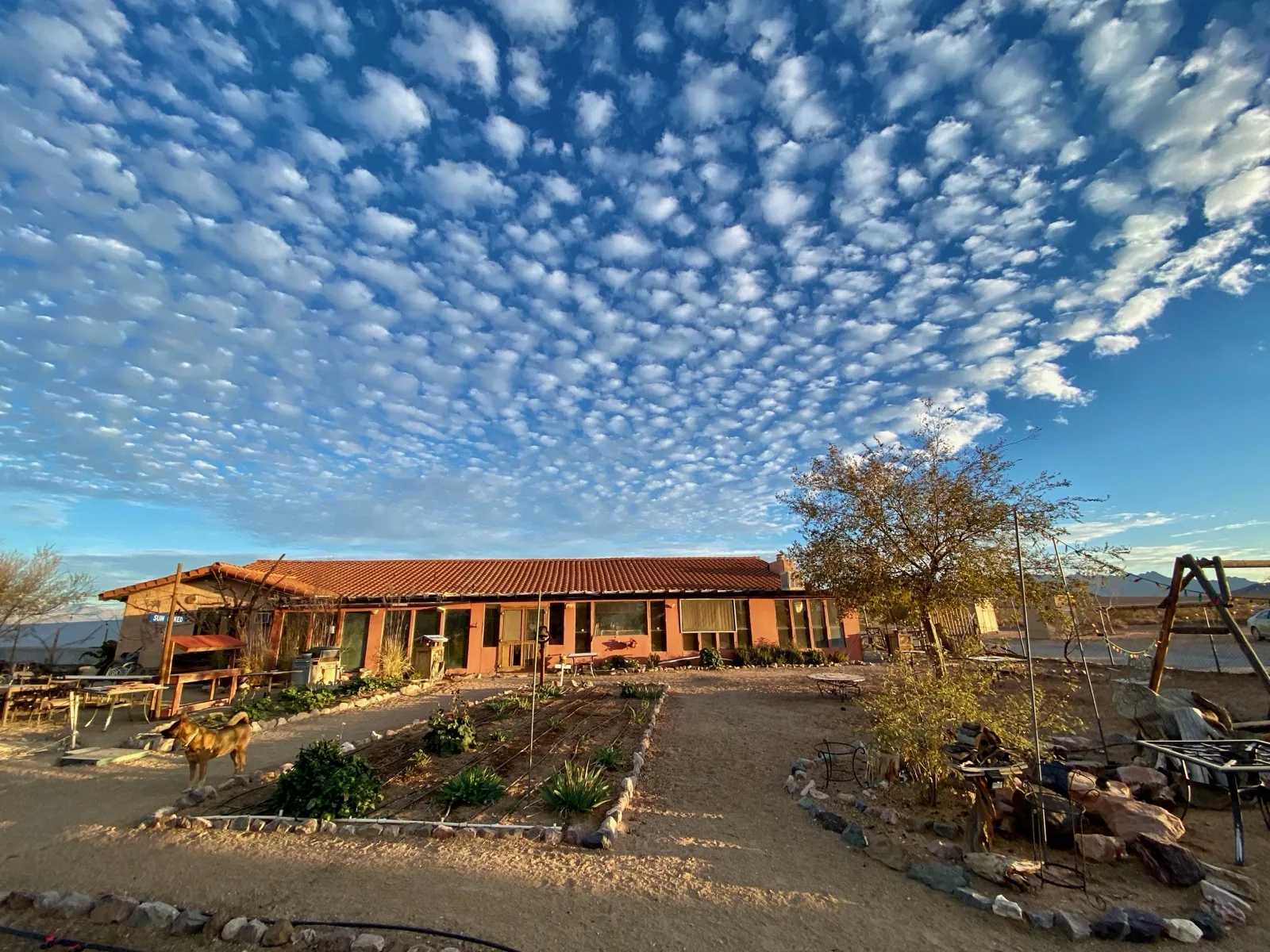
That shift is driving renewed interest from private buyers, ag-tech operators, and project-based corporate teams toward turnkey desert compounds located within commuting distance of Las Vegas. One standout example in Southern California’s high desert is Sunbaked Estate, a 10-acre gated off-grid compound and agribusiness facility in Tecopa, California (691 Desert Trail Way, Tecopa, CA 92389), roughly an hour from Las Vegas and minutes from Death Valley.
The Economics of Buying Built Infrastructure vs. Raw Desert Land
For buyers evaluating rural acreage in California or Nevada, raw land often carries hidden capital expenses before a single structure is habitable. Bringing three-phase power to a remote parcel, drilling deep production wells, and installing commercial solar generation can easily exceed the purchase price of the land itself.
Turnkey compounds bypass that multi-year permitting and construction timeline. Following a $500,000 price adjustment to $1,000,000, Sunbaked Estate illustrates how buyers can acquire residential living quarters alongside commercial-grade power and water systems well below replacement cost.
Three Core Pillars of a Self-Sustaining Agribusiness Compound
Evaluating a true off-grid estate requires looking beyond residential square footage to the underlying utility and zoning infrastructure:
1. Commercial Power Generation (100 kW Solar + Lithium Storage):
Standard residential solar setups are rarely sized for continuous desert cooling alongside agricultural equipment. A commercial 100 kW solar array paired with industrial lithium battery storage allows a compound to operate completely off the grid with zero monthly utility bills while supporting heavy electrical loads.
2. Independent Water & Cultivation Systems:
In arid regions, reliable water access determines long-term land value. Dual deep commercial wells paired with automated, climate-controlled greenhouses enable year-round specialty crop production, agricultural R&D, or licensed cultivation without municipal water constraints.
3. Dual-Purpose Zoning & Livable Design:
Properties zoned for Agricultural and Commercial Variance provide operational flexibility that standard residential parcels cannot match. At Sunbaked Estate, the industrial infrastructure sits alongside a 2,875 sq ft custom Spanish-style main residence (3 bedrooms, 2 bathrooms) and a detached guest casita—making the site equally suited for full-time owner-operators, executive retreats, or corporate workforce housing.
Flexible Deployment: Ownership or Corporate Workforce Leasing
Another trend reshaping desert real estate is dual-use demand from regional energy and infrastructure projects. With major utility-scale solar developments expanding across the California–Nevada border corridor, self-contained compounds with ample acreage for crew lodging and equipment staging are increasingly sought after for medium-term corporate leases (typically $8,500 to $12,000 per month) as well as outright acquisition.
Key Takeaway for Buyers and Operators
Whether the goal is private off-grid living, commercial agriculture, or project-team housing near Las Vegas, the strongest value in today's desert market lies in already-permitted, infrastructure-complete compounds where solar, water, and zoning are already operational on day one.
For detailed technical specifications, property documentation, or private tour scheduling for Sunbaked Estate in Tecopa, CA, visit sunbakedestate.com or reach the property team directly at (702) 460-3882 or Desertfarm42@google.com.