Commercial properties are built for the long run. Offices, retail spaces, and large buildings take years of steady management to reach their full value. Location and rent are important, but financial clarity matters just as much. This is where commercial property accounting plays a vital role.
Many property owners believe that steady rent automatically means strong performance. That is not always true. If expenses are not tracked properly or records are unclear, profits slowly decline. Poor financial tracking makes planning difficult and weakens cash flow. Over time, this can reduce the value of the property.
Commercial property accounting gives owners a clear picture of how their asset is performing. It shows income, expenses, and trends over time. With reliable numbers, owners can make informed decisions that protect and grow value. This guide explains what commercial property accounting is, how it supports long-term performance, and why it is essential for daily operations.
What Is Commercial Property Accounting?
Commercial property accounting is the process of recording and managing all financial activity related to a commercial building. This includes rent, operating expenses, taxes, loans, and long-term costs. It applies to offices, retail units, malls, factories, and mixed-use properties.
This type of accounting is more detailed than residential accounting. A single property may have multiple tenants, each with different lease terms. Some tenants pay fixed rent, while others contribute to shared costs or additional charges.
The purpose of commercial property accounting is to ensure every charge is accurate and every lease condition is followed.
Key areas include:
· Rent setup and invoicing
· Tracking shared expenses
· Managing supplier and service bills
· Recording maintenance and repair costs
· Handling tax and loan payments
· Preparing monthly and annual reports
· Reporting for owners and investors
Commercial property management accounting works alongside this process. It links financial records with daily property activities, making it easier to manage billing, repairs, and vendor payments.
When commercial property accounting is handled correctly, owners can rely on their data. When it is not, mistakes increase and asset value slowly declines.
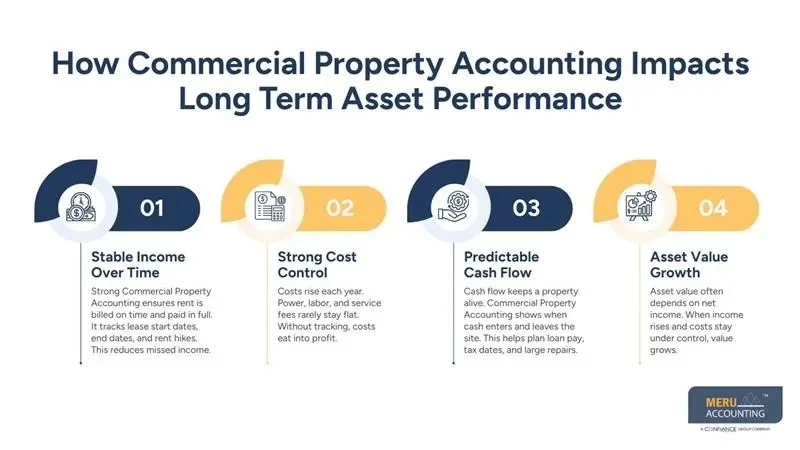
How Commercial Property Accounting Supports Long-Term Performance
Strong long-term performance depends on control, planning, and clear financial insight. Commercial property accounting supports all three.
Steady Income Over Time
Accurate accounting ensures rent is billed correctly and collected on time. Lease start dates, renewals, and rent increases are tracked carefully, reducing missed income.
Late payments are identified quickly, allowing faster follow-up. Over time, this helps maintain stable income.
Better Expense Control
Operating costs increase every year. Without proper tracking, expenses can quietly reduce profits.
Commercial property accounting records every cost, allowing owners to compare spending across time and properties. This makes it easier to spot high-cost areas and take action, such as changing vendors or adjusting contracts.
Reliable Cash Flow
Cash flow keeps a property running. Commercial property accounting shows when money comes in and when it goes out. This helps owners plan for taxes, loan payments, and major repairs without sudden pressure.
Clear cash flow data allows better short-term and long-term planning.
Growth in Property Value
Property value is closely linked to net income. When income grows and expenses stay under control, value increases.
Commercial property accounting helps reduce waste and improve net results. Clean records also build trust with buyers, lenders, and partners, often leading to smoother and faster transactions.
The Role of Commercial Property Management Accounting in Daily Work
While commercial property accounting focuses on overall performance, commercial property management accounting handles day-to-day financial tasks that keep operations running smoothly.
Accurate Tenant Charges
Each tenant lease is different. Property management accounting ensures bills follow lease terms, reducing disputes and saving time.
Rent Monitoring
Late rent affects cash flow. Daily tracking makes it easier to follow up quickly and encourage timely payments.
Supplier Payments
Commercial properties rely on many service providers. Property management accounting tracks invoices and payments to avoid delays, penalties, or service disruptions.
Maintenance Planning
Repair costs provide insight into building condition. Rising repair expenses may signal the need for upgrades. Commercial property accounting helps compare ongoing repair costs with replacement options.
Tax and Compliance Support
Clear and organized records make reviews and audits easier. Property management accounting keeps documents accurate and ready.
Key Reports Used in Commercial Property Accounting
Financial reports turn data into useful insight. Common reports include:
· Income Statement – Shows income, expenses, and profit over a period
· Balance Sheet – Lists assets, liabilities, and equity
· Cash Flow Report – Tracks actual cash movement
· Rent Roll – Details tenants, rent amounts, lease terms, and payment status
· Budget vs Actual Report – Compares planned spending with real costs
These reports help owners understand performance and plan ahead.
Best Practices for Effective Commercial Property Accounting
To get the most value from commercial property accounting, owners should:
· Keep systems simple and clear
· Review financial reports regularly
· Separate daily expenses from long-term investments
· Use past data to guide future decisions
· Work with experienced accounting professionals
How Commercial Property Accounting Supports Smarter Investment Decisions
Every property decision involves risk. Commercial property accounting reduces that risk by providing clear financial insight.
Better Timing for Buying and Selling
Accurate records show true performance, helping owners decide when to sell or hold. Buyers also trust clean books, which can improve deal value and speed.
Measuring Returns on Improvements
Upgrades such as parking, lifts, or energy systems require investment. Commercial property accounting tracks these costs and shows whether they lead to higher income.
Early Risk Detection
Vacancies, late payments, and rising costs can reduce value. Commercial property accounting helps identify these risks early, allowing quick action.
Support for Loans and Refinancing
Lenders rely on accurate financial data. Clear reports from commercial property accounting support loan and refinancing applications.
How Meru Accounting Supports Commercial Property Accounting
Meru Accounting provides complete commercial property accounting and property management accounting support for owners and managers. Our focus is on clarity, accuracy, and easy-to-understand reports.
Our services include:
· Rent billing and tracking
· Tenant charge setup
· Supplier invoice management
· Monthly financial reports
· Budget and cash flow planning
· Clean, audit-ready records
We align accounting with daily property operations so managers can focus on growth instead of paperwork.
Key Takeaways
· Commercial property accounting protects long-term asset value
· Clear records support stable income and cash flow
· Property management accounting handles daily financial tasks
· Strong reports guide better decisions
· Expert support builds confidence and control