Unveiling the Invisible Infrastructure Powering Modern Life
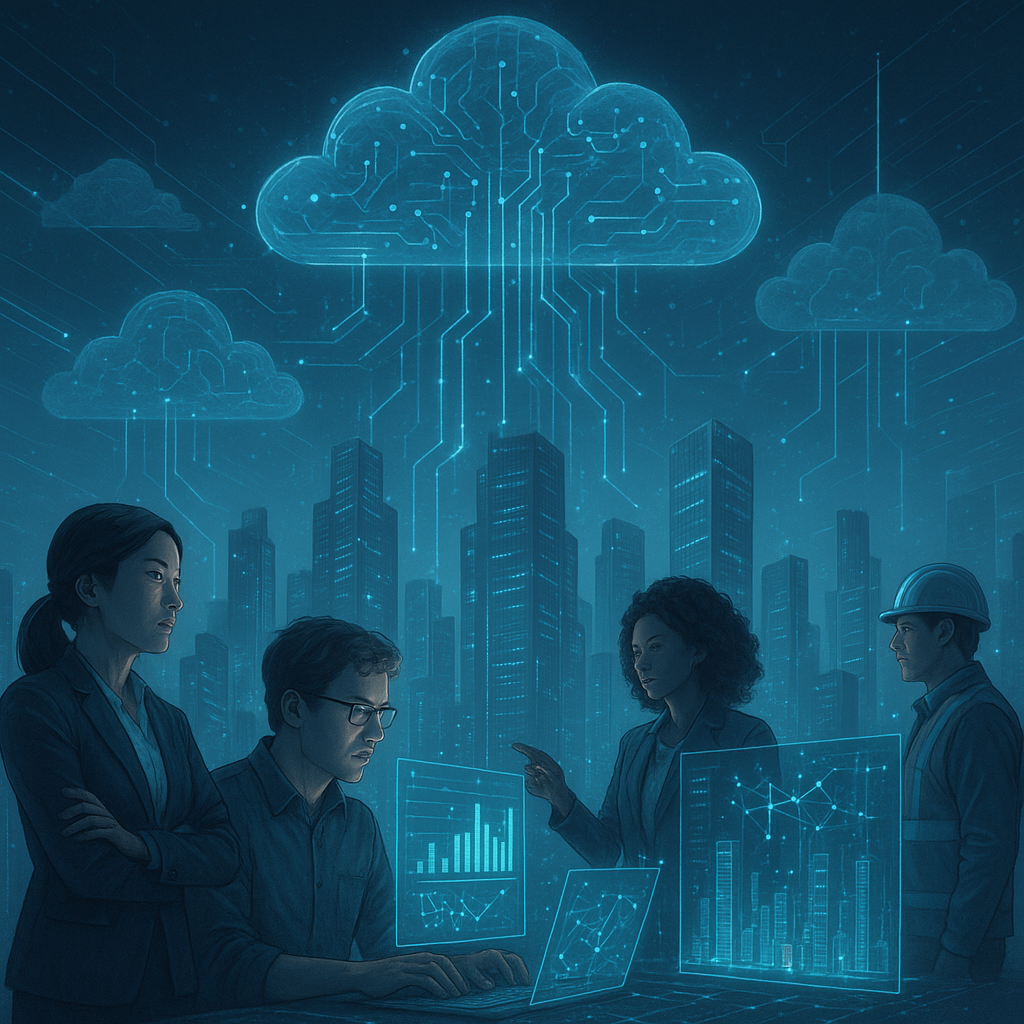
Imagine a world where your favorite streaming service buffers endlessly, your critical business application crashes during peak hours, or your smart home devices lose connection simultaneously. This dystopian scenario is what life might look like without the seamless, robust infrastructure of cloud computing. Today, cloud computing operates as the silent engine behind billions of digital interactions daily. According to industry estimates, over 95% of enterprises globally use cloud services, underscoring its ubiquity and critical role. From supporting global supply chains to enabling real-time communication and AI-powered analytics, cloud platforms have become indispensable.
Yet, despite its pervasive presence, the complexity and scale of cloud computing often go unnoticed by end users. The systems enabling this connectivity are distributed across thousands of data centers worldwide, leveraging vast networks and sophisticated software orchestration. This article explores the evolution, current landscape, and future trajectory of cloud computing, revealing why it remains the backbone of digital transformation in 2026.
“Cloud computing has evolved from a mere convenience to a fundamental pillar supporting innovation, agility, and resilience across industries.” – Industry Analyst, TechInsights 2026
A Journey Through Cloud Computing's Evolution
The foundations of cloud computing trace back to the 1960s with the concept of time-sharing on mainframes, but its modern incarnation began in the early 2000s. Companies like Amazon revolutionized the market in 2006 by launching Amazon Web Services (AWS), offering computing power on demand. This development triggered a paradigm shift from traditional on-premises data centers to scalable, pay-as-you-go cloud resources.
Over the past two decades, cloud computing has expanded through distinct phases:
- Infrastructure as a Service (IaaS): Providing virtualized hardware resources over the internet.
- Platform as a Service (PaaS): Facilitating application development platforms without managing infrastructure.
- Software as a Service (SaaS): Delivering software applications accessed via browsers.
More recently, the rise of hybrid and multi-cloud strategies has allowed organizations to combine public clouds, private clouds, and on-premises infrastructure for optimal flexibility and security. Regulatory changes and data sovereignty concerns further shaped cloud adoption, prompting providers to establish regional data centers and comply with localized frameworks.
By 2026, cloud ecosystems have matured into comprehensive platforms integrating edge computing, AI, and serverless architectures, enabling rapid innovation across sectors.
Decoding the Core Technologies and Market Dynamics
Cloud computing today is a complex interplay of technologies and business models. At its core, virtualization enables multiple virtual machines to run on physical servers, optimizing resource utilization. Containerization, popularized by Docker and Kubernetes, provides lightweight, portable environments for applications, accelerating deployment and scaling.
Data storage in the cloud utilizes distributed databases and object storage systems, ensuring high availability and durability. Network virtualization and software-defined networking (SDN) allow dynamic management of traffic flows, critical for latency-sensitive applications.
Market dynamics in 2026 reveal impressive growth and consolidation:
- Market Size and Growth: The global cloud computing market is projected to exceed $900 billion by 2027, growing at a CAGR of over 18% (according to Gartner).
- Dominant Players: AWS, Microsoft Azure, Google Cloud Platform, and Alibaba Cloud continue to lead, collectively controlling approximately 65% of the market share.
- Emerging Trends: The integration of generative AI services within cloud platforms, expansion of edge cloud computing, and increased focus on green data centers.
Comparatively, organizations adopting multi-cloud strategies report enhanced resilience and cost optimization but face challenges in interoperability and governance. A recent survey by Forrester found that 78% of enterprises using multi-cloud experienced improved performance but 54% struggled with complexity.
“The cloud market is no longer just about storage and compute; it’s a battleground for AI, edge, and sustainability.” – Cloud Strategist, Forrester Research 2026
2026 Cloud Computing Landscape: Innovations and Challenges
This year marks significant milestones in cloud computing evolution. AI-native clouds have gained prominence, with providers embedding generative AI frameworks and large language models directly into cloud services. These developments empower businesses to deploy AI applications with minimal latency and customized data governance.
Edge computing complements the centralized cloud by processing data nearer to sources, critical for autonomous vehicles, IoT, and real-time analytics. By 2026, over 40% of cloud workloads are estimated to run at the edge, according to IDC, driven by 5G and advanced networking.
Security remains a major focus. Zero-trust architectures, confidential computing, and advanced encryption techniques are standard practices. However, the rise in sophisticated cyberattacks targeting cloud infrastructure demands ongoing innovation and vigilance.
Environmental sustainability has become a competitive differentiator. Leading cloud providers have committed to achieving carbon neutrality by 2030, investing heavily in renewable energy and energy-efficient data centers. This shift responds to increased regulatory scrutiny and customer demand for sustainable IT solutions.
Operationally, serverless computing continues to grow, enabling developers to run code without managing servers, enhancing agility and reducing costs.
These developments highlight a cloud ecosystem that is simultaneously expanding in capability and complexity.
Industry Perspectives: Transforming Business Models and Innovation
The impact of cloud computing extends far beyond IT departments. Industry leaders emphasize that cloud adoption drives business transformation, enabling agility, scalability, and innovation. Enterprises leverage cloud-native architectures to rapidly prototype and deploy new products, integrate AI-powered analytics, and enhance customer experiences.
Financial services, healthcare, manufacturing, and retail sectors exemplify this trend. For instance, banks use cloud platforms for real-time fraud detection and personalized services, while healthcare providers accelerate genomic research and telemedicine through cloud-enabled AI.
Experts note that cloud computing has also democratized access to advanced technologies:
- Startups can access enterprise-grade infrastructure without significant capital investment.
- Small and medium businesses benefit from scalable SaaS applications tailored to their needs.
- Global collaboration is facilitated by cloud-based tools, breaking down geographic and organizational silos.
However, challenges persist. Skills shortages in cloud architecture and cybersecurity remain critical bottlenecks. Organizations must invest in continuous training and strategic partnerships to harness cloud potential fully.
“Cloud computing is no longer optional for competitive enterprises; it is the platform on which the future is built.” – CTO, Global Tech Corporation
Looking Ahead: What to Expect from Cloud Computing in the Next Five Years
As we look beyond 2026, several key trends and challenges will shape the trajectory of cloud computing:
- Ubiquitous AI Integration: AI will be deeply embedded into all cloud services, enabling autonomous operations, predictive analytics, and hyper-personalization.
- Quantum Computing on Cloud: Early adoption of quantum computing services via cloud platforms will unlock new computational capabilities, especially in cryptography and complex modeling.
- Regulatory Evolution: Data privacy and sovereignty laws will become more stringent, compelling cloud providers to innovate in compliance and data localization.
- Enhanced Interoperability: Open standards and frameworks will reduce vendor lock-in and facilitate smoother multi-cloud environments.
- Sustainability as Standard: Environmental impact metrics will become integral to cloud service selection and reporting.
Organizations must prepare for this future by adopting flexible cloud strategies, investing in workforce skills, and prioritizing security and sustainability. The cloud’s role as an innovation catalyst will only deepen, underpinning emerging technologies and reshaping economic and social landscapes.
For those interested in a deeper dive into the major players and the ongoing transformation, TheOmniBuzz’s comprehensive analysis in 8 Cloud Giants Shaping the Future of Computing and Innovation and How Cloud Computing Is Transforming Business and Technology in 2026 offer extensive insights.