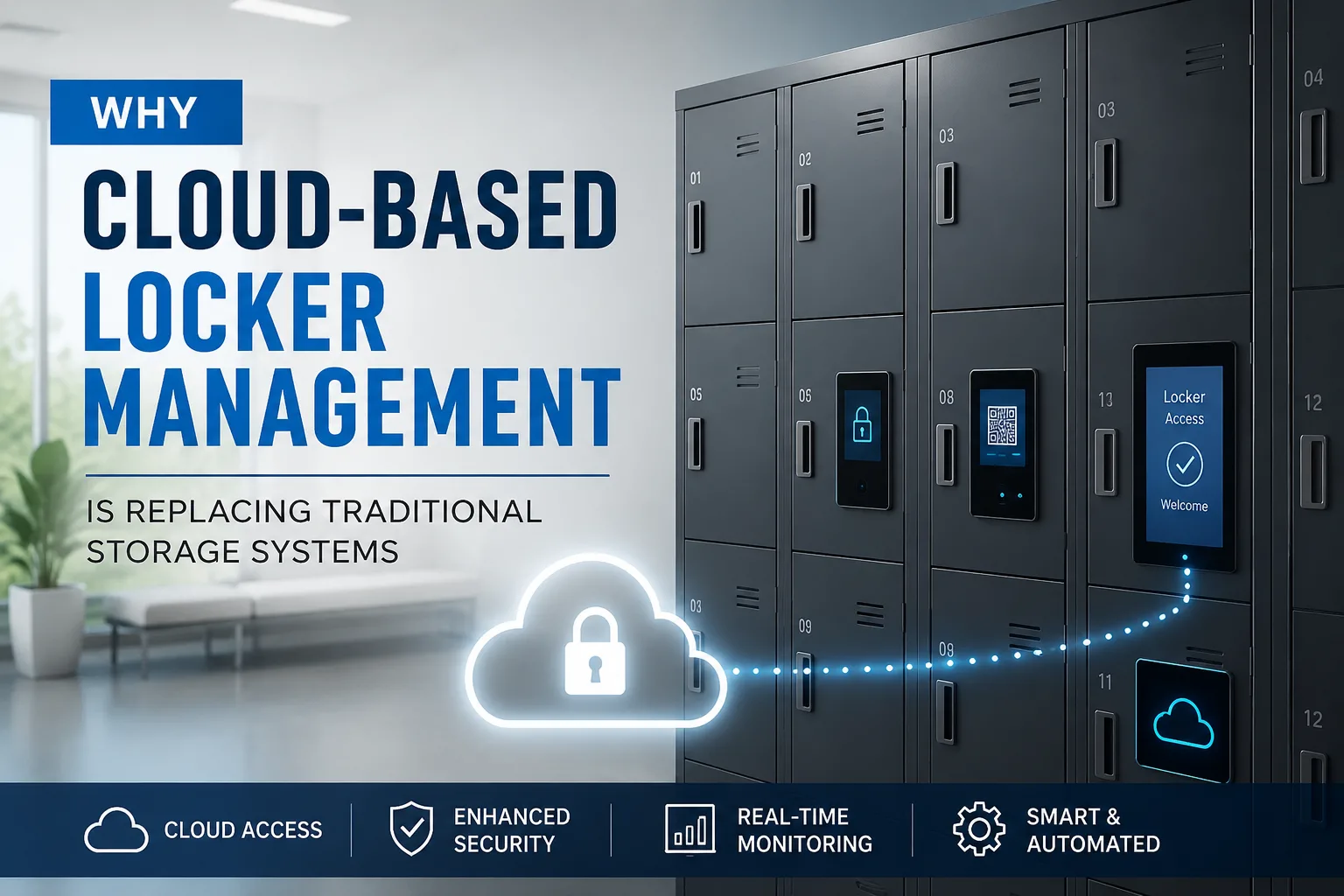
There was a time when storage lockers felt pretty straightforward. A metal cabinet, a key, maybe a padlock that jammed during winter. That was enough. At least people thought it was. But businesses changed. Workplaces changed too. And somewhere in the middle of all that, cloud-based locker management started becoming less of a fancy upgrade and more of a practical fix for everyday problems.
You can actually see it happening across offices, warehouses, universities, logistics hubs, even gyms in the USA. Traditional lockers still exist, sure. But they feel a little... tired now.
The Problem With Traditional Lockers
Physical keys sound simple until someone loses one.
Then another person forgets which locker they were assigned. Someone else leaves the company without returning access cards. Admin teams start maintaining spreadsheets nobody updates properly. Tiny issues pile up quietly.
I remember visiting a distribution facility once where supervisors kept backup locker keys inside a drawer labeled “Emergency.” Funny thing was, that drawer stayed open half the day.
That’s kind of the issue.
Old locker setups depend too much on manual handling. And manual systems usually crack under pressure. Not instantly. Slowly.
Businesses dealing with employee storage, package management, or secure asset handling need something less messy. That’s where a smart locker management system enters the picture.
Why Cloud-Based Systems Feel Different
The biggest shift is visibility.
With a cloud locker management system, admins can monitor lockers remotely without standing in front of them physically. Access logs, locker status, user permissions — everything shows up on a dashboard.
No hunting for keys. No awkward “Who opened this?” conversations.
A manager sitting in Chicago can manage lockers installed in Dallas. Real-time updates happen quietly in the background. Honestly, after using cloud-connected systems, going back to manual lockers feels strange.
A bit like returning to paper maps after years of GPS.
Smart Locker Management System Brings Better Security
Security is probably the first reason companies switch.
Traditional locks can be copied, damaged, or bypassed more easily than people admit. Most businesses won’t say this openly, but internal access problems happen all the time.
Modern secure storage solutions reduce that risk through:
- PIN access
- Mobile authentication
- RFID cards
- OTP verification
- Timed permissions
Some intelligent locker systems even record failed access attempts automatically. Tiny detail, but useful.
And there’s something oddly reassuring about digital audit trails. You know who accessed what and when. No guessing.
Keyless Locker Management Removes Everyday Frustration
People underestimate how annoying keys are until they stop using them.
A keyless locker management setup cuts down delays almost immediately. Employees don’t need physical handovers. Temporary users can receive digital access codes. Access can expire automatically after shifts end.
Small things, big differences.
Hospitals in the USA have started using these systems for staff lockers and controlled storage areas because shift changes happen constantly. Physical key handling just slows everything down.
Same story in logistics centers.
Businesses Want Remote Access and Monitoring
This part matters more than people realize.
A regular locker only exists in one place physically. A cloud-based smart locker solution exists digitally too. That changes how companies manage storage completely.
Facility teams can:
- Lock or unlock compartments remotely
- View usage history
- Assign lockers instantly
- Disable access without changing hardware
There’s less panic during employee exits or contractor changes. IT teams appreciate that. HR departments too, honestly.
And yeah, cloud-connected systems occasionally make older storage setups feel prehistoric.
Electronic Locker Management Fits Modern Workplaces Better
Workplaces aren’t fixed anymore.
Hybrid work changed storage needs in weird ways. Some employees come twice a week. Others travel constantly. Fixed locker assignments waste space.
An electronic locker management platform allows temporary or rotating usage. People reserve lockers through apps or access them only during active shifts.
Co-working spaces in the USA are using this heavily now. Makes sense. Why dedicate permanent storage when occupancy changes daily?
Traditional lockers weren’t designed for flexible work patterns. Modern systems were.
AI-Powered Locker Management System Adds Smarter Control
This is where things get interesting.
An AI-powered locker management system doesn’t just lock and unlock compartments. It studies usage behavior too. Peak access times. Unused units. Security irregularities.
Not in a creepy way. More operational.
Warehouses sometimes discover entire locker sections rarely get used during certain shifts. Companies can reorganize layouts based on actual usage patterns instead of assumptions.
That kind of visibility was nearly impossible with old storage systems.
IoT-Based Locker Management System Connects Everything
An IoT-based locker management system connects lockers with broader facility operations.
Access control. Security alerts. Video systems. Inventory tracking.
One event can trigger another automatically.
A restricted locker opens after approved verification. Security teams receive notifications instantly if unauthorized attempts happen. Maintenance alerts appear when hardware starts failing.
And honestly, this connected setup feels less chaotic than managing disconnected systems everywhere.
Not perfect. Tech never is. Still better.
Smart Locker Systems USA Businesses Are Adopting Fast
The adoption rate across the USA has been pretty noticeable lately.
Corporate offices use smart lockers for hybrid employees. Universities use them for student package handling. Airports manage temporary baggage storage digitally. Manufacturing sites secure tools and sensitive equipment.
Even apartment buildings are getting involved because package theft became such a headache.
A lot of these companies started small. Ten lockers. Twenty maybe.
Then they expanded after realizing the admin workload dropped significantly.
That’s usually how these things spread. Quietly.
Traditional Storage Systems Still Exist… But Barely Evolving
To be fair, traditional lockers still work for some situations.
Small gyms. Tiny offices. Places with minimal turnover.
But once operations grow, the cracks start showing:
- Lost keys
- Manual tracking
- Security concerns
- Poor accountability
- Expensive lock replacements
An automated locker management system solves many of these issues without adding constant supervision.
And people like convenience. Maybe more than they admit.
Nobody misses carrying tiny locker keys around.
Storage Is Becoming Digital, Even If The Locker Isn’t
Funny thing is, the physical locker itself hasn’t changed that much. It’s still a compartment with a door.
The real shift happened behind the scenes.
Software now handles access. Cloud platforms handle visibility. AI notices unusual behavior. IoT connects storage with the rest of the building ecosystem.
That combination is why businesses are moving toward cloud-based locker management faster now.
Not because it sounds futuristic. Most decision-makers honestly don’t care about that.
They just want fewer problems tomorrow than they had yesterday.