
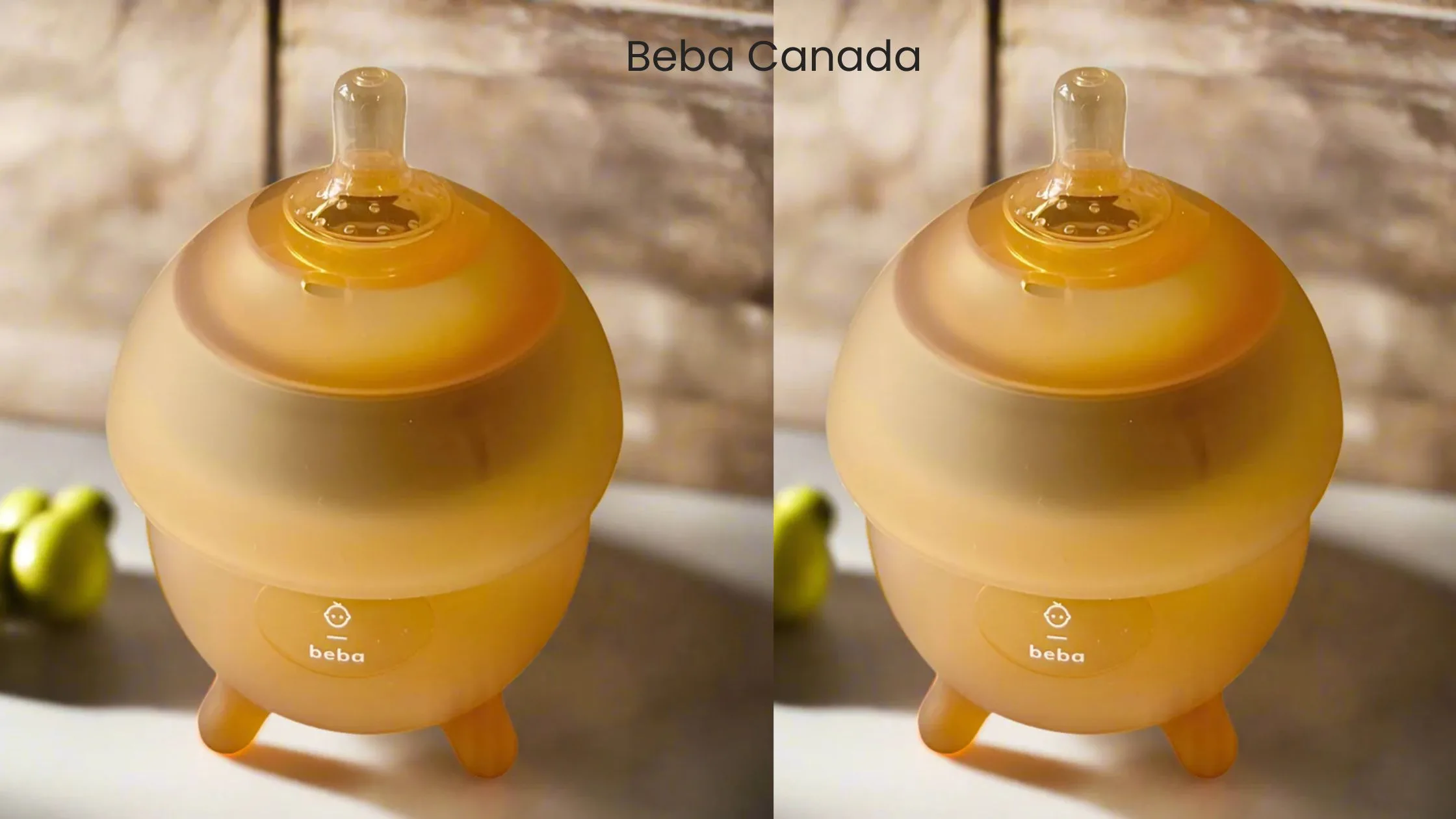
Here's something nobody prepares you for before you have a baby: the bottle aisle. You walk in expecting to grab something and walk out in five minutes. Instead you stand there for twenty minutes surrounded by a wall of options, each claiming to be the most natural, the most anti-colic, the most breast-like bottle ever made, and you leave either guessing or completely overwhelmed.
If you're a new parent in Canada trying to figure out which baby bottle is actually worth it — whether you're breastfeeding and need to introduce a bottle, managing colic symptoms, or simply looking for a safer, softer silicone option — this guide is written specifically for you. No marketing fluff, no inflated claims. Just honest information about what matters and why, with a close look at what the Beba Canada simulation breast-like baby bottle brings to the table.
Let's Start With the Question Everyone Actually Has: What Is Colic?
Before you can understand why an anti-colic bottle matters, it helps to understand what colic actually is. Colic is defined as inconsolable crying in an otherwise healthy, well-fed baby that lasts more than three hours a day, more than three days a week, for more than three weeks. If that sounds exhausting just to read — yes, living it is exactly as hard as it sounds.
The frustrating truth is that nobody has pinpointed a single definitive cause of colic. What researchers and pediatricians do know is that air ingestion during feeding plays a significant role in many cases. When babies swallow air while feeding — either from a fast-flowing nipple, a poor latch, or a bottle design that pulls air into the milk — those air bubbles get trapped in the stomach and intestines, causing bloating, gas, discomfort, and that distinctive inconsolable crying that defines colic.
Around 20 to 25 percent of all babies experience colic symptoms in the first three months of life. It affects breastfed and bottle-fed babies equally. And while there's no single cure, reducing the amount of air a baby swallows during feeding is one of the most practical, well-supported steps parents can take — which is exactly where bottle design becomes critically important.
Why Silicone? What Makes a Natural Baby Bottle Silicone the Right Choice?
A generation ago, most baby bottles were made from plastic. Today, Canadian parents are increasingly choosing food-grade silicone, and for good reason. Silicone is soft, flexible, and free from BPA, BPS, and other potentially harmful chemicals found in some plastics. It doesn't leach chemicals when heated, which means warming breast milk or formula in a silicone bottle is genuinely safer than doing the same in low-quality plastic.
But the benefits of a natural baby bottle silicone go beyond just what it's free from. The texture and feel of high-grade silicone closely mimics human skin — which is why well-designed silicone nipples are so much more readily accepted by babies, especially those who are being introduced to a bottle after weeks of breastfeeding. A cold, hard plastic nipple feels nothing like the breast. A soft, warm, flexible silicone nipple — particularly one shaped to simulate the breast — feels familiar in a way that matters enormously to a newborn.
From a practical standpoint, silicone is also naturally resistant to stains and odors, handles high temperatures well, and can go through repeated sterilizations — whether by steam, boiling, microwave, or dishwasher — without degrading the way plastic can over time. For Canadian parents who sterilize frequently (especially in the newborn stage), this durability makes silicone bottles a genuinely cost-effective choice despite the slightly higher upfront price.
The Breast-to-Bottle Challenge: Why Most Babies Reject Standard Bottles
Here's a scenario that's almost universal among breastfeeding parents: you've been nursing your baby for four or five weeks, everything is going well, and then one day you need to introduce a bottle — maybe because you're returning to work, maybe because you want your partner to share a feed, maybe because you need a few hours of sleep. You offer the bottle. Your baby looks at it, tries it once, and refuses. Completely.
This is called bottle rejection, and it happens far more often than the packaging on most baby bottles suggests. The reason is simple: the nipple feels, tastes, and flows differently than the breast. Babies who have spent weeks learning to breastfeed have developed a specific oral pattern — a specific way of latching, sucking, and controlling milk flow. A standard bottle nipple disrupts all of that.
The solution is a bottle that doesn't force babies to re-learn how to feed. A simulation breast-like baby bottle — designed with a wide, soft, breast-shaped nipple that encourages the same latch depth and jaw movement as breastfeeding — dramatically reduces the likelihood of rejection because it doesn't feel like a foreign object. It feels like a natural extension of feeding, not an interruption of it.
This is also why the concept of nipple confusion matters. When a fast-flow bottle makes feeding effortless (no active sucking required), some babies start to prefer it over the breast, where milk requires more work to draw out. A properly designed bottle with a controlled, slow-flow anti-colic nipple prevents this preference from developing, because it maintains the same level of engagement and effort that breastfeeding requires.
What to Actually Look for in an Anti-Colic Bottle in Canada
Not every bottle that says "anti-colic" on the label has earned that label. In Canada, as in most countries, manufacturers can make virtually any claim on baby product packaging without independent verification. So rather than trusting the label, look at the actual design features.
Anti-colic venting system: The most effective anti-colic bottles have a venting or valve system that separates air from milk — meaning air gets vented out through the base or sides of the bottle rather than mixing into the liquid your baby drinks. The result is that your baby gets milk, not air bubbles. The quality and design of this valve matters enormously. A cheap, poorly made valve will either not work consistently or make the bottle almost impossible to clean properly.
Nipple flow rate: Flow rate is one of the most underappreciated variables in bottle feeding. Too fast, and your baby gulps and swallows air to keep up with the flow — a direct path to gas and colic symptoms. Too slow, and your baby becomes fatigued and frustrated before getting a full feed. Newborns generally do best with a slow-flow nipple that requires them to actively draw out the milk, mimicking the effort of breastfeeding. Look for a bottle that offers multiple flow rate options so you can adjust as your baby grows.
Nipple shape and flexibility: The nipple should be wide at the base (to encourage a deep latch, not a shallow one), soft enough to compress naturally during feeding, and firm enough that it doesn't collapse completely under suction — nipple collapse interrupts flow and causes babies to take in air trying to re-establish suction. Breast-shaped, skin-soft silicone nipples perform best across all these criteria.
Ease of cleaning: This one is often overlooked until you're cleaning bottles twelve times a week at 11 pm. Anti-colic systems with multiple small internal parts can be genuinely difficult to clean thoroughly, and residue in uncleaned parts is a hygiene risk. Look for a design that disassembles simply, has smooth interior surfaces, and is fully dishwasher safe.
Material safety: For the bottle body, food-grade silicone is the gold standard. BPA-free, phthalate-free, lead-free. Check that the entire feeding surface — not just the nipple — meets these standards.
Beba Canada's Simulation Breast-Like Baby Bottle: What Sets It Apart
The Beba Canada simulation breast-like baby bottle was designed with the breastfeeding-to-bottle transition specifically in mind — which sets it apart from generic anti-colic bottles that treat bottle feeding as a standalone activity rather than something that coexists with breastfeeding.
The nipple is shaped and textured to simulate the natural breast — not in a vague marketing sense, but in the specific way it sits in a baby's mouth, encouraging the same latch depth and jaw positioning that breastfeeding does. This matters because it means your baby doesn't have to learn two different ways to feed. The muscle memory transfers. The latch transfers. Which is why bottle rejection rates are significantly lower with breast-simulation designs compared to conventional bottle nipples.
The silicone used in the Beba Canada bottle is food-grade, BPA-free, and soft enough to respond to the natural pressure of a baby's gums and jaw — giving it that skin-like quality that babies instinctively respond to. It warms quickly to body temperature, which makes it even more familiar.
The anti-colic design works through a controlled valve system that prevents air from entering the milk supply during feeding. Your baby gets clean, uninterrupted milk flow without the air bubbles that cause gas and colic symptoms. For parents in Canada who have tried other anti-colic bottles and found inconsistent results, the valve design here is worth examining closely — it performs consistently across both breast milk and formula.
Cleaning is straightforward. The wide-neck design means your hand (or a brush) can reach every interior surface. The components are dishwasher safe and withstand repeated sterilizations without degrading.
Practical Tips for Introducing a Bottle — Especially If Your Baby Is Already Breastfeeding
Even with the best bottle, the introduction process matters. A few things that consistently help:
Wait until breastfeeding is well established — typically around three to four weeks — before introducing a bottle regularly. This protects your milk supply and your baby's latch.
Let someone other than mom offer the first few bottle feeds. Babies can smell their mother's milk and will often prefer the breast when mom is present. Having a partner or caregiver offer the bottle when mom is out of the room reduces resistance significantly.
Warm the nipple slightly under warm running water before offering it. The closer it feels to body temperature, the more familiar it will feel to your baby.
Be consistent. Offer the bottle at the same time each day, in a calm, quiet environment. Babies pick up on stress. If you're anxious about rejection, your baby will sense it.
Don't force it. If your baby refuses, wait an hour and try again. Pressure during feeding is counterproductive and can create a stronger aversion.
The Bottom Line for Canadian Parents
Choosing a baby bottle in Canada doesn't have to mean wading through hundreds of reviews and conflicting opinions. The factors that actually matter come down to a short list: safe silicone materials, a breast-like nipple that supports a natural latch, a genuine anti-colic venting system, appropriate flow control, and easy cleaning.
The Beba Canada simulation breast-like baby bottle was built around exactly these principles — with a specific focus on making the breast-to-bottle transition as seamless as possible, and on reducing the air ingestion that sits at the heart of so many colic and gas problems in Canadian infants.
Visit bebacanada.ca to explore the bottle and see whether it's the right fit for your family. Because the right bottle doesn't just make feeding easier — it makes everything that comes after a feed easier too.