In today's digital economy, customers interact with beautifully designed websites, mobile applications, SaaS platforms, and connected digital experiences every day. They browse products, make payments, receive notifications, and collaborate with teams across devices and locations. What most users never see, however, is the sophisticated backend infrastructure that makes these experiences possible.
Behind every seamless digital product lies a network of databases, cloud services, business logic, and APIs working together in real time. These backend systems determine whether an application can scale, remain secure, integrate with external platforms, and deliver consistent performance as demand grows.
As organizations accelerate digital transformation initiatives, backend architecture has become one of the most critical factors in long-term product success. At the center of this architecture are APIs, the invisible connectors that power modern software ecosystems.
What Backend API Development Really Means
Backend development refers to the server-side systems responsible for processing data, managing business logic, storing information, authenticating users, and communicating with external services.
While users interact with interfaces on websites or mobile applications, the backend performs the work behind the scenes. Every login request, payment transaction, data update, or notification typically passes through backend services before reaching the end user.
APIs, or Application Programming Interfaces, serve as communication bridges between software systems. In business terms, APIs allow different applications to exchange information securely and efficiently without requiring direct access to each other's internal systems.
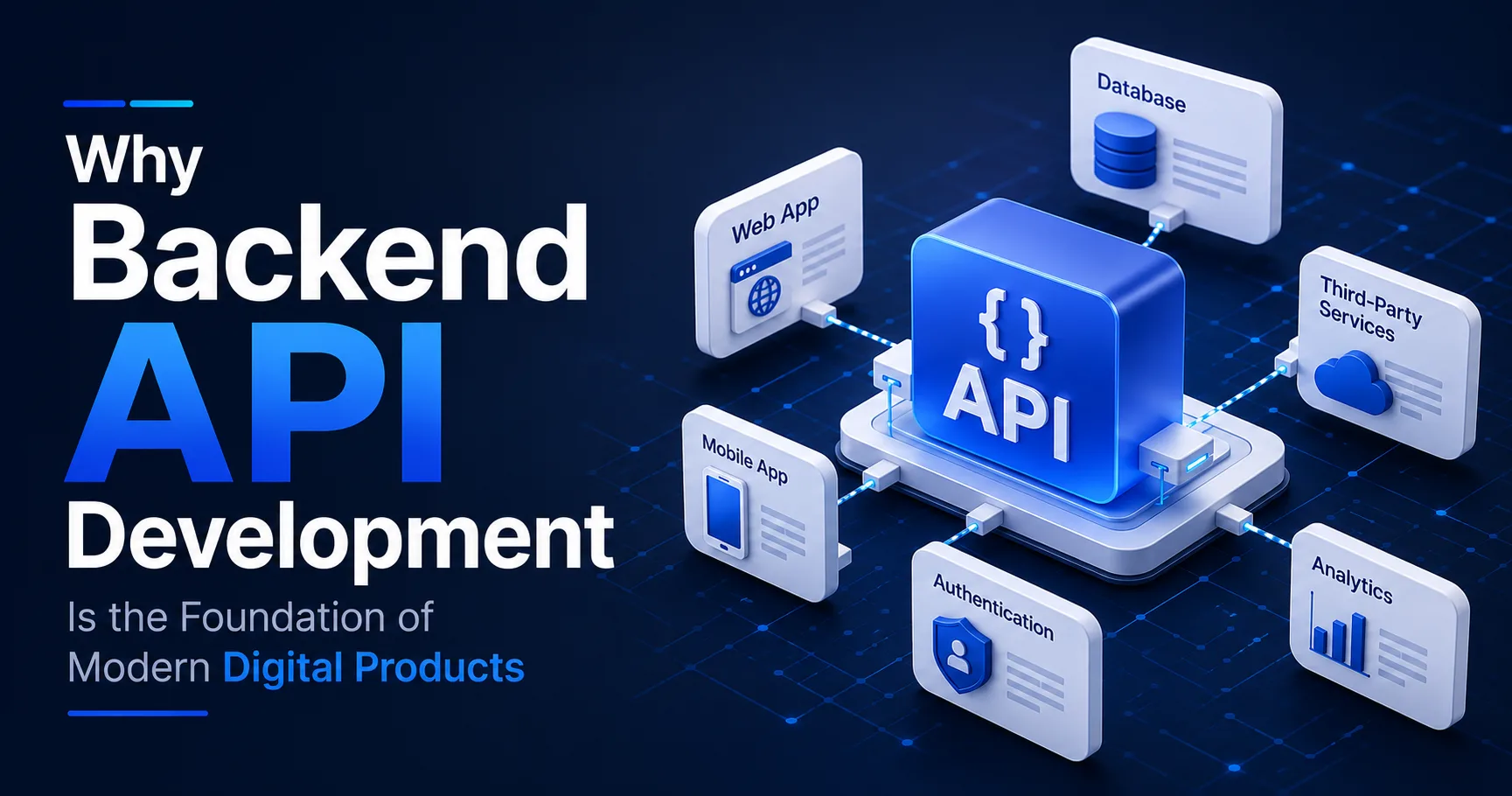
For example, when a customer purchases a product online, APIs may connect the storefront to payment processors, inventory systems, shipping providers, analytics platforms, and customer relationship management tools. These connections enable seamless operations while reducing manual processes.
Modern backend development services focus heavily on creating robust APIs that support software integration across applications, databases, cloud platforms, and third-party services.
Why APIs Have Become the Backbone of Modern Digital Products
The growth of SaaS platforms, mobile applications, cloud computing solutions, and omnichannel customer experiences has fundamentally changed how software is built.
In the past, many applications operated as isolated systems. Today, businesses rely on interconnected ecosystems where information flows continuously across multiple platforms. A single customer action may trigger processes across dozens of systems simultaneously.
This shift has fueled the adoption of API-first architecture, an approach that prioritizes API design before application development begins. Rather than treating integrations as an afterthought, organizations build software around APIs from the start.
API-first development offers several advantages. It accelerates product development, improves collaboration between teams, supports future integrations, and creates greater flexibility for evolving business requirements.
Whether connecting marketing automation tools, payment systems, analytics platforms, or enterprise software solutions, APIs have become the foundation that enables modern digital products to function as cohesive ecosystems.
How Backend APIs Enable Scalability and Growth
Many digital products launch successfully but struggle when usage increases. A platform that performs well for thousands of users may encounter significant challenges when serving millions.
Well-designed backend APIs play a central role in supporting application scalability.
By separating services into independent components, organizations can scale specific functions without affecting the entire system. This principle is a key characteristic of microservices architecture, which has become widely adopted among high-growth technology companies.
Consider a streaming platform experiencing a surge in users during a major event. Instead of scaling the entire application, backend engineers can allocate resources specifically to video delivery services, user authentication systems, or recommendation engines.
Backend APIs also facilitate efficient data management by optimizing communication between databases and applications. Combined with load balancing strategies, distributed systems, and intelligent caching mechanisms, APIs help maintain performance even under heavy traffic conditions.
Many of today's most successful digital platforms rely on cloud-native applications built around API-driven architectures that support continuous growth while maintaining reliability.
The Role of API Integration in Customer Experience
Customer experience is often viewed through the lens of design and usability. However, many of the interactions customers value most depend on effective API integration behind the scenes.
When a customer receives an instant payment confirmation, accesses personalized recommendations, or receives support through multiple communication channels, APIs are typically responsible for enabling those experiences.
Organizations increasingly invest in api integration services to connect critical business systems and improve operational efficiency.
Common integration scenarios include:
- Payment gateways that process transactions securely.
- CRM platforms that synchronize customer information.
- Communication services that deliver emails, messages, and notifications.
- Analytics tools that track customer behavior.
- Customer support systems that centralize interactions across channels.
Without reliable API integrations, businesses often face fragmented customer data, inconsistent user experiences, and operational inefficiencies.
Strong integration strategies ensure information moves seamlessly across systems, creating more connected and responsive customer journeys.
Backend Development and Cloud Infrastructure
Backend systems and cloud infrastructure have become inseparable components of modern software architecture.
Cloud platforms provide the computing resources necessary to support growing applications, while backend services manage the logic, workflows, and data that power business operations.
Organizations increasingly rely on managed cloud services to reduce infrastructure complexity and improve operational efficiency. These services allow teams to focus on product innovation rather than maintaining servers and hardware.
Cloud-native architecture further enhances flexibility by enabling applications to scale dynamically based on demand. This approach supports greater resilience, improved application performance, and faster deployment cycles.
Security also plays a critical role. Modern cloud infrastructure incorporates advanced monitoring, automated backups, disaster recovery capabilities, and cloud security controls that help protect sensitive business and customer data.
When combined with strong backend engineering practices, cloud-native backend environments provide the foundation for scalable software systems capable of supporting long-term growth.
Why SaaS Companies Depend on Strong Backend Architecture
For SaaS platforms, backend architecture is not simply a technical consideration. It is a core business requirement.
Every subscription-based platform depends on backend systems to manage user accounts, billing operations, permissions, authentication, and customer data.
A successful saas development company understands that backend architecture directly affects product reliability, customer retention, and operational scalability.
Key SaaS functions supported by backend APIs include:
- Subscription and billing management.
- User authentication and authorization.
- Multi-tenant data architecture.
- Real-time synchronization across devices.
- Data security and compliance management.
As SaaS platforms expand into global markets, backend systems must support growing user bases while maintaining consistent performance and availability.
Without scalable backend infrastructure, even innovative SaaS products can encounter significant growth limitations.
Why Node.js Is Popular for Backend API Development
Among modern backend technologies, Node.js has emerged as one of the most widely adopted frameworks for API development.
Its event-driven, non-blocking architecture makes it particularly effective for handling large volumes of simultaneous requests while maintaining responsiveness.
This capability is especially valuable for real-time applications such as messaging platforms, collaboration tools, financial services, and online marketplaces.
A specialized nodejs development company often recommends Node.js for projects requiring high concurrency, rapid development cycles, and efficient resource utilization.
Additional advantages include:
- Fast execution performance.
- Strong ecosystem support.
- Efficient server-side development.
- Simplified full-stack JavaScript development.
- Excellent support for REST APIs and GraphQL APIs.
These characteristics make Node.js a popular choice for organizations building modern web applications and mobile app backend systems.
Common Backend API Development Mistakes Businesses Make
Despite the importance of backend systems, many organizations underestimate the complexity of API development.
One common mistake is building applications without scalability planning. Early architectural decisions can create limitations that become costly to address later.
Weak API security is another significant risk. Insufficient authentication, poor access controls, and inadequate encryption can expose sensitive information and create compliance challenges.
Poor documentation frequently slows development and complicates software integration efforts. APIs should be designed with clear standards and comprehensive documentation to support internal and external stakeholders.
Businesses also often overlook monitoring and performance optimization. Without visibility into system behavior, teams struggle to identify bottlenecks before they affect users.
Finally, some organizations adopt overly complex software architecture prematurely. While advanced patterns such as microservices architecture can provide benefits, they should align with actual business needs rather than industry trends.
Choosing the Right Backend Development Partner
Selecting the right technology partner can significantly influence the success of a digital product.
Organizations evaluating backend development services should look beyond technical capabilities and assess long-term strategic value.
Relevant experience remains one of the most important factors. Teams with experience across enterprise application development, cloud-native backend environments, and API management initiatives can often anticipate challenges before they emerge.
Cloud expertise is equally important, particularly as businesses increasingly rely on cloud computing solutions and managed cloud services.
Security knowledge should also be a priority. API security, cloud security, and compliance requirements must be integrated into development processes from the beginning.
Additionally, organizations should evaluate integration capabilities, DevOps practices, database architecture expertise, and ongoing support models.
The most effective backend partners understand that digital product development extends beyond launching software. It requires building a foundation that can evolve alongside changing business needs.
Conclusion
The most successful digital products are often judged by what users see on the surface. Yet their long-term success depends on what operates behind the scenes.
Backend APIs have become the foundation of modern software ecosystems, enabling integrations, supporting scalability, improving performance, and connecting applications across increasingly complex technology environments.
From SaaS platforms and enterprise software development initiatives to cloud-native applications and real-time digital experiences, organizations rely on strong backend development services to create reliable, secure, and scalable systems.
As businesses continue investing in digital transformation, API-driven architecture will become even more important. Organizations that prioritize scalable backend infrastructure, strategic api integration services, and cloud-ready architectures will be better positioned to adapt, innovate, and compete in an increasingly connected digital future.