The landscape of commercial properties is undergoing a significant transformation, moving away from traditional grass towards a more innovative and sustainable solution: commercial artificial grass. From sprawling corporate campuses to bustling retail centers and vibrant hospitality venues, businesses are increasingly recognizing the myriad benefits that commercial synthetic turf brings to their outdoor spaces. This shift isn't just about aesthetics; it is a strategic move driven by economic advantages, environmental responsibility, and the desire for consistently appealing and functional landscapes.
This blog delves into the compelling reasons why artificial turf grass is revolutionizing commercial landscapes across the globe.
The Unsustainable Demands of Traditional Grass in Commercial Settings
For decades, the manicured lawn has been the quintessential symbol of a well-maintained commercial property. However, maintaining a lush, green natural grass landscape in a commercial setting comes with a significant set of challenges and costs.
1. The Relentless Need for Watering
Commercial properties often feature expansive lawns, requiring substantial amounts of water to stay healthy, especially in regions prone to dry spells or water restrictions. This constant demand for irrigation not only leads to hefty water bills but also strains local water resources, raising concerns about environmental sustainability. Commercial turf eliminates this need for regular watering, offering significant cost savings and contributing to water conservation efforts.
2. The High Cost of Maintenance
Maintaining a pristine natural grass lawn in a commercial environment is a labour-intensive and expensive undertaking. It involves regular mowing, edging, fertilization, weed control, and pest management. These tasks require dedicated groundskeeping staff or frequent visits from landscaping companies, leading to substantial ongoing operational costs. Commercial artificial grass, on the other hand, requires minimal maintenance, freeing up valuable resources and reducing overhead.
3. The Inconsistent Aesthetics
Natural grass can be susceptible to various environmental factors, including weather fluctuations, pests, diseases, and heavy foot traffic. These can lead to patchy, brown, or uneven lawns, detracting from the overall appearance of the commercial property. Maintaining a consistently perfect green aesthetic with natural grass in a high-traffic commercial area is a constant battle. Artificial turf grass offers a consistently lush and vibrant appearance year-round, regardless of weather conditions or usage intensity.
4. The Environmental Impact of Chemicals
The fertilizers, herbicides, and pesticides often used to maintain natural grass lawns can have negative environmental consequences. These chemicals can leach into the soil and groundwater, potentially harming local ecosystems and posing health risks. Commercial synthetic turf eliminates the need for these harmful chemicals, contributing to a more environmentally friendly landscape.
5. The Limitations of Climate and Usage
In regions with harsh climates, maintaining healthy natural grass can be particularly challenging and costly. Extreme temperatures, prolonged droughts, or excessive rainfall can take a toll on natural lawns. Similarly, areas with high foot traffic in commercial settings often experience wear and tear, leading to unsightly bare patches. Commercial turf is far more resilient to climate extremes and heavy usage, maintaining its appearance and functionality even under challenging conditions.
The Multifaceted Advantages of Commercial Artificial Grass
The limitations and costs associated with traditional grass have paved the way for the widespread adoption of commercial artificial grass in various commercial applications. The benefits are numerous and far-reaching.
1. Significant Cost Savings
One of the most compelling advantages of commercial artificial grass is the substantial long-term cost savings it offers. By eliminating the need for regular watering, mowing, fertilization, weed control, and pest management, businesses can significantly reduce their landscaping expenses over time. While the initial investment in commercial synthetic turf may be higher than establishing a natural lawn, the reduced operational costs lead to a quicker return on investment and significant savings in the long run.
2. Enhanced Aesthetics and Curb Appeal
Artificial turf grass provides a consistently lush, green, and well-manicured appearance year-round, regardless of weather conditions or foot traffic. This enhances the overall aesthetics and curb appeal of a commercial property, creating a positive first impression for visitors, clients, and employees. A visually appealing landscape can contribute to a stronger brand image and a more welcoming environment.
3. Minimal Maintenance Requirements
Unlike natural grass, commercial turf requires very little maintenance. There is no need for mowing, watering, fertilizing, or applying pesticides. Occasional brushing to remove debris and redistribute infill is typically all that is required to keep the artificial turf grass looking its best. This significantly reduces the time, labour, and costs associated with landscape maintenance.
4. Superior Durability and Longevity
Commercial artificial grass is designed to withstand heavy foot traffic and the rigours of commercial use. It is made from durable synthetic fibers that are resistant to wear and tear, fading, and UV degradation. A high-quality commercial synthetic turf installation can last for many years, providing a long-term landscaping solution.
5. Environmental Benefits
Commercial turf offers several environmental advantages. Eliminating the need for irrigation conserves precious water resources. It also eliminates the use of harmful fertilizers, herbicides, and pesticides, reducing the risk of soil and water contamination. Furthermore, it eliminates the need for gasoline-powered mowing equipment, reducing air pollution and carbon emissions.
6. Improved Functionality and Accessibility
Commercial artificial grass provides a consistently even and stable surface, making it ideal for various commercial applications, including playgrounds, sports fields, and pet areas. It improves accessibility for people with mobility issues and creates safer play surfaces. It also drains quickly after rainfall, minimizing downtime and preventing muddy conditions.
7. Versatility in Design and Application
Commercial artificial grass is incredibly versatile and can be customized to suit a wide range of design aesthetics and applications. It can be installed in various shapes and sizes, incorporating features like putting greens, pet-friendly areas, and decorative landscaping elements. The consistent colour and texture of artificial turf grass allow for creative and visually appealing landscape designs.
The Diverse Applications of Artificial Turf in Commercial Settings: A Closer Look
The inherent advantages of commercial artificial grass – its durability, low maintenance, aesthetic appeal, and sustainability – have spurred its pervasive adoption across a spectrum of commercial sectors. Businesses and organizations are increasingly recognizing the value proposition of transforming their outdoor spaces with this versatile landscaping solution. The below delves even deeper into the specific ways commercial turf is being utilized in various industries:
1. Corporate Campuses
Modern corporations are increasingly focused on creating work environments that foster employee well-being and reflect their commitment to sustainability. Commercial artificial grass plays a significant role in achieving these goals on corporate campuses. Imagine sprawling green lawns that require no constant watering, mowing, or chemical treatments, freeing up maintenance staff to focus on other crucial tasks. These meticulously maintained green spaces enhance the aesthetic appeal of the campus, creating a more welcoming and visually pleasing environment for employees, clients, and visiting stakeholders.
2. Retail Centers and Shopping Malls
Creating an attractive and welcoming environment is paramount to attracting and retaining customers. Commercial artificial grass offers a practical and aesthetically pleasing solution for retail centers and shopping malls. High-traffic common areas, often prone to wear and tear with natural grass, can maintain a consistently lush and inviting appearance with commercial turf. Dedicated children's play zones surfaced with artificial turf grass provide a safe, durable, and easy-to-clean environment for families, enhancing the overall shopping experience.
3. Hospitality Industry
The hospitality industry thrives on creating memorable and enjoyable experiences for guests. Commercial synthetic turf is proving to be an invaluable asset in achieving this goal. Around swimming pools, artificial turf grass offers a slip-resistant, comfortable, and quick-draining surface, enhancing safety and aesthetics. Outdoor dining areas benefit from the lush and consistently green backdrop of commercial turf, creating a more inviting and pleasant ambiance for guests. Recreational spaces like mini-golf courses, lawn game areas, and even rooftop gardens utilizing commercial turf provide durable and low-maintenance amenities that enhance the guest experience.
4. Educational Institutions
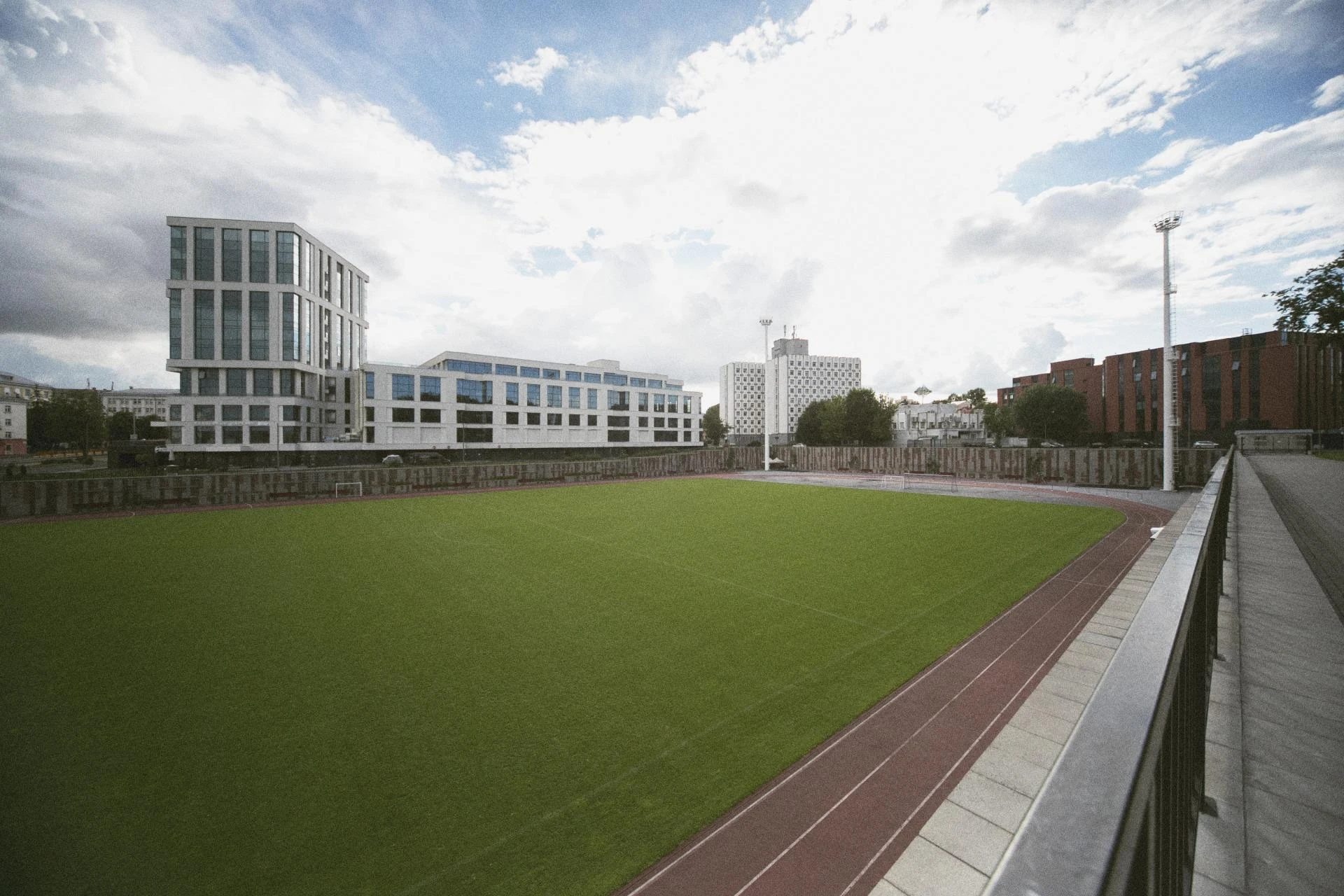
Educational institutions, from preschools to universities, are increasingly recognizing the benefits of artificial turf grass for creating safe, durable, and engaging learning and recreational environments. On sports fields, artificial turf grass provides a consistent and high-performance playing surface that can withstand intensive use year-round, reducing cancellations due to weather conditions and minimizing the risk of injuries. Playgrounds surfaced with commercial turf offer a safer alternative to traditional surfaces like gravel or wood chips, providing cushioning and reducing the severity of falls. Common areas and landscaping around school buildings benefit from the low maintenance and consistent aesthetic of artificial turf grass, creating a more welcoming and visually appealing campus.
5. Parks and Recreation Areas
Municipalities are increasingly turning to commercial turf for parks and recreation areas to create sustainable, accessible, and enjoyable community spaces. High-traffic areas in parks, such as picnic spots and walkways, maintain a consistently green and usable surface with commercial synthetic turf, even with heavy foot traffic. Playgrounds surfaced with artificial turf grass offer a safer and more accessible environment for children of all abilities. Sports fields utilizing commercial turf can accommodate more playing hours and require significantly less maintenance than natural grass fields, maximizing their usability for community sports leagues and recreational activities.
6. Pet-Friendly Businesses
For businesses catering to pet owners, such as veterinary clinics, dog daycare centers, and apartment complexes with pet areas, commercial artificial grass offers a superior surfacing solution. Natural grass in high-traffic pet areas can quickly become muddy, worn, and difficult to clean, posing hygiene challenges. Commercial turf, on the other hand, provides a durable, easy-to-clean, and pet-safe surface. It can withstand the wear and tear of playful pets, and its excellent drainage properties help to minimize odors and maintain a clean environment. Specialized artificial turf grass designed for pets often features antimicrobial properties and enhanced drainage to improve hygiene further. Providing dedicated pet areas surfaced with commercial turf is a significant amenity for pet-friendly businesses, enhancing the experience for both pets and their owners.
Final Thoughts: Embracing the Future of Commercial Landscapes
The evidence is clear: commercial artificial grass is not just a trend; it is a fundamental shift in how commercial landscapes are designed, maintained, and experienced. The compelling combination of cost savings, enhanced aesthetics, minimal maintenance, superior durability, and environmental benefits makes artificial turf grass an increasingly attractive and practical solution for businesses of all sizes and across various industries. As water conservation efforts become more critical and the demand for sustainable practices grows, the revolution driven by commercial turf will only continue to gain momentum, transforming commercial landscapes into greener, more efficient, and more appealing spaces for the future. By embracing commercial artificial grass, businesses are not just upgrading their outdoor spaces; they are investing in a more sustainable, cost-effective, and visually impressive future.