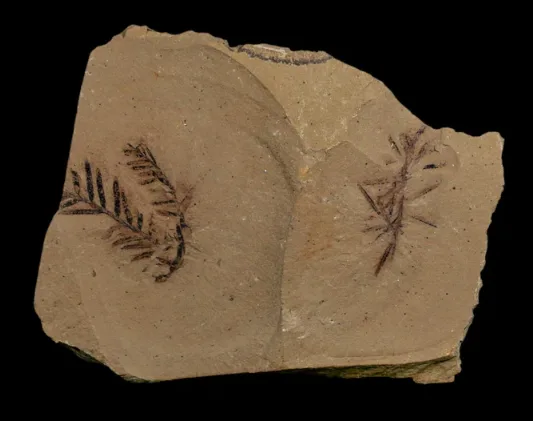
You’re probably thinking of enormous dinosaurs and prehistoric predators when most people hear the word fossil. Nonetheless, some of our most precious records of Earth's past come from organisms that never bothered to develop teeth, claws or bones. Even before the first human, ancient plants silently hummed away, changing everything, and their fossils are etched into stone.
Because plants did not wander the land like animals, they are tightly woven into the fabric of their surroundings. Consequently, plant fossils serve scientists as a window into ancient climate, ecosystems and environmental change. The study of fossilized leaves, stems, seeds and roots documents a vanished world and will allow scientists to piece together the history of our planet spanning hundreds of millions of years.
What Makes Plant Fossils So Valuable?
A fossil tells more than the story of a decimated organism. It can also tell the conditions that were surrounding it. Since plants are so sensitive to temperature, rainfall, light, and soil conditions, plant fossils are clues to past environments.
When paleontologists find plant fossils they can often discern whether an area was a swamp, forest, a coastal plain, or something more like a desert. Certain species of plants will only grow in particular conditions, and hence they are useful as indicators.
In many instances, they can provide information about Earth’s past which you would not be able to get from the animal fossils alone.
How Do Fossilized Plants Reveal Ancient Climates?
The Earth has fluctuated in climate over its long history. Ice ages and warming periods, sea-level changes and ecological shifts have reshaped the planet more times than we can count.
Many plant fossils have characteristics that provide clues about the environment. From leaf form and growth pattern to species diversity, fossils can be used to infer temperature, moisture and other environmental variables.
Some things that scientists study include:
- Leaf morphology
- Growth rings
- Species diversity
- Distribution of plant communities
These investigations can help paint a picture of past climates and the ways in which ecosystems have reacted to changing environments.
Why Are Flower Fossils So Important?
Among the most fascinating plant fossils to be discovered are fossils of flowers. Flowers are important to modern ecosystems, supporting pollinators, and is crucial to plant reproduction around the world. By understanding when flowers first evolved, scientists can better understand one of the most important evolutionary events in Earth's history.
Flowers are delicate, and are not often preserved compared to harder plant parts. Flower fossils, when found, can provide insight into ancient flowering species and the ecosystems they belong to.
These fossils can answer questions about:
- Flowering plant evolution
- Old pollination systems
- Diversity
- Ecological relationships
A small flower fossil can have a huge impact on our understanding of the ancient world.
How Do Plant Fossils Preserve Lost Ecosystems?
All fossils are specific. A solitary fossilized plant may be truly one thing. But when placed in the context of other discoveries, a bigger picture emerges.
Scientists may use living plant fossils as collections. By combining and comparing species from the same geological formation, they can tease out the ecosystems those species co-existed in, like ancient forests or swamps, rivers or the marine environment itself.
From that, it is possible to assume insights into how those species interacted with animals and their surrounding environment.
In many cases, these fossil plants gave the foundation for entire ecosystems.
What Can Plants Tell Us About Extinction Events?
The Earth has gone through a number of large-scale extinction events that drastically altered the planet's life. Fossil plants can sometimes provide clues about how these events impacted organisms and environments.
Following changes in plant diversity and distribution to paired changes in growth and development can help scientists localize potential causes of environmental stress before, during, and after extinction events. These include shifts in temperature, lava flow, and asteroid impacts.
Why Do Plant Fossils Appeal To Collectors?
Collectors are drawn to fossils with unique stories, and some plant specimens give a different view from the usual dinosaur and marine fossils.
Leaf or flower fossils preserve a sudden moment of a landscape that vanished millions of years ago. Atingling with the behavior of apocalyptic predators or exciting moments in mass extinction events, these fossils capture snapshots of the ancient world that supported living things through long periods of time.
The fascination with flower fossils and plant fossils is that they give us the chance to witness moments in natural history that may have been overlooked unless we read their stories. They show us that mere looking at ordinary things can lead us through extraordinary thoughts.
How Do Fossils Connect With Minerals?
Because fossils and minerals are squeezed into the same geological environment, it's no surprise that lots of fossilization processes depend upon minerals to help preserve creatures from the past.
Plants and animals can be preserved for millions of years because of minerals in groundwater replacing or filling the structures of their bodies as they settle through sediments. The crossover between geology and paleontology explains why collectors often look for both fossils and minerals for sale.
Collectors looking for rocks and minerals for sale then find that fossils and minerals go so well together. Both serve to deepen a fragile understanding of Earth's geological and biological history.
Why Do Plant Fossils Matter Today?
Millions of years ago, plant fossils first appeared. Today, they still serve important purposes. Plants that have long since died provide scientists with the clues necessary for studying climate change, evolutionary patterns, and disappeared environments.
The fossils also offer perspective. They remind us that Earth’s landscapes have always been in flux, and that life has survived the many environmental challenges that accompany that chaos. Each leaf, stem, and flower that has been preserved tells a tiny section of a story that is far greater than anything humans might recognize.
For collectors and history buffs who enjoy authentic links to a far older Earth, Fossil Age Minerals offers a wide range of fossils, minerals, and natural history specimens. From impressive flower fossils to rare rocks and minerals for sale, collectors can find amazing specimens that tell the story of this planet’s rich and fascinating history.