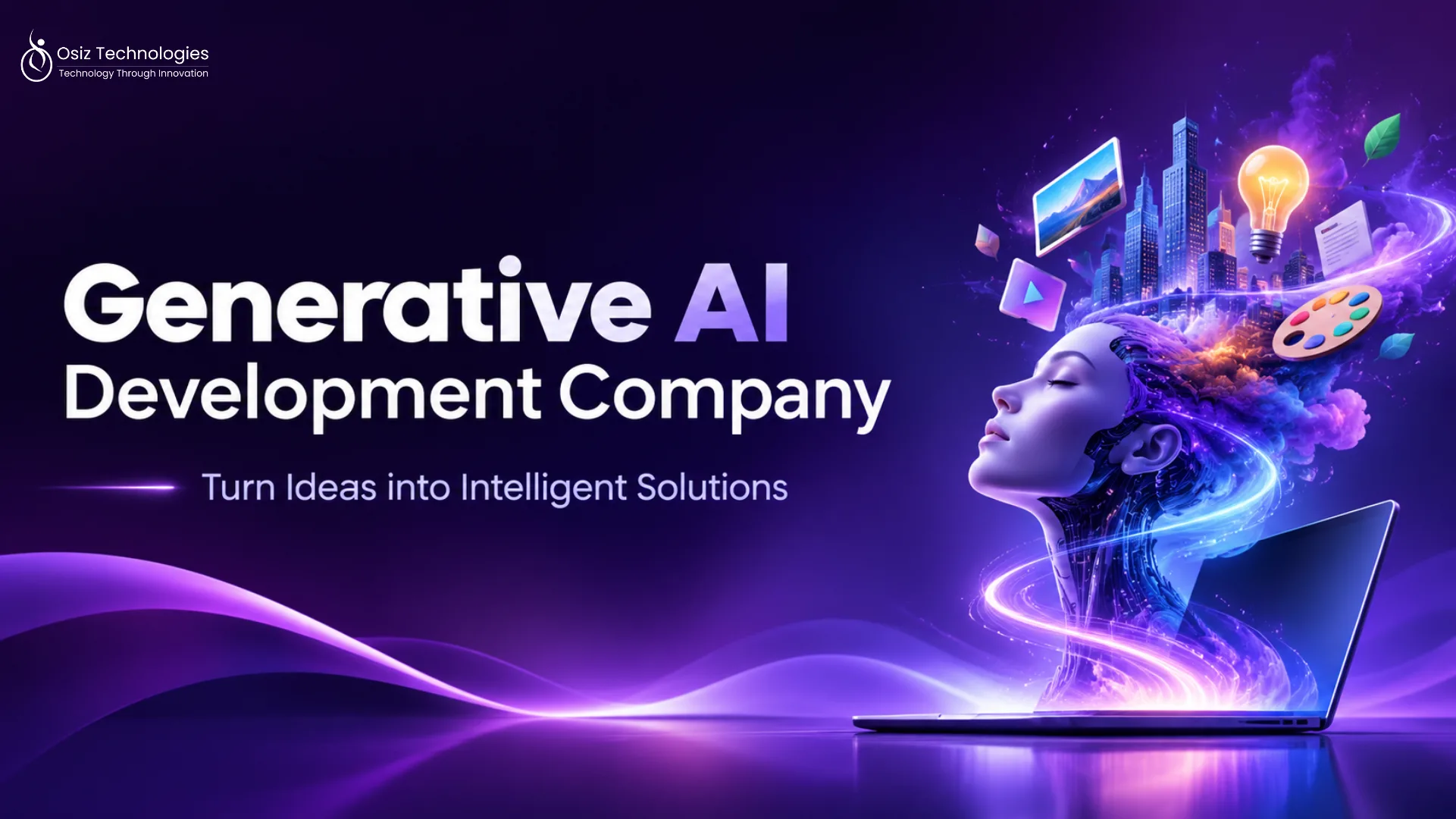
The growing adoption of artificial intelligence is encouraging global brands to explore smarter ways to create content, manage information, and deliver personalized experiences. General-purpose AI tools have made these capabilities more accessible, but many enterprises now require solutions that understand their specific business requirements. This demand is increasing interest in custom Generative AI Development, where AI models are designed around proprietary data, industry requirements, and organizational workflows. By investing in tailored AI capabilities, brands can build more relevant applications, maintain greater control over their outputs, and explore new opportunities for innovation.
Why Are Global Brands Moving Beyond General-Purpose AI Models?
General-purpose AI models offer broad capabilities, but they may not fully understand a company's products, internal processes, brand guidelines, or specialized industry knowledge. Businesses handling sensitive information also need greater control over how their data is processed. Custom AI models address these limitations by adapting generative capabilities to specific organizational needs. They allow enterprises to develop relevant outputs, support specialized tasks, and integrate AI into existing systems. As competition increases, global brands are exploring custom models to build distinctive digital experiences and reduce their dependence on generic AI tools.
How Does Custom Generative AI Development Support Brand-Specific Needs?
Custom Generative AI Development aligns AI capabilities with a brand's objectives, operational requirements, and customer expectations. Development teams can use proprietary datasets to train or fine-tune models for specific applications. They can also configure response styles, connect business databases, and integrate AI functionality into existing software. For example, a retail brand can develop an AI solution that understands its product catalog and generates relevant recommendations. Similarly, a healthcare organization can explore specialized AI applications for information management. This approach makes AI outputs more relevant to the intended use case.
Key Business Applications of Custom Generative AI
AI-Powered Content and Marketing Creation
Brands can use custom generative AI solutions to create marketing content, product descriptions, campaign ideas, and promotional materials. Models configured with brand guidelines help maintain consistent messaging across different channels while reducing repetitive content creation work.
Personalized Customer Experiences
Generative AI can support personalized interactions through intelligent assistants, product recommendations, and conversational applications. By understanding customer preferences and relevant business information, these solutions can generate responses and suggestions suited to individual needs.
Product Design and Creative Development
Businesses can explore generative AI for concept development, visual creation, design variations, and product prototyping. These capabilities help creative teams experiment with different ideas and accelerate early-stage design processes.
Enterprise Knowledge and Document Generation
Custom AI models can help organizations search internal information, summarize documents, generate reports, and retrieve relevant knowledge. Connecting these capabilities to enterprise data makes information easier for employees to access and use.
Technologies Behind Custom Generative AI Development
Large Language Models (LLMs)
LLMs process and generate human-like text for applications such as conversational assistants, content creation, summarization, and knowledge retrieval. They provide a foundation for many enterprise generative AI applications.
Generative Adversarial Networks (GANs)
GANs use two competing neural networks to generate realistic synthetic data, images, and other creative outputs. They are useful in applications involving image generation and data synthesis.
Diffusion Models
Diffusion models generate images and other media by progressively transforming random noise into structured outputs. They support creative applications such as visual design, image generation, and digital content production.
Retrieval-Augmented Generation (RAG)
RAG connects generative AI models with external knowledge sources to retrieve relevant information before generating responses. This helps applications provide more context-aware answers based on business-specific data.
Fine-Tuning and Model Optimization
Fine-tuning adapts pre-trained models to specialized tasks using relevant datasets. Model optimization improves performance, efficiency, and suitability for specific deployment environments.
Benefits of Investing in Custom Generative AI Solutions
Business-Specific AI Capabilities
Custom solutions address unique organizational requirements instead of relying entirely on generic AI functionalities. This helps brands develop applications aligned with their products, services, and workflows.
Improved Productivity and Operational Efficiency
Automating repetitive content generation, document processing, and information retrieval allows employees to focus on more valuable responsibilities. This can reduce manual effort across different departments.
Better Data Privacy and Control
Organizations can implement suitable data governance policies, access controls, and deployment arrangements. These measures help businesses manage sensitive information according to their security requirements.
Scalability and Long-Term Business Growth
Custom AI applications can evolve alongside changing business needs. Organizations can expand model capabilities, connect additional data sources, and introduce new use cases as their requirements grow.
What Should Businesses Consider Before Developing Custom Generative AI?
Data Quality and Availability
Reliable datasets are essential for developing relevant AI applications. Businesses should evaluate data accuracy, completeness, relevance, and availability before beginning development.
Development Costs and Infrastructure
Model selection, computing resources, integration requirements, and ongoing maintenance influence development costs. Companies should establish a realistic budget based on their intended applications.
Data Privacy and Model Security
Businesses must consider data encryption, access management, model vulnerabilities, and regulatory requirements to protect information throughout the AI development lifecycle.
Scalability and Long-Term Maintenance
Organizations should evaluate infrastructure flexibility, model monitoring, performance optimization, and future upgrades to ensure their solutions remain useful as business demands change.
Why Choose Osiz Technologies for Custom Generative AI Development?
Osiz Technologies is a Custom Generative AI Development Company helping businesses explore and implement AI capabilities tailored to their specific requirements. Our Generative AI Development services focus on building customized AI models and applications that support content generation, intelligent automation, personalized experiences, and enterprise workflows. We work with technologies such as LLMs, RAG, fine-tuning, and generative models to address different industry requirements. By aligning development with business objectives, Osiz helps organizations turn generative AI opportunities into practical solutions that support innovation and long-term growth.