
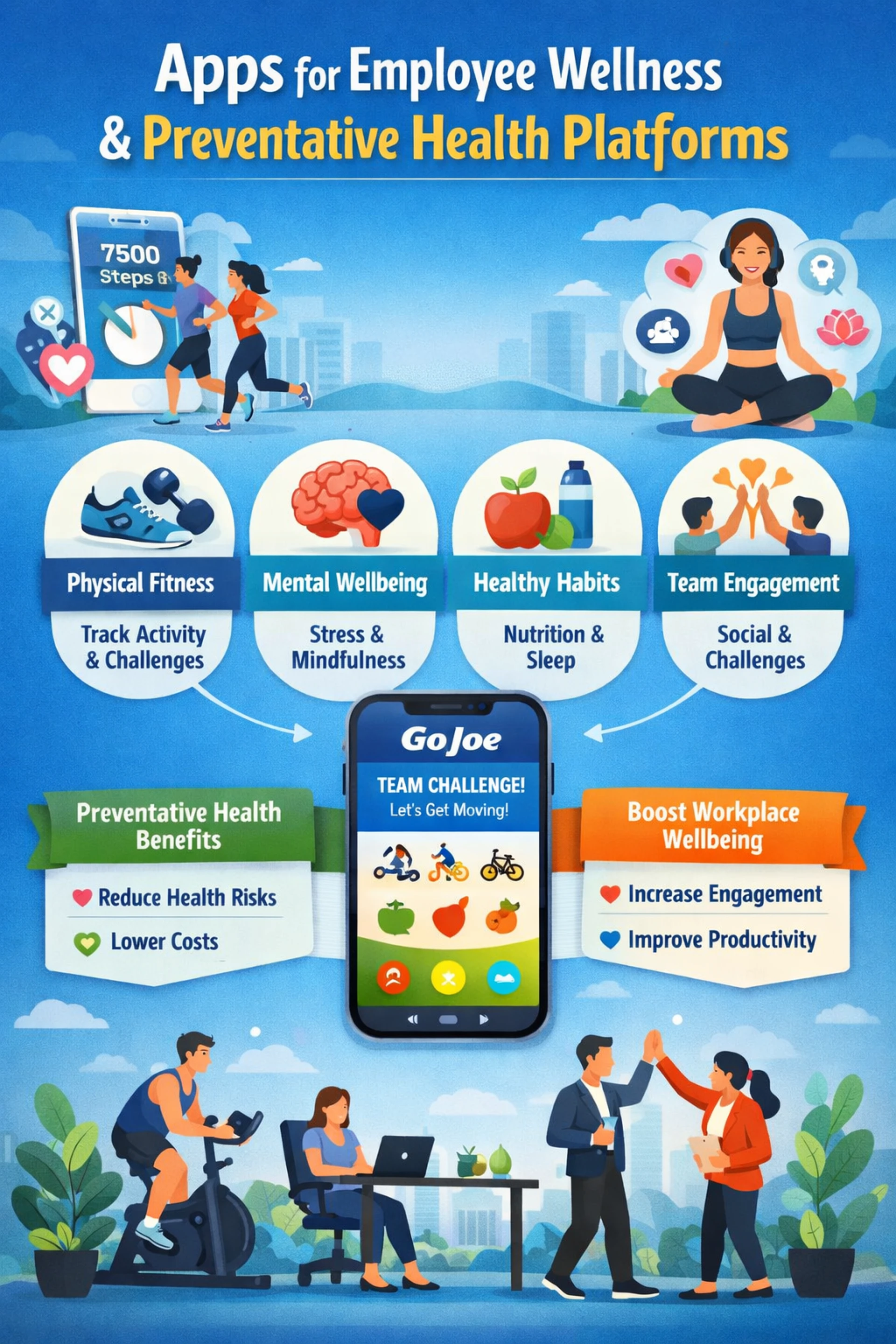
In today’s fast-paced corporate environment, employers are increasingly looking beyond traditional benefits to support the wellbeing of their teams. With rising rates of stress, burnout, chronic illness, and disengagement at work, companies are turning to apps for employee wellness and preventative health platforms to make health support proactive not reactive. These digital solutions provide a modern approach to nurturing a healthier, more engaged workforce while delivering measurable business impact.
One name that stands out in this space is Gojoe, a platform designed to improve physical health, mental wellbeing, and social connection all through one inclusive app. But what makes these wellness apps essential, and how do they function as preventative health platforms? Let’s explore.
What Are Apps for Employee Wellness?
Apps for employee wellness are digital tools that help organisations offer health-focused experiences, content, and activities directly to their teams. Unlike traditional employer wellness programs that rely on brochures or offline events, these apps harness technology to provide:
- Activity tracking and personalized goals
- Mental wellness and stress-management resources
- Nutritional guidance and fitness content
- Gamified challenges and social community features
- Data insights and corporate reporting
As digital health evolves, these apps are now considered preventative health platforms because they help employees manage risk factors before they develop into serious health issues. They encourage regular movement, mindfulness, healthy eating, and better sleep all crucial elements of long-term health.
Why Employee Wellness Apps Matter Today
Workplaces globally are seeing the toll that poor health and disengagement take on performance. Long hours, sedentary jobs, and limited focus on wellbeing contribute to rising healthcare costs, absenteeism, and low morale. Here’s why apps for employee wellness have moved to the forefront of corporate strategy:
1. Improved Physical Health
Wellness apps like GoJoe offer features that motivate employees to move more, engage in physical activity, and adopt healthier habits. Through virtual challenges, activity tracking, and expert-led content, users are encouraged to get active in ways that fit their lifestyle and interests whether that’s walking, cycling, strength training, or yoga.
2. Enhanced Mental Wellbeing
Beyond physical fitness, employee wellness platforms tackle stress, anxiety, and mental burnout through guided practices, educational resources, and programmes designed to support emotional health. By integrating mental wellbeing into the platform, employees are more likely to adopt holistic habits that sustain long-term health.
3. Stronger Engagement and Company Culture
Apps for employee wellness also serve as community builders. GoJoe’s social features, team challenges, and shared experiences help colleagues connect, support each other, and build a positive work culture centred around health. This kind of engagement fosters collaboration and improves morale.
4. Tangible Business Benefits
Preventative health platforms don’t just help employees they benefit organisations too. Healthier employees mean:
- Reduced healthcare and insurance costs
- Fewer absences and higher productivity
- Better employee satisfaction and retention
- Stronger employer brand and talent attraction
GoJoe’s data shows impressive results, with significant increases in wellbeing and reductions in stress reported by users within just weeks of using the platform.
What Makes Preventative Health Platforms Different?
While the terms “apps for employee wellness” and “preventative health platforms” are closely related, there’s a subtle difference in focus:
- Wellness apps provide tools and activities that help employees be healthier day-to-day.
- Preventative health platforms go a step further by identifying risk factors, tracking trends over time, and providing early intervention resources to prevent disease and long-term health issues.
Preventative health platforms use data and behaviour insights to tailor recommendations, making health support more personalised and effective. This is why modern corporate wellness solutions increasingly blend both approaches.
A Closer Look at GoJoe as a Wellness Solution
GoJoe is an example of an employee wellness platform that successfully combines engagement, health content, and preventative strategies. It’s built around a simple concept: by encouraging movement and connection, employees feel better personally and professionally.
Here’s what sets GoJoe apart:
Inclusive, Engaging Challenges
Rather than limiting activity tracking to step counts, GoJoe supports over 60 types of activities and uses weighted points to appeal to different fitness levels. This inclusive design ensures that everyone, regardless of ability or preference, can participate meaningfully.
Social Connectivity and Rewards
With gamified experiences, social feeds, and team challenges, GoJoe motivates users through community support and recognition. Employees can earn rewards, connect with colleagues, and celebrate milestones together all of which strengthen engagement long-term.
Comprehensive Health Content
GoJoe offers expert content from fitness professionals, mental health guides, nutrition tips, and motivational resources that support both immediate wellbeing and long-term preventative health behaviours.
Actionable Insights for Employers
One of the strengths of modern preventative health platforms is the ability to track and interpret health data at scale. GoJoe provides insights into user engagement, stress trends, activity levels, and more, helping employers optimise wellness strategies.
Best Practices for Implementing Wellness Apps
If you’re considering integrating apps for employee wellness or a preventative health platform into your organisation, here are key best practices:
1. Align with Company Goals
Start by defining what you want to achieve better morale, reduced healthcare costs, or improved productivity. Align wellness goals with broader business objectives.
2. Offer Training and Support
Provide onboarding and ongoing support so employees understand how to use the app and take full advantage of its features.
3. Encourage Participation, Don’t Force It
Participation should be voluntary and fun. Incentivise involvement with rewards, challenges, and recognition without penalising non-participation.
4. Protect Privacy
Ensure that health data is handled securely, transparently, and according to privacy standards. Trust is essential for successful engagement.
Conclusion
Apps for employee wellness and preventative health platforms are no longer optional extras they are strategic tools that help companies support their teams in meaningful ways. With digital solutions like GoJoe leading the charge, organisations can promote physical health, nurture mental wellbeing, and build more connected, productive workplaces. These platforms provide value to both individuals and businesses, making health a shared priority.
Frequently Asked Questions (FAQs)
1. What exactly are employee wellness apps?
Employee wellness apps are digital platforms that help organisations deliver health-focused activities, content, tracking, and support to their teams. They aim to improve physical and mental wellbeing through accessible, engaging tools.
2. How do preventative health platforms differ from regular wellness apps?
While wellness apps focus on behaviours and activities, preventative health platforms go further by identifying health risks early and guiding users toward habits that prevent chronic conditions and long-term issues.
3. Are these wellness apps useful for remote workers?
Yes. Most wellness apps, including GoJoe, are designed to be used anywhere, supporting remote, hybrid, and on-site teams with accessible mobile features and social engagement tools.
4. Can wellness apps really reduce healthcare costs?
Data suggests that employees who engage with wellness and preventative health platforms experience improved health metrics, fewer sick days, and reduced health-related expenses over time.
5. How can companies encourage employees to use wellness apps?
Successful engagement strategies include leadership support, incentives, clear communication, personalized challenges, and ongoing encouragement making wellness participation enjoyable rather than obligatory.