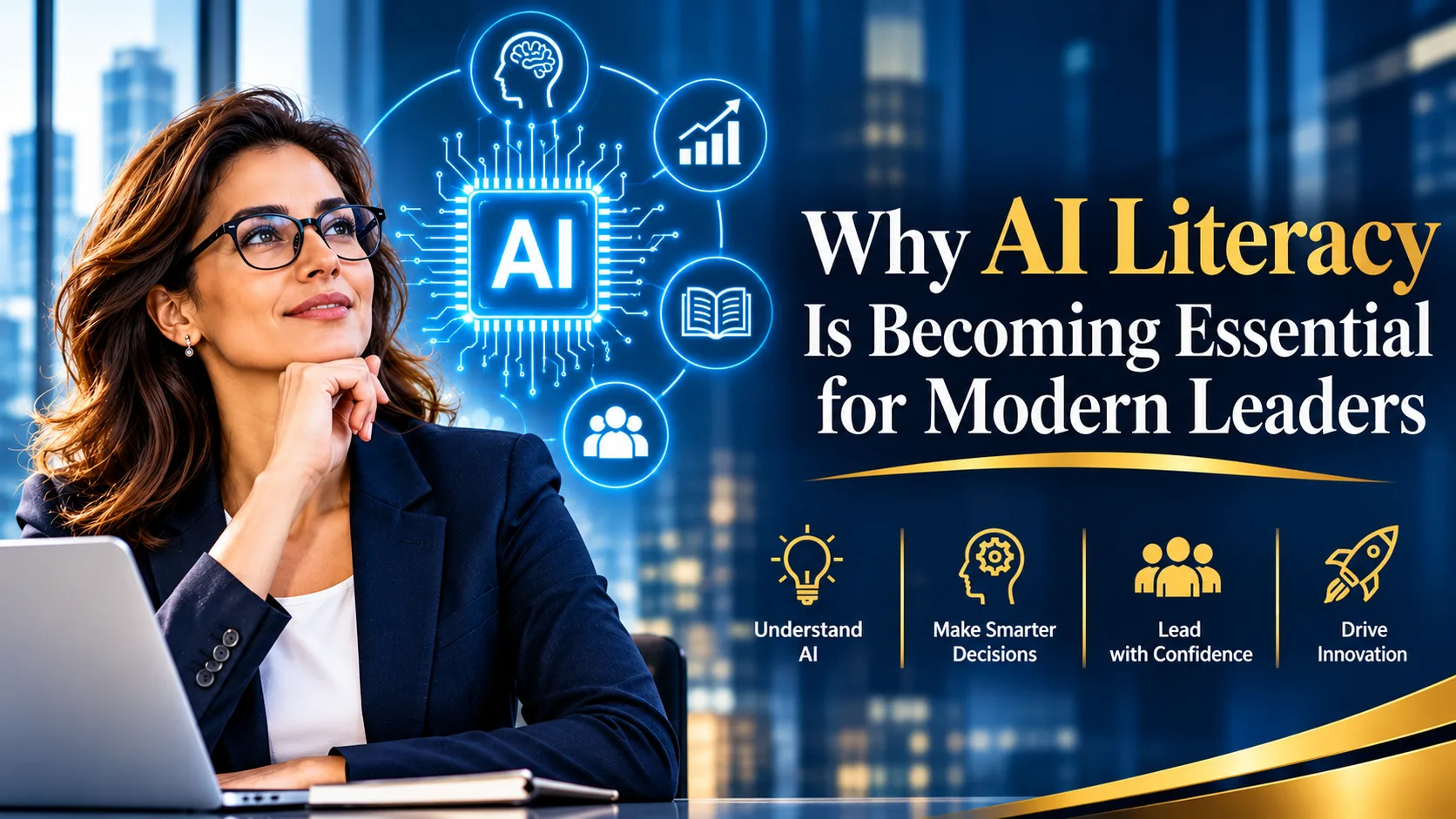
Artificial intelligence is transforming the way businesses operate, teams collaborate, and organizations make decisions. From automating everyday tasks to analyzing complex business data, AI is becoming an increasingly important part of the modern workplace. But beyond improving efficiency and productivity, it is raising a much bigger question: Will AI change what it means to be a leader?
Leadership has traditionally been associated with experience, strategic thinking, communication, decision-making, and the ability to inspire people. Today, artificial intelligence is introducing new possibilities that challenge traditional leadership approaches. Leaders can access information faster, identify emerging trends, automate repetitive processes, and make more informed decisions.
However, technology alone cannot create meaningful leadership. As AI continues to evolve, the most successful leaders will be those who understand how to combine technological capabilities with human intelligence, emotional awareness, and ethical responsibility.
1. The Changing Definition of Leadership
For decades, leadership has focused on guiding people toward shared goals, solving problems, and creating long-term organizational success. While these responsibilities remain important, the tools available to leaders are changing rapidly.
AI-powered platforms can now analyze business performance, generate reports, identify operational challenges, and support strategic planning. Tasks that once required hours of research can increasingly be completed in minutes.
This transformation allows leaders to spend less time managing routine activities and more time focusing on innovation, organizational development, and people.
The definition of effective leadership is therefore expanding. Tomorrow's leaders will not simply need to understand their industries and teams; they will also need to understand how technology can support better outcomes.
The question is no longer whether leaders should embrace AI, but how effectively they can integrate it into their leadership approach.
2. AI Is Transforming Leadership Decision-Making
Decision-making is one of the most important responsibilities of any leader. Every strategic choice can influence employees, customers, financial performance, and the long-term direction of an organization.
Artificial intelligence is changing this process by providing leaders with access to valuable insights and data-driven recommendations.
AI tools can examine market trends, evaluate customer behavior, identify potential risks, and highlight patterns that might otherwise go unnoticed. These capabilities help leaders make more informed decisions and respond quickly to changing business conditions.
For example, a business leader can use AI-powered analytics to understand customer preferences, predict demand, and evaluate business performance before making strategic investments.
However, AI-generated recommendations should not replace human judgment. Data can provide valuable information, but it cannot always understand organizational culture, personal circumstances, ethical considerations, or the broader consequences of a decision.
The strongest leaders will use AI as a decision-support system while retaining responsibility for the final outcome.
3. Human Intelligence Will Become More Valuable
As artificial intelligence becomes capable of performing increasingly complex tasks, uniquely human leadership qualities will become even more important.
Empathy, emotional intelligence, creativity, adaptability, and communication are qualities that help leaders build meaningful relationships and create positive workplace environments.
AI can analyze employee feedback, identify productivity patterns, and generate recommendations for improving workplace performance. However, understanding an employee's personal challenges, recognizing unspoken concerns, and building genuine trust require human connection.
Employees do not simply need instructions or automated solutions. They need leaders who listen, understand, encourage, and support them.
In an AI-driven workplace, human-centered leadership will become a significant competitive advantage.
Leaders who combine technological knowledge with emotional intelligence will be better positioned to build engaged teams and maintain a strong organizational culture.
4. The Rise of AI-Driven Workplace Transformation
Artificial intelligence is changing not only how leaders work but also how entire organizations function.
Businesses are increasingly adopting AI-powered systems for recruitment support, customer service, performance analysis, workflow automation, and knowledge management.
These developments are creating new opportunities for organizations to improve efficiency and focus on higher-value activities.
For leaders, this transformation brings an important responsibility: preparing employees for a changing workplace.
Rather than viewing AI as simply a replacement for existing processes, forward-thinking leaders should explore how it can support employees, strengthen collaboration, and create opportunities for professional growth.
This includes investing in employee training, encouraging experimentation, and developing a culture where people feel comfortable learning new technologies.
Successful AI adoption is not just a technology initiative. It is a leadership and organizational transformation.
5. Ethical Leadership Will Matter More Than Ever
While AI offers significant opportunities, it also introduces important challenges.
Issues such as data privacy, algorithmic bias, misinformation, transparency, and accountability require careful consideration. An AI system may produce recommendations quickly, but those recommendations are not automatically accurate, fair, or ethical.
Leaders must understand the potential risks associated with AI adoption and establish responsible guidelines for its use.
For example, organizations using AI in recruitment must ensure that automated systems do not unfairly disadvantage certain candidates. Similarly, businesses handling customer information must prioritize data security and privacy.
Ethical leadership means taking responsibility for how technology affects people.
The future will require leaders who can balance innovation with integrity, ensuring that technological progress does not come at the expense of trust, fairness, and human values.
Conclusion: Leadership Is Evolving, Not Disappearing
Artificial intelligence is undoubtedly changing the business landscape, and leadership will continue to evolve alongside it. The ability to understand and use AI will become an important leadership advantage, but technology will never replace the fundamental purpose of leadership: guiding people, building trust, and creating meaningful progress.
The leaders of tomorrow must be technologically aware without losing their human perspective. They must embrace innovation while protecting ethical values, encourage automation while empowering employees, and use data without overlooking human experience.
Ultimately, AI may change how leaders work, but it does not change why leadership matters.
The future of leadership will not be defined by how effectively people compete with artificial intelligence, but by how wisely they combine its capabilities with the qualities that make us human.
At The Visionary Icons, we believe that visionary leadership is about looking beyond today's possibilities and preparing for tomorrow's opportunities. As artificial intelligence reshapes the world, the leaders who bring together innovation, purpose, and human connection will be the ones who make a lasting difference.