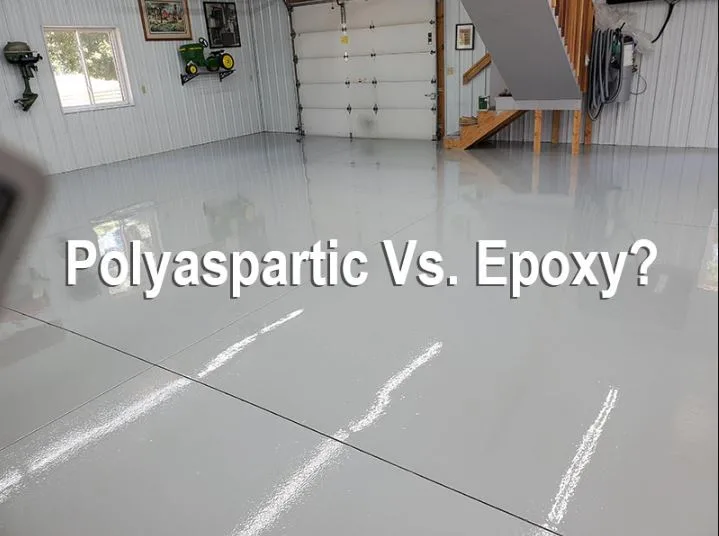
Minnesota garages take a beating year-round, and your floor feels it first. Between freezing winters, road salt, and constant moisture, choosing the right coating becomes more than just a cosmetic decision. When comparing options, many homeowners weigh a polyaspartic coating garage floor against traditional epoxy concrete garage floor coatings to find what truly holds up in the Twin Cities climate.
If you live in Minneapolis, St. Paul, or nearby areas, you already know how brutal freeze-thaw cycles can get. Your garage floor expands, contracts, absorbs moisture, and deals with salt almost daily in winter. That’s exactly why not all coatings perform the same—and why your choice matters more than you might think.
Minnesota’s Climate Isn’t Easy on Garage Floors
Let’s be real—Minnesota weather doesn’t play nice. One day it’s below zero, the next day it warms up just enough to melt snow, and then everything freezes again overnight. That constant expansion and contraction puts serious stress on your concrete.
Now here’s where things get interesting. Standard coatings like epoxy concrete garage floor coatings tend to be rigid. They look solid at first, but over time, they struggle to move with your concrete. That leads to cracking, peeling, or even full-on delamination.
A polyaspartic coating garage floor, on the other hand, flexes with the surface. Instead of fighting the movement, it adapts to it. That flexibility makes a huge difference when temperatures swing wildly.
Freeze-Thaw Resistance: The Real Game Changer
You probably don’t think about your garage floor shifting, but it does—constantly. When moisture seeps into concrete and freezes, it expands. Then it contracts when it thaws. Repeat that cycle hundreds of times each winter, and weaker coatings start to fail.
Polyaspartic coatings handle this much better. They stretch and contract along with the slab. That means fewer cracks, fewer chips, and way less frustration over time.
Epoxy coatings? They’re tough, sure—but also brittle. And brittleness doesn’t survive Minnesota winters very well.
Salt and Chemical Exposure: A Daily Battle
Every time you drive into your garage in winter, you bring in road salt, slush, and chemicals. That mix sits on your floor, melts, refreezes, and slowly eats away at the surface.
Here’s the difference:
● Epoxy coatings resist some chemicals, but over time, salt can wear them down.
● Polyaspartic coatings resist chemicals more aggressively and maintain their integrity longer.
That means your floor doesn’t just look better—it actually stays protected.
And let’s be honest, nobody wants a stained, flaking garage floor after just a couple of winters.
Better Adhesion Means Longer Life
One of the biggest reasons coatings fail comes down to bonding. If the coating doesn’t properly adhere to the concrete, it won’t last—simple as that.
Epoxy tends to sit more on top of the surface. It creates a mechanical bond, which works fine under mild conditions.
Polyaspartic coatings go deeper. They penetrate the pores of the concrete and form a stronger, more integrated bond. That “root-like” grip helps prevent peeling, even when moisture tries to push upward from below.
In Minnesota, where moisture intrusion is common, that extra adhesion matters—a lot.
Fast Installation (Without Cutting Corners)
Let’s talk about convenience for a second. You don’t want your garage out of commission for a week, especially in winter.
Traditional epoxy systems take time. You often wait days between coats and even longer before you can drive on them.
Polyaspartic systems cure much faster. You can often walk on them within hours and use your garage fully within a day or two.
Now, speed alone isn’t the selling point—but when you combine fast curing with durability, it becomes a major advantage.
UV Stability: No Yellowing Over Time
Even in Minnesota, sunlight still hits your garage floor—especially near the door. Over time, epoxy coatings can yellow or discolor due to UV exposure.
Polyaspartic coatings don’t have that problem. They stay clear and maintain their color, whether exposed to sunlight or not.
So if you care about how your garage looks long-term, this becomes a big deal.
Impact Resistance and Daily Wear
Think about everything your garage floor deals with:
● Car tires (hot and cold)
● Dropped tools
● Heavy storage
● Constant foot traffic
Epoxy coatings are hard, but that hardness can work against them. When something impacts the surface, it can chip or crack.
Polyaspartic coatings absorb impact better. They resist abrasions and hold up under pressure without breaking down as easily.
That means fewer repairs and a longer-lasting finish.
Why a Multi-Layer System Works Best
Here’s something many homeowners overlook—you don’t actually have to choose just one material.
The most effective systems combine strengths:
● An epoxy base layer for strong adhesion to the concrete
● A full flake broadcast for durability and design
● A polyaspartic topcoat for protection and longevity
This layered approach gives you the best of both worlds. You get the bonding power of epoxy and the resilience of polyaspartic.
It’s not about choosing one over the other—it’s about using each where it performs best.
Long-Term Value vs Short-Term Savings
You might notice that polyaspartic systems cost more upfront. That’s true.
But here’s the thing—cheaper coatings often lead to:
● Repairs
● Recoating
● Premature failure
Over time, those costs add up. A system built for Minnesota conditions saves you money in the long run because it lasts longer and performs better.
And let’s be honest—replacing or repairing a failed floor is way more expensive (and annoying) than doing it right the first time.
What This Means for Twin Cities Homeowners
If you live in Minneapolis, St. Paul, or anywhere in the Twin Cities, your garage floor deals with:
● Freeze-thaw cycles
● Heavy salt exposure
● Moisture intrusion
● Temperature extremes
Not every coating can handle that. And while epoxy has been around for years, newer technologies simply outperform it in these conditions.
When you choose a system that includes a polyaspartic coating garage floor, you’re choosing flexibility, durability, and long-term performance tailored for your environment.
Conclusion
At the end of the day, your garage floor needs to survive Minnesota—not just look good for a season. While traditional epoxy concrete garage floor coatings still offer decent performance, they fall short when faced with constant freeze-thaw cycles, salt exposure, and moisture.
A polyaspartic coating garage floor gives you the flexibility, chemical resistance, and durability your home actually needs. And when combined with a proper system that includes both polyaspartic coating garage floor technology and epoxy concrete garage floor coatings, you get a solution that not only lasts—it performs year after year.
If you want fewer headaches, less maintenance, and a garage that holds up through brutal winters, this isn’t just an upgrade—it’s the smarter move.