
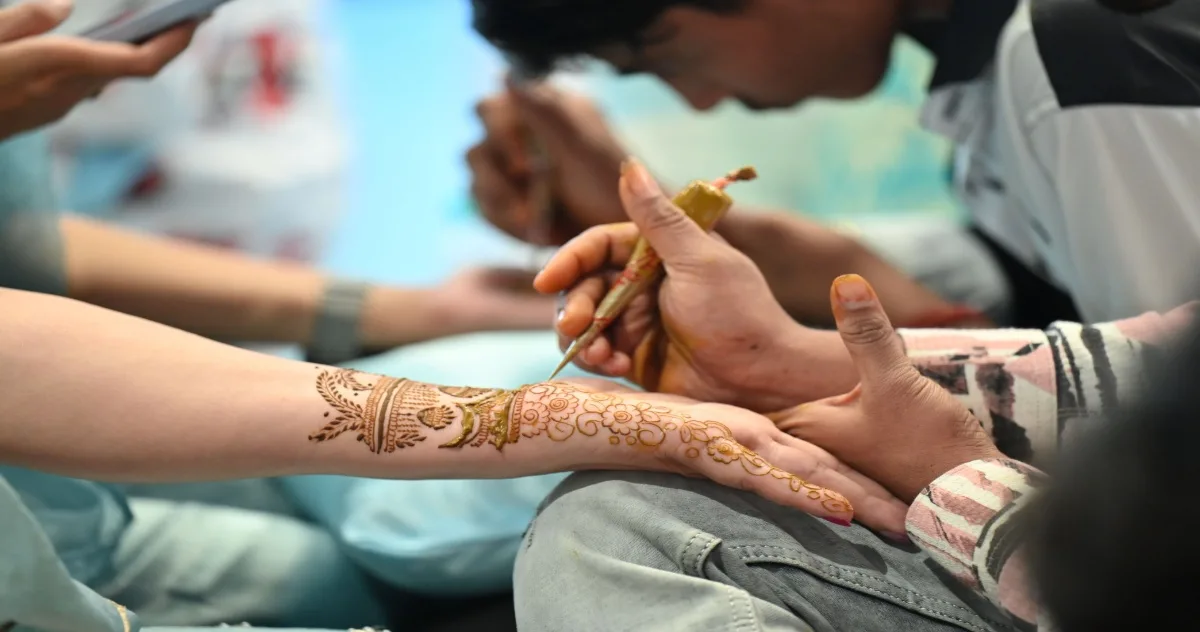
A good mehendi artist can make a simple function feel special. A rushed or careless one can leave you with smudged lines, a long wait and a bride who cannot sit still. Choosing the right mehendi artist matters more than most families expect, because mehendi takes hours and cannot be redone on the wedding morning.
So how do you decide? The answer depends on your function, your guests, and the time you have. This guide walks you through the different types of artists, what to check in their work, how to avoid unsafe products, and how to plan your timing.
How to choose a mehendi artist: start with your function
Before you compare any artist, answer three questions.
- What is the function? A bridal session, a lively mehendi night with many guests and a small family ceremony need different setups.
- How many people need mehendi? One bride is simple. Thirty guests need extra artists or a limited design plan.
- How much time do you have? Detailed bridal designs take several hours. Plan the rest of your day around that.
Once you know these answers, the shortlist becomes much smaller.
Types of mehendi artist: which one suits you?
Not every artist works in the same way. Here are the common types, with honest pros and cons.
Freelance home artists: Often flexible and affordable. Check their recent work and ask how they manage peak-season dates.
Studio or salon artists: Usually easier to book and well organised. Ask who will apply your design, as the artist you meet may not be the one who comes.
Bridal specialists: Experienced with detailed bridal work and long sessions. They may book up early and cost more.
Teams for large functions: Useful when many guests want mehendi. Ask how they divide the work and how long the queue will take.
A famous name is not always the best match. A lesser-known artist with clean, recent bridal work may suit your function better than a popular one who is overbooked.
Bridal mehendi artist: what to check before you shortlist
If you are hiring a bridal mehendi artist, look beyond the best photos on a profile.
Ask for full hand photos, not only close ups. Look at line clarity, balance and how neatly the artist fills the design. Check work on different hand sizes and skin tones, and look for recent bridal photos instead of old ones.
Ask who will apply your design and how long it takes. Request a small sample or trial design if the artist offers one. Speak to one or two recent brides if you can.
Henna mehendi artist: check the cone and the colour
The stain on your skin comes from the paste, so the product matters as much as the skill. A henna mehendi artist should use natural henna. Natural henna gives an orange to brown stain that deepens over a day or two.
Be careful with so called black henna. Some of these products contain a chemical hair dye called PPD, which can cause allergic skin reactions. Health authorities such as the US FDA have warned about this. If an artist promises a jet black stain within minutes, ask what is in the paste.
If you have sensitive skin, ask for a small patch test a few days before the function. Also share any allergies with the artist.
Mehendi design: how to choose one that suits you
Many brides arrive with a saved mehendi design and then find that it does not fit their hands, outfit or schedule. A few simple rules help.
Match the design to your outfit and jewellery. Heavy sleeves and bangles can hide detailed work near the wrist.
Choose a design that fits your time. A very detailed bridal pattern needs several hours, so keep a simpler design for smaller functions.
Show your references early, and ask the artist what works for your hands. A good artist will adapt the pattern instead of copying it exactly.
Coordinate with your bridal makeup artist
Mehendi needs time to dry, and you cannot move your hands freely until it does. That affects your hair, makeup and outfit timings, especially on a busy day.
Share your schedule with your bridal makeup artist, and let them confirm timings with each other. This avoids last minute clashes between drying time, dressing and photos.
How many mehendi artists do you need?
The bride usually gets the main artist. Guests can be handled by one or two assistants or extra artists, so the schedule does not run late.
For a big function, keep guest designs simple and set a limit on how many people each artist can serve. Decide the order early, so the bride's session starts on time.
Questions to ask before you book
Ask these questions before you confirm any mehendi artist.
1. What is included: hands, feet, one side or both?
2. How long will my bridal design take?
3. Will you apply it yourself, or will an assistant help?
4. Which cones and paste do you use?
5. Do you travel to the venue, and is there an extra charge?
6. Can I see a sample or trial design?
7. What are your cancellation and date change terms?
For a longer checklist with timing and payment tips, read our guide on when, how and what to ask when booking a bridal mehendi artist.
Is it worth paying more for a mehendi artist?
Families often argue about this, and both sides have a point. A higher charge can reflect more experience, better products and a more reliable schedule. However, a higher charge does not guarantee a better result for your function.
Compare artists on the same terms: inclusions, time, products, travel and trial. A fair price is the one that matches the work you need, not simply the highest or lowest number.
Disclosure: I am writing this for BandhanGuru, a verified wedding and event vendor platform that helps families and couples find vendors across India. On BandhanGuru, you can explore mehendi artists alongside makeup artists, photographers and decorators, compare options and send free enquiries. Use it as a single place to start, and always ask for a sample and written terms before you book.
The takeaway
The best mehendi artist for you is not the most famous one. It is the one who fits your function, uses safe products, respects your timing and shows clean recent work. Decide your function and time first, shortlist two or three artists, ask clear questions and keep everything in writing.