
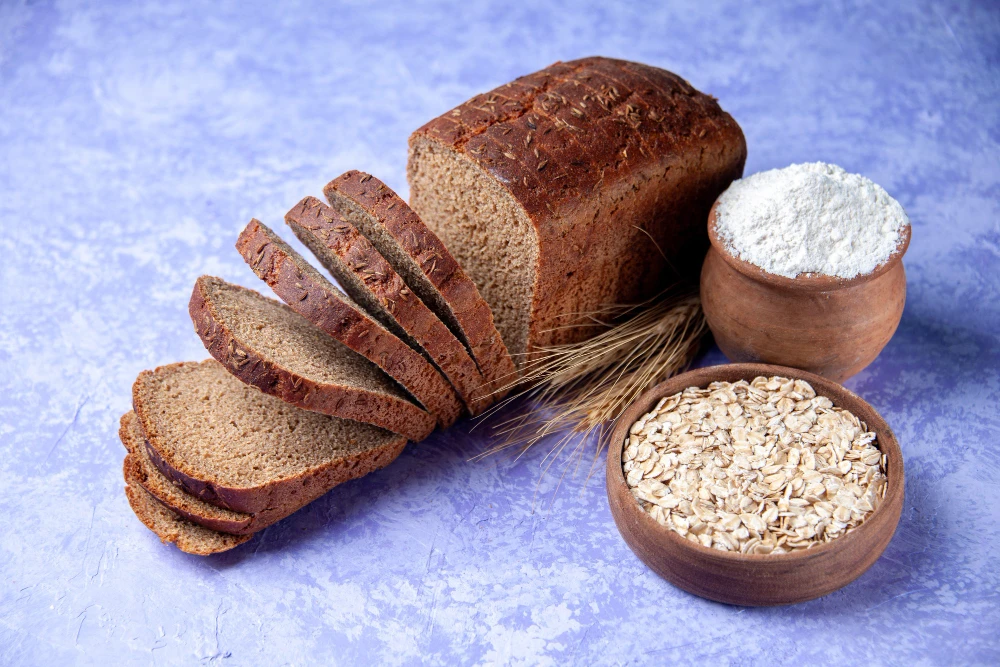
Ten centuries ago, bread was a sign of prosperity, but today it is increasingly becoming a subject of discussion: to eat or not to eat, healthy or not, with yeast or without... Read what experts say about this.
To eat or not to eat
According to analysts from Gfk (a global analytical platform for the consumer goods industry), bread consumption has decreased by 57% over the year among low-income families aged 50+. At the same time, bread consumption has increased by 43% among families with an average income aged 30+.
Analysts attribute such statistics to the fact that the remote work format changes consumption and habits, snacks during working hours are taken at home and become healthier. This is confirmed by the dynamics of demand:
Gluten-free bread consumption increased by 458% in a year,
bread fitness line - by 13%,
bread from the “healthy” category - by 10%.
Doctors and nutritionists attribute such statistics, According to Thedoctiplus fact that people have become more attentive to their health and are reviewing their nutrition principles. However, they do not support those who completely exclude bread from their diet.
Endocrinologist Advice:
Bread is a source of carbohydrates, dietary fiber, vitamins, including B vitamins, micro- and macroelements such as magnesium, selenium, iron. In a balanced diet, carbohydrates should make up 50%. A healthy person can safely eat 1-3 slices of bread per day, which is about 100 grams. The greatest amount of nutrients is contained in products made from whole grains with the addition of bran.
What to Look for in Bread Ingredients
Try to carefully read the composition of a classic sliced loaf with an honest composition (i.e. without artificial flavors, preservatives and improvers). You will not find anything potentially dangerous or harmful in the list of ingredients. The composition includes wheat flour, vegetable oil, sugar, salt, yeast, water. At the same time, 100 grams of the product contains only 262 kcal.
What you can definitely find in 100 grams of sliced bread (in % of the daily value):
7.2% protein
48.5% starch
2.9% mono- and disaccharides
2.5% dietary fiber
1.5% fat
1.2% iron
1.7% vitamin E
0.11% vitamin B1
0.9% vitamin PP
2.1% niacin
A sliced loaf contains vitamins B and E, iron, magnesium, calcium, potassium and phosphorus. It is a source of energy and allows you to quickly restore strength.
But we must not forget that sliced bread contains gluten, which means it is contraindicated for people with celiac disease. It is also not recommended for diabetics, since its glycemic index is about 80, although this is no more than that of boiled carrots. For more information on what these numbers mean and how to interpret them, read the article “What is the glycemic index? ”
Dietitians and nutritionists support the assertion that bread is an essential part of a healthy plate of food.
Nutritionist Advice:
Bread is a grain, one of the five recommended food groups. It is possible to completely eliminate bread from your diet, but only if you simply don’t like it. But I recommend replacing it with any other form of grain, such as cereals. And if you like bread, eat it to your heart’s content!
What about the calorie content?
The results of a survey of Thedoctiplus customers show that 27% have given up bread in order to reduce the amount of carbohydrates in their diet, while another 12% consider bread to be harmful to their figure.
Let's count. Bread consumption in US Per capita, Americans consume around 20-25 kilograms of bread annually.
The caloric content of bread depends on the ingredients included in the composition. Products made from wheat flour have a caloric content of 230-260 kcal, and bread using rye flour - 200-230 kcal. It is easy to calculate the approximate daily caloric content of the consumed bakery products - from 260 to 320 kcal. The body's energy expenditure will leave about 30% of the "eaten" caloric content of bread, which can be easily burned with 30 minutes of physical activity or household chores.
Which bread to choose
Manufacturers really offer an incredible variety of bread. The Haggen catalogue alone has six categories:
sourdough bread
yeast bread
baked goods, pastries
crispbread, rusks, biscuits, crackers
buns, pretzels, rusks
national bread.
And this is without dividing into rye, wheat and bread from different types of flour. Let's try to understand the most popular types and decide which bread to choose.
Rye bread
Glycemic index: 50–58.
Caloric content - 175 kcal/100 g.
A product with an average carbohydrate load and high nutritional value, with moderate consumption does not provoke excess weight gain and gives a long feeling of satiety. Rye bread contains fiber, iron, magnesium, amino acids.
The darker the color of the bread, the more rye flour it contains, which means its GI is lower, but its acidity is higher. It is not advisable to combine it with meat, since such a combination complicates the digestion process. It is best to eat such bread with light vegetable salads and soups.
Borodinsky bread
Glycemic index - 45.
Caloric content - 206 kcal/100 g.
Borodinsky bread is rich in B vitamins (not inferior to meat in this regard), macro- and microelements. It contains more complete protein than any other bread. Vitamin B1, or thiamine, which is quite abundant in Borodinsky, is important for the functioning of the nervous system. It is well absorbed by the body, is beneficial for digestion processes, and caraway, coriander or anise, which it is sprinkled with, help remove uric acid from the body.
Bran bread
Glycemic index - 45.
Caloric content - 227 kcal/100 g.
Due to the presence of coarse dietary fiber, bran bread is digested for a long time and does not cause sharp fluctuations in blood glucose levels, which is important for people with diabetes. It saturates the body with B vitamins, improves normal bowel function, increases immunity due to antioxidants in the composition, and gives a long-lasting feeling of satiety without a feeling of heaviness and bloating.
Grain bread
Glycemic index - 45.
Caloric content - 252 kcal/100 g.
Contains bran and germ of grain, which saturate the body with fiber, vitamins and minerals. In whole grain bread, the grain retains its shell, which contains the maximum amount of useful enzymes, amino acids and vitamins. The baking temperature of whole grain bread rarely exceeds 99°C, so part of the natural microflora of the grain remains in the finished product.
Nutritionist Advice:
The concepts of proper nutrition and healthy nutrition are often substituted. It has become fashionable to consider proper nutrition to be products that have a reduced calorie content and do not lead to extra pounds. Bread is an important component of proper nutrition. The benefits of bread will depend on the correctness and purity of its composition and, of course, on the quantities in which you eat it. Bread should not contain anything except grain, salt, water, sourdough. Coarse flour is optimal, for which whole grains are used, for example, rye flour, green buckwheat flour, almond or coconut.
It is up to you to decide what kind of bread to eat. But you definitely need to consider your health and keep to a reasonable amount.