The first thing I noticed wasn’t the cold.
It was the quiet.
Bicheno in winter doesn’t announce itself loudly. There are no festival banners, no busy beachfront chatter, no steady stream of cars searching for parking. Instead, there’s space wide, uninterrupted space and a kind of calm that feels almost deliberate.
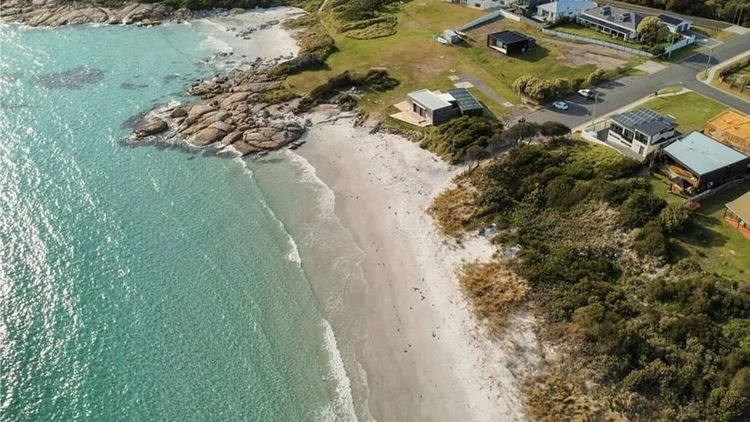
I arrived just after sunrise. The sky was pale, almost silver, and the ocean was moving in slow, steady lines toward the shore. Waubs Bay stretched out before me without a single footprint. The tide had pulled back overnight, leaving firm sand and shallow pools reflecting the morning light.
There’s something about winter light along Tasmania’s East Coast. It sits lower, softer. It doesn’t glare. It reveals texture instead in the rocks, in the water, even in the air.
Walking along the shoreline, I realised how rarely we experience coastal towns without background noise. In summer, the rhythm of the sea competes with conversation, music, and movement. In winter, the sea takes its place again as the dominant sound.
The waves folded in quietly. The wind carried salt further inland. Even the gulls seemed less hurried.
Bicheno has always been known for its natural landmarks the Blowhole, the rocky headlands, the sweeping views of the Tasman Sea. But in winter, those landmarks feel different. More personal, somehow. Without crowds, you don’t just observe the landscape you stand inside it.
Later that afternoon, I drove along the East Coast road just outside town. The drive felt almost meditative. No traffic pressure. No overtaking. Just long stretches of coastline framed by shifting clouds.
Every so often, I pulled over simply because the view felt too open to pass by. The sea changed colour constantly deep blue in one moment, steel grey in the next. The air was crisp but not harsh. The kind of cold that wakes you up rather than sends you running indoors.
There’s a rhythm to winter here that doesn’t exist in peak season. Cafés move at a steady pace. Conversations last longer. The urgency disappears.
Staying close to the water deepens that experience. On the shoreline, properties such as Cooinda On The Beach feel almost woven into the landscape itself. From the window, the ocean becomes the main feature not a distant attraction but a constant presence.
For travellers looking to understand the quieter season more intentionally, the property’s winter escape experience in Bicheno captures the slower rhythm and atmosphere that define Tasmania’s East Coast during the cooler months.
But beyond accommodation, winter changes the mindset.
There’s less desire to fill every hour. Instead, time stretches. You sit longer. You walk further without checking your phone. You watch the horizon shift through subtle colours as evening approaches.
One night, I stood outside just after sunset. The wind had settled, and the sea was darker than the sky. There were no street sounds, no distant traffic. Only the steady roll of water meeting shore.
It struck me then that places often reveal more when fewer people are present to shape them.
Summer brings energy to Tasmania’s East Coast and that energy has its own appeal. But winter offers clarity. It lowers the volume enough to hear the coastline properly.
The Blowhole still roars when the tide pushes through. The headlands still frame the sea dramatically. The beaches remain wide and open.
The difference is pace.
Winter doesn’t rush you. It doesn’t demand activity. It allows you to arrive slowly and leave slowly.
And sometimes, that quieter version of a place lingers longer in memory than the busiest one ever could.
As I left Bicheno a few days later, the sky was layered with cloud, and the sea moved steadily beneath it. Nothing about the landscape had changed. But my experience of it had.
Winter had revealed something that summer might have concealed space.
Space to notice.
Space to breathe.
Space to experience Tasmania’s East Coast without distraction.
And in that quiet, the coastline felt entirely its own.