
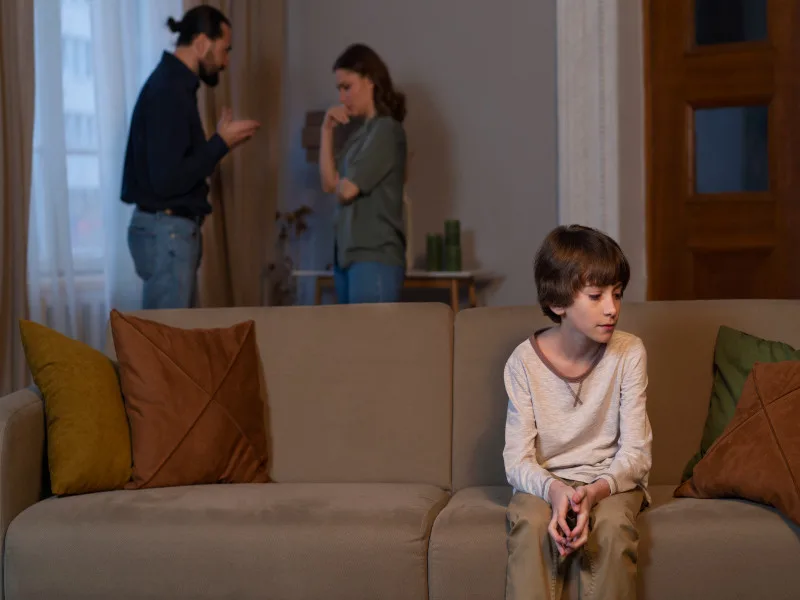
Have you noticed your child’s emotion regulation getting worse during times of family conflict, even when you try to keep things “behind closed doors”?
This is a question many parents are quietly asking. Right now, conversations online are shifting. People are no longer just talking about parenting styles or discipline. They are looking deeper at the emotional climate at home and how it affects children’s inner world.
Because children do not just hear conflict.
They feel it.
The Emotional Climate Children Grow Up In
Think of your home like the weather your child lives in every day.
- Calm, predictable homes feel like a clear sky
- Tense, unpredictable homes feel like a storm
Even when conflict is not directed at them, children absorb tone, body language, and emotional energy.
Over time, this shapes how they learn emotion regulation.
What Happens Inside a Child During Conflict?
Children do not have the same emotional tools as adults. When they are exposed to frequent conflict, their nervous system can stay on high alert.
This can show up as:
- Quick frustration or anger
- Withdrawal or quiet shutdown
- Difficulty calming down after small problems
- Increased behavioural issues at home or school
Some children become reactive. Others become avoidant.
Both are coping strategies.
Why Emotion Regulation Gets Disrupted
Emotion regulation is a skill children learn through experience. It develops when they feel safe, supported, and guided.
Family conflict can interrupt this learning in three key ways.
1. Less Emotional Safety
When children feel unsure about what might happen next, their brain shifts into protection mode.
Instead of learning to manage feelings, they focus on:
- Staying alert
- Avoiding conflict
- Reacting quickly to perceived threats
This can look similar to patterns seen in children with ADHD, especially when impulsivity increases under stress.
2. Fewer Calm Role Models
Children learn by watching adults.
If they often see:
- Raised voices
- Sudden emotional reactions
- Avoidance or silence
They may copy these patterns.
Not because they want to, but because it is what they know.
3. Emotional Overload
Children have limited capacity to process strong emotions.
Repeated exposure to conflict can overwhelm them. This may lead to:
- Meltdowns
- Aggressive behaviour
- Difficulty expressing feelings clearly
In some cases, this overlaps with challenges seen in ASD or learning disorders, where emotional expression already requires more support.
Small Changes That Make a Big Difference
You do not need a conflict-free home. That is not realistic.
What matters is how conflict is handled.
1. Let Children See Healthy Repair
It is okay for children to see disagreement. What matters more is what happens after.
Show them:
- Apologies
- Calm discussions
- Problem-solving
This teaches that conflict can be safe and manageable.
2. Name Emotions Out Loud
Help your child understand what they are feeling.
Simple phrases can help:
- “That felt loud and a bit scary, didn’t it?”
- “I can see you’re upset. Let’s sit together.”
This builds emotional awareness and supports emotion regulation.
3. Create Predictable Calm Moments
Even in busy or tense homes, small routines help:
- Bedtime chats
- Quiet play
- One-on-one time
These moments tell your child: You are safe here.
4. Support Their Body, Not Just Behaviour
When children are overwhelmed, logic does not work straight away.
Start with calming the body:
- Deep breathing
- Gentle movement
- Sitting close
Then talk.
When Extra Support Can Help
Sometimes, family conflict and emotional challenges become too complex to manage alone.
Support can include:
- Children and adolescent therapy to build emotional skills
- Parent support sessions to guide communication and routines
- Behavioural interventions for ongoing behavioural issues
- Diagnostic assessments if there are concerns about ADHD, ASD, or learning disorders
For some families, including NDIS patients, structured support provides clarity and relief.
A Different Way to See Behaviour
It is easy to label children as “difficult” or “too sensitive”.
But behaviour is often communication.
A child who struggles with anger management may actually be saying:
“I don’t feel safe or understood right now.”
When we shift from correcting behaviour to understanding it, change becomes possible.
What Children Really Need
Children do not need perfect families.
They need:
- Emotional safety
- Consistent connection
- Guidance through big feelings
Even small improvements in the home environment can strengthen a child’s ability to regulate emotions.
Moving Forward, One Step at a Time
Family conflict happens. It is part of life.
But it does not have to define your child’s emotional future.
With awareness, small changes, and the right support, children can learn to manage emotions in healthy ways, even in imperfect environments.
If your child is finding it hard to cope with strong emotions or ongoing behavioural issues, MLA Psychology offers thoughtful, evidence-based support for families. Reaching out can be a gentle first step toward creating a calmer, more connected home.