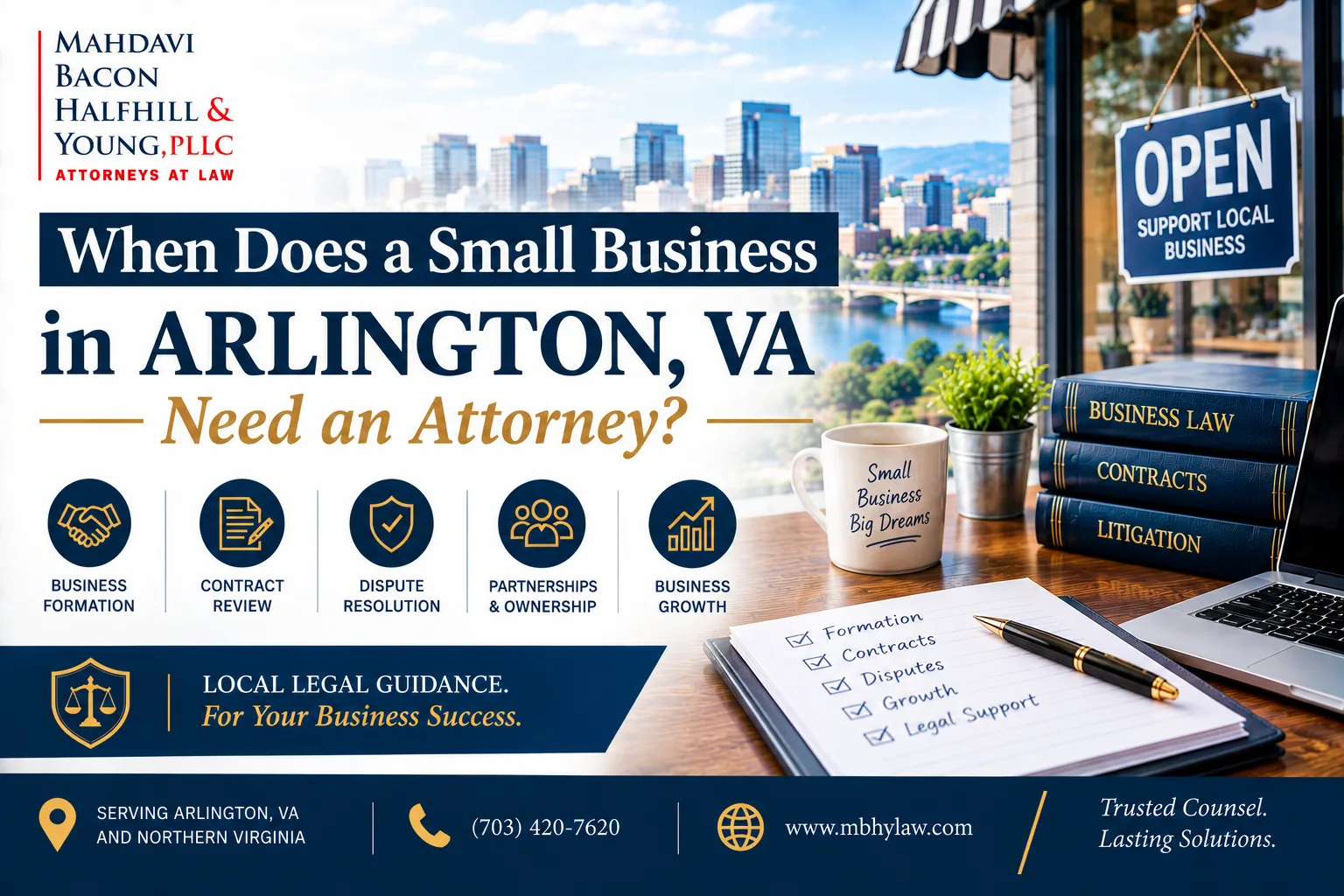
Running a small business means making decisions every day. Owners negotiate with customers, sign vendor agreements, hire service providers, manage expenses, pursue new opportunities, and respond to unexpected challenges. Although these responsibilities are essential to business growth, many also involve legal considerations.
Small business owners may assume they only need an attorney when a lawsuit begins. In reality, legal guidance can be useful much earlier, particularly when a company is forming, entering an important agreement, bringing in a partner, purchasing assets, or addressing a disagreement.
For entrepreneurs and established companies in Arlington, Virginia, a Small Business Attorney in Arlington, VA can help clarify legal obligations, review important documents, and identify options when a business faces a legal or commercial challenge.
Knowing when to seek legal advice can help owners make more informed decisions while remaining focused on running their companies.
What Does a Small Business Attorney Do?
A small business attorney provides legal guidance on issues that may affect a company's ownership, contracts, operations, transactions, and disputes.
The precise services depend on the attorney's practice and the company's needs.
Common areas of assistance include:
- Business formation and organizational documents
- Commercial contract drafting and review
- Partnership and shareholder agreements
- Business purchases and sales
- Vendor and customer disputes
- Commercial real estate matters
- Ownership changes
- Business litigation
- Risk management through clear agreements
- Legal planning for business transitions
Not every small business requires the same level of legal support. A company with a single owner and limited contractual obligations may have different needs from a growing business with multiple owners, employees, commercial leases, and long-term vendor relationships.
Should You Hire an Attorney When Starting a Small Business?
Starting a business involves more than choosing a name and finding customers. Owners may need to decide how the company will be structured, who will own it, who will manage it, and how important decisions will be made.
Legal guidance can be particularly useful when the business has multiple founders or when ownership and responsibilities need to be clearly defined.
Choosing a Business Structure
Business owners may consider structures such as a sole proprietorship, partnership, limited liability company, or corporation. Each has different legal and operational implications.
An attorney can help explain legal considerations relevant to the proposed structure. Tax treatment and financial planning should also be discussed with an appropriately qualified tax or accounting professional.
Creating Governing Documents
Depending on the entity and ownership structure, a business may need an operating agreement, bylaws, shareholder agreement, partnership agreement, or other organizational documents.
These documents can address management authority, voting, ownership transfers, responsibilities, and procedures for resolving disagreements.
Clarifying Owner Responsibilities
When two or more people start a business together, they may have different expectations about work responsibilities, financial contributions, compensation, and decision-making.
Documenting these matters early can reduce uncertainty as the company develops.
When Should a Small Business Have a Contract Reviewed?
Contracts shape relationships with customers, vendors, landlords, contractors, consultants, and business partners.
Before signing a significant agreement, a business owner should understand the obligations it creates.
A small business attorney may help review:
- Service agreements
- Vendor and supplier contracts
- Commercial leases
- Independent contractor agreements
- Partnership agreements
- Licensing arrangements
- Confidentiality agreements
- Purchase agreements
- Settlement agreements
Important provisions may concern payment, scope of work, deadlines, renewal, termination, liability, confidentiality, and dispute resolution.
For example, a business may agree to a long-term service contract without realizing that it automatically renews unless notice is given by a particular date. Reviewing the agreement before signing can help the owner understand that obligation and decide whether to negotiate different terms.
Can a Small Business Attorney Help With Partnership Problems?
Small businesses often depend on relationships between founders, family members, investors, or business partners. These relationships can become strained when the owners disagree about financial decisions, responsibilities, growth strategies, or company management.
A business attorney can review the relevant agreements and explain how they address the dispute.
Questions may include:
- Who has authority to make important decisions?
- How are profits and expenses allocated?
- Can an owner sell or transfer an interest?
- What happens if a partner wants to leave?
- How should an ownership interest be valued?
- What procedures apply if the owners reach a deadlock?
Depending on the circumstances, owners may consider negotiation, mediation, a buyout, restructuring, or litigation.
Clear governing documents can provide a useful starting point, but the available options depend on the company's structure, agreements, and applicable law.
What Should a Business Do When a Customer or Vendor Dispute Arises?
A commercial disagreement can affect cash flow, project delivery, customer relationships, and daily operations.
Examples include a customer refusing to pay an invoice, a supplier failing to deliver goods, or a service provider allegedly failing to meet contractual requirements.
Before escalating the issue, a business should gather the relevant agreement, invoices, emails, notices, and performance records.
A small business attorney can help evaluate the contractual obligations and explain possible responses.
Depending on the facts, the parties may be able to resolve the disagreement through direct negotiation, a written demand, mediation, arbitration, or litigation.
The most suitable option depends on the contract, the available evidence, the value of the dispute, and the business's objectives.
How Can Legal Counsel Support Small Business Growth?
Growth can create legal responsibilities that did not exist when a company first opened.
A business may add new services, hire employees, expand into another location, accept outside investment, enter a franchise relationship, or purchase another company.
Each step may require different legal considerations.
For example, a company expanding its vendor network may need standardized commercial agreements. A business entering a new location may need to review lease terms. A company accepting investment may need to address ownership and decision-making rights.
Legal counsel can help owners identify relevant issues before making commitments.
The aim is not to slow down growth. It is to help the business understand its obligations and plan for the legal aspects of expansion.
Does a Small Business Need Help With Commercial Real Estate?
Many small businesses operate from leased offices, retail premises, restaurants, warehouses, or other commercial locations.
Commercial leases may contain provisions covering rent increases, maintenance responsibilities, insurance, permitted use, renewal options, assignment, subleasing, and termination.
Owners should understand these obligations before signing a lease or agreeing to amendments.
A small business attorney can help review the lease and identify provisions that may affect the company's operations or financial commitments.
Property purchases and sales may require additional review of transaction documents, title-related matters, financing arrangements, and other relevant issues.
What If a Small Business Receives a Legal Demand or Lawsuit?
A legal demand, threatened claim, or lawsuit should not be ignored. Delays can affect the business's ability to respond appropriately, preserve evidence, or comply with applicable deadlines.
The owner should retain relevant documents and seek legal advice promptly.
An attorney can review the allegations, identify the issues requiring attention, and explain possible next steps. Depending on the dispute, the matter may involve contract interpretation, business relationships, commercial property, ownership, or another legal issue.
Not every dispute proceeds to trial. Negotiation or another form of resolution may be possible, depending on the facts and procedural requirements.
Small Business Legal Considerations in Arlington, VA
Arlington is part of Northern Virginia's connected business environment, with companies serving local customers as well as clients and partners across the Washington metropolitan region.
Small businesses may operate in professional services, technology, consulting, retail, hospitality, construction, and many other sectors. Their legal needs can vary according to the nature of their work and the agreements they enter.
For an Arlington business, legal counsel may be useful when negotiating a commercial lease, signing a major vendor agreement, forming a partnership, purchasing a business, or responding to a contractual dispute.
Businesses that operate across jurisdictions should also pay attention to which laws and contractual terms apply to their relationships.
Why Businesses Choose MBHYLAW
Mahdavi, Bacon, Halfhill & Young, PLLC, also known as MBHYLAW, provides legal services involving business law, contracts, litigation, real estate, and other matters affecting businesses and individuals.
For small businesses in Arlington and surrounding Northern Virginia communities, legal guidance may help address commercial agreements, ownership issues, transactions, and disputes.
MBHYLAW provides additional information about its services at https://www.mbhylaw.com/.
The appropriate legal approach depends on the company's circumstances. Owners should seek advice tailored to the matter at hand rather than assuming that the same solution will work for every business.
How to Choose a Small Business Attorney in Arlington, VA
Choosing an attorney is an important decision, particularly for a small company where legal costs and business continuity matter.
Consider the following factors.
1. Experience With Business Matters
Look for experience relevant to the company's needs, such as contracts, ownership agreements, commercial transactions, or business disputes.
2. Practical Advice
The attorney should explain legal issues in clear terms and help the owner understand the available options.
3. Preventive Approach
Consider whether the attorney can help identify contractual or organizational concerns before they develop into larger problems.
4. Communication and Accessibility
Small business owners often need timely answers. Discuss how communications will be handled and who will work on the matter.
5. Understanding of Business Priorities
Legal guidance should consider the company's commercial objectives, financial realities, and tolerance for risk.
6. Dispute Resolution Experience
If a disagreement arises, knowledge of negotiation and litigation can help the owner evaluate possible strategies.
7. Transparent Engagement Terms
Before beginning representation, understand the scope of work, fee arrangements, expected responsibilities, and any limitations on the engagement.
FAQs
When should a small business hire an attorney in Arlington, VA?
A small business may benefit from legal guidance when forming the company, signing an important contract, bringing in a partner, purchasing property or another business, or facing a legal dispute.
Can a small business attorney help with contracts?
Yes. Depending on the attorney's practice, services may include drafting, reviewing, negotiating, and interpreting commercial agreements.
Do small businesses need partnership agreements?
When multiple owners are involved, a written agreement can help clarify responsibilities, decision-making, ownership transfers, and procedures for handling disagreements.
Can a small business attorney help resolve a vendor dispute?
An attorney can review the relevant agreement and evidence, explain potential options, and assist with negotiation or formal dispute-resolution proceedings when appropriate.
Should a small business consult an attorney before signing a commercial lease?
For a significant or long-term lease, legal review can help the owner understand rent obligations, renewal rights, maintenance responsibilities, termination provisions, and other important terms.
Can an attorney help a small business prepare for expansion?
Yes. Legal guidance may be useful when a business adds owners, enters new contracts, expands locations, purchases another company, or changes its organizational structure.