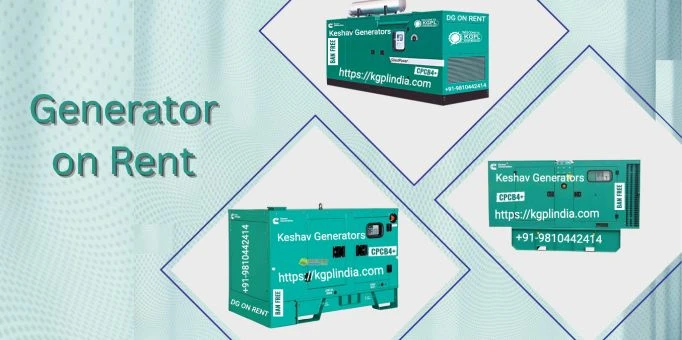
Whether for an event, construction site, emergency backup, or industrial operation, having reliable power access is crucial. Buying a generator is not always practical, as it requires a high upfront investment and ongoing maintenance. That is why many businesses and individuals today prefer renting, allowing them to get the right power solution only when needed. This blog explains the different types of generators available for rental, their applications, and the advantages of each option, helping you make an informed decision.
Why Rent a Generator Instead of Buying?
Renting a generator eliminates the financial pressure of purchasing expensive equipment, especially for temporary needs. It also saves the cost and effort of maintenance, servicing, and long-term storage. Rental generators are widely used for construction locations, outdoor events, commercial spaces, industrial projects, and emergency situations, where dependable power is critical for smooth operations. Additionally, renting allows you to select a machine based on project scale, load requirement, and duration, providing complete flexibility. Most professional rental companies also offer delivery, installation, and technical support to ensure seamless usage throughout the rental period.
Portable Generators
Portable units are compact machines designed for quick deployment and moderate power requirements. They are easy to transport and ideal for situations where mobility matters the most. These generators are commonly used for camping trips, temporary lighting, roadside repairs, DIY outdoor workshops, or powering small equipment at local events. Their biggest advantages include low fuel consumption, fast setup, and ease of handling. For short-term use and light electrical loads, portable generators serve as an affordable and efficient solution without the need for specialized infrastructure.
Diesel Generators
Diesel-powered generators are one of the most commonly rented options for commercial and industrial applications due to their durability and consistent output. These machines deliver high performance and can run for long durations without overheating or interruptions. They are typically found on construction sites, large events, manufacturing floors, data centers, and mining locations. Diesel generators are preferred because they are fuel-efficient, can support heavy electrical loads, and offer reliable functionality even in demanding working environments. Their rugged design and long service life make them a dependable choice for projects where continuous power is mandatory.
Gas Generators
Gas-based generators operate on LPG or natural gas and are frequently chosen for residential and commercial environments where power needs are moderate. They are quieter than diesel machines and produce fewer emissions, making them suitable for indoor installation or closely populated areas. Their running cost is also economical when steady gas supply is available. However, gas generators may not always be suitable for heavy-duty industrial applications that demand high power output. For small offices, homes, clinics, retail spaces, and similar setups, these units offer a clean, cost-effective, and stable power alternative.
Inverter Generators
Industrial machines are built for heavy-duty requirements and large-scale operations. They support high-capacity machinery, welding equipment, cranes, and production systems commonly found in mining, oil and gas projects, large construction sites, and manufacturing facilities. Investing in such high-power units can be expensive, which is why many users prefer generator rent for temporary industrial needs. This ensures operational continuity without large capital expenses.
Industrial Generators
Industrial machines are designed to deliver high power output for large-scale operations. These high-capacity units are capable of supporting heavy machinery, welding equipment, cranes, industrial plants, metro site infrastructure, and continuous production tasks. Sectors such as oil and gas, major construction projects, mining, large manufacturing units, and public infrastructure development commonly rely on industrial generators. Because purchasing such massive equipment is extremely costly, renting becomes the most practical choice. Industrial generators ensure uninterrupted activity even in remote locations where power supply is limited or unavailable.
Solar Generators
Solar-powered units are gaining popularity among businesses and organizers who prioritize sustainability and low environmental impact. These machines operate through solar panels connected to battery-based power systems and are best suited for low-load activities. Solar generators are used for remote monitoring stations, outdoor green events, basic lighting, and portable mobile setups. They operate silently and eliminate fuel expenses entirely. However, they are dependent on sunlight availability and may not be powerful enough for large-scale industrial or heavy commercial usage. Still, for eco-friendly energy needs, they are an excellent choice.
Standby Generators
Standby units automatically activate when a power outage occurs, ensuring hassle-free continuity of electricity. Hospitals, data centers, research facilities, telecom hubs, server rooms, and highly sensitive commercial operations rely on these systems because even a moment of downtime can disrupt important functions. Standby generators are also used during scheduled maintenance periods to guarantee smooth operations. Their greatest advantage is peace of mind, as they provide dependable backup without requiring manual switching.
Factors to Consider Before Renting a Generator
Before selecting a machine, it is essential to calculate the total power requirement in kVA or kW. Other factors include project duration, fuel availability, installation space, noise limitations, and safety considerations. Also evaluate whether the power supply must support sensitive electronics, heavy industrial machinery, or temporary mid-load devices. Fuel efficiency, airflow requirements, delivery support, emergency servicing, and operator availability should also be reviewed. Taking time to compare rental policies and technical commitments ensures you choose the right generator that meets your operational needs without extra expense.
How Rental Companies Support Users
Reputable rental providers supply the complete setup, including delivery, installation, and pickup after use. They also offer 24×7 technical support in case any issues arise during operation. Many companies provide trained operators, fuel management support, and periodic inspections. This saves time and ensures safe and efficient running, especially at high-load industrial sites or large public events where uninterrupted power is non-negotiable.
Conclusion
Choosing the right generator depends on your power requirement, location, duration, and type of equipment being supported. From small portable units to heavy-duty industrial machines, multiple options are available for diverse applications. Using a generator on rent ensures flexibility and affordability for short-term or seasonal projects. At Keshav Generators Pvt. Ltd., we ensure our customers receive reliable solutions and complete technical assistance whenever they need dependable power support.