
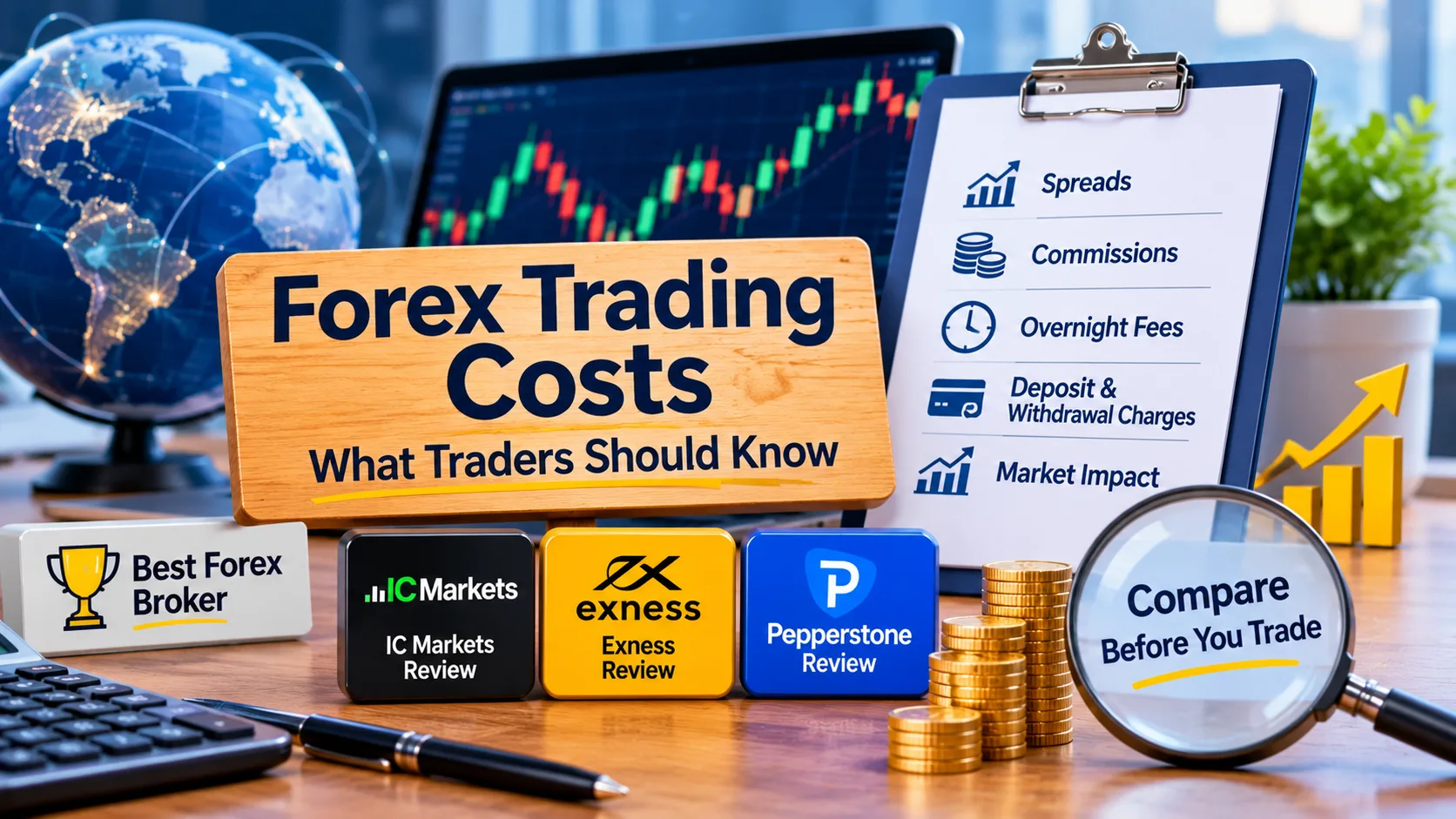
Forex trading involves more than buying and selling currencies. Every trade may include different costs that can affect the overall trading experience. These costs can vary between brokers, account types, and currency pairs. Understanding them is important when comparing platforms and choosing the Best Forex Broker.
Whether someone is new to forex or has trading experience, knowing how spreads, commissions, and other charges work can help them make better-informed decisions.
1. Understanding Forex Spreads
A spread is the difference between the buying price (ask) and selling price (bid) of a currency pair. It is one of the most common costs in forex trading.
For example, when a trader buys a currency pair, the buying price may be slightly higher than the selling price. This difference represents the spread.
Spreads can change depending on market activity, liquidity, and volatility. During major economic announcements or uncertain market conditions, spreads may become wider. When comparing forex broker rankings, traders should check the spread information provided by each broker.
The SEC's guide to foreign currency trading explains how bid and ask prices work and why spreads are an important trading cost.
2. Understanding Commission Charges
Some forex brokers charge a separate commission for opening and closing trades. This charge may depend on the trading volume or account type.
Other brokers advertise commission-free trading but may include their charges within the spread. Therefore, traders should not assume that a zero-commission account is always the cheapest option.
Before selecting the Best Forex Broker, it is useful to compare both spreads and commissions. Looking at the total cost of a trade gives a clearer understanding of what a broker charges.
3. Overnight and Swap Fees
Traders who keep positions open beyond the daily trading session may face overnight financing charges, also known as swap fees or rollover costs.
These charges can depend on the currency pair, position size, direction of the trade, and the broker's financing rates. In some situations, an overnight adjustment may be credited instead of charged.
These costs are particularly important for traders who hold positions for several days. When reading forex broker reviews, users should check the broker's overnight fee information and understand how these charges are calculated.
4. Deposit and Withdrawal Charges
Apart from trading costs, brokers may have additional charges for account services. These can include deposit fees, withdrawal fees, currency conversion charges, and inactivity fees.
The available payment methods and processing times may also differ between brokers. Traders should read the account terms carefully to understand whether additional charges apply.
A detailed IC Markets review can help users explore its account services and fee information. Similarly, an Exness review and a Pepperstone review can provide useful details about their respective account options, payment services, and trading conditions.
Always check the latest information directly with the broker because charges and conditions can change.
5. How Market Conditions Affect Trading Costs
Forex trading costs are not always fixed. Market volatility, liquidity, and economic announcements can influence the prices offered by brokers.
For example, major interest rate announcements or unexpected economic news can lead to sudden currency movements. During these periods, variable spreads may increase, and order execution conditions may change.
The Australian Securities and Investments Commission's MoneySmart forex guide explains how volatility, trading fees, and execution risks can affect forex trading.
Understanding these factors is useful when comparing brokers and evaluating their services during different market conditions.
6. Comparing Forex Brokers Before Choosing
Every forex broker offers different trading conditions. Some may focus on competitive spreads, while others provide different account types, platforms, or trading tools.
Before opening an account, traders should compare:
- Spreads and commission charges
- Overnight financing fees
- Deposit and withdrawal conditions
- Available trading platforms
- Regulation and security information
- Customer support and service quality
Reading updated forex broker reviews can help users understand these differences. Comparing forex broker rankings can also provide an overview of how different platforms are evaluated.
However, rankings should not be the only deciding factor. Traders should check the latest fees and conditions that apply to their country and account type.
7. Why Understanding Trading Costs Matters
Small charges can add up when traders open and close positions frequently. Even a small difference in spreads or commissions may affect the total cost over multiple transactions.
This is why understanding broker fees is an important part of forex research. A broker with low advertised spreads may have other charges, while another broker may offer a different fee structure.
Looking beyond promotional offers and comparing the complete cost structure can help traders identify a platform that matches their requirements.
Conclusion
Forex trading costs include spreads, commissions, overnight fees, and possible deposit or withdrawal charges. These costs can vary between brokers and may change with market conditions.
Before choosing the Best Forex Broker, traders should compare available services, read updated forex broker reviews, and understand all applicable fees. Researching an IC Markets review, Exness review, or Pepperstone review can also help users explore individual broker features.
Understanding trading costs makes it easier to compare platforms and make informed decisions before entering the forex market.