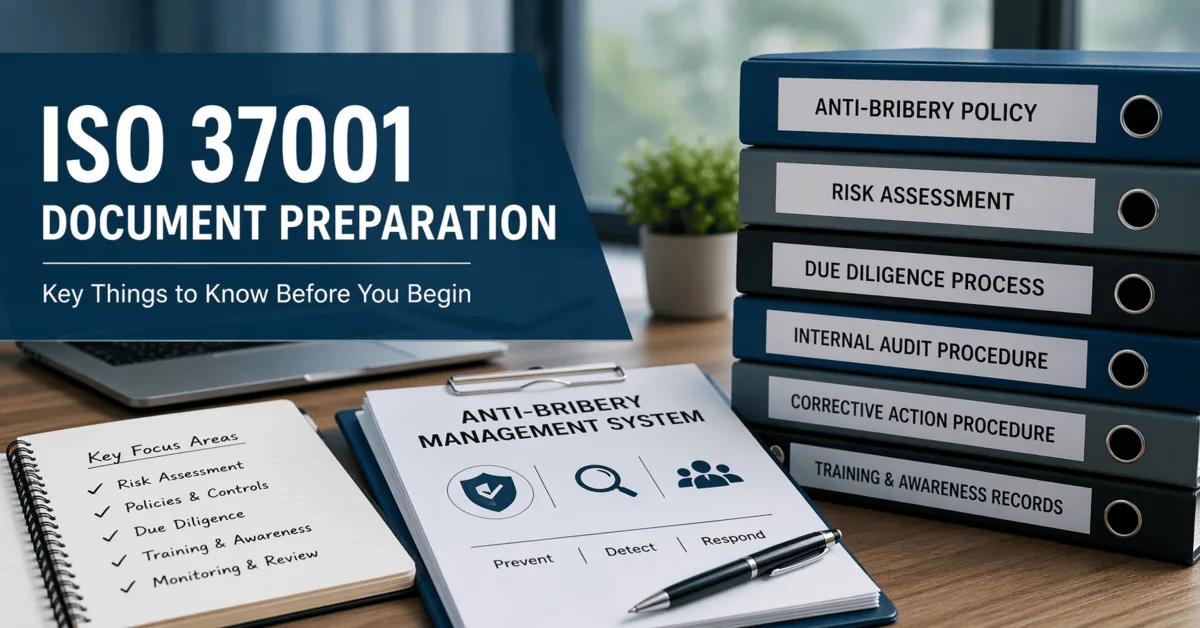
Before preparing ISO 37001 documents, it is important to understand what the standard actually requires and how documentation supports certification. ISO 37001 is an international standard designed to help organizations prevent, detect, and respond to bribery through a structured management system.
This standard is widely used by organizations to build a strong anti-bribery management system and improve compliance with global regulations across different industries, sectors, and organizations of all sizes and levels of complexity, ensuring better governance, transparency, and regulatory alignment.
Many businesses start documentation directly without proper planning. This often leads to confusion, rework, and audit failures. To avoid that, you should first focus on key areas that form the foundation of ISO 37001 documentation. A clear understanding at the beginning can save time and reduce errors during implementation.
Understand the Purpose of ISO 37001 Documentation
ISO 37001 documentation is not just about creating files. It defines how your organization manages bribery risks and ensures compliance with the standard. It includes policies, procedures, controls, and records that demonstrate how your system works in practice.
A clear documentation structure helps to:
- Define roles and responsibilities
- Maintain transparency in operations
- Support audits and certification
Organizations are expected to implement policies, risk assessments, due diligence, and monitoring controls as part of the system.
In many cases, businesses also develop an ISO 37001 manual structure to organize these elements into a framework that aligns with the standard. This also helps in maintaining consistency and clarity across all departments.
Know the Key Documents Required
Before starting, you should be clear about the types of documents needed. Most organizations require:
- Anti-bribery policy
- Risk assessment procedure
- Due diligence process
- Internal audit procedure
- Corrective action procedure
- Training and awareness records
These documents form the backbone of your Anti-Bribery Management System (ABMS). Without them, certification is not possible.
ISO 37001 requires organizations to implement policies, controls, risk assessments, and monitoring processes to prevent and detect bribery effectively.
Having properly structured ISO 37001 documents makes it easier to align these requirements with real business processes and ensures smoother certification.
Focus on Risk Assessment First
One of the biggest mistakes companies make is creating documents without identifying risks.
ISO 37001 follows a risk-based approach, meaning you must:
- Identify bribery risks
- Evaluate their impact
- Apply controls accordingly
This ensures your documents are not generic but aligned with your business operations.
Align Documentation with Business Processes
Your documents should reflect how your organization actually works.
Avoid:
- Copy-paste templates
- Generic policies
- Unused procedures
Instead, ensure:
- Documents match real activities
- Employees understand processes
- Controls are practical and usable.
This improves both compliance and audit success.
Understand Certification Expectations
Before preparing documents, you should also know how the ISO 37001 certification process works.
Auditors typically check:
- Whether documents meet ISO clauses
- Whether processes are implemented
- Whether records are maintained
ISO 37001 includes key areas like leadership, planning, support, operation, and performance evaluation, which must be properly documented.
Common Mistakes to Avoid
Many organizations delay certification due to avoidable mistakes:
- Creating too many unnecessary documents
- Ignoring risk assessment
- Not updating documents regularly
- Lack of employee awareness
Proper planning before documentation helps avoid these issues.
Final Thoughts
Preparing ISO 37001 documents becomes much easier when you understand the purpose, structure, and requirements beforehand. Instead of rushing into documentation, focus on building a strong foundation with risk assessment, clear policies, and practical procedures.
A well-structured documentation system not only helps in certification but also strengthens your organization’s integrity and compliance framework.