
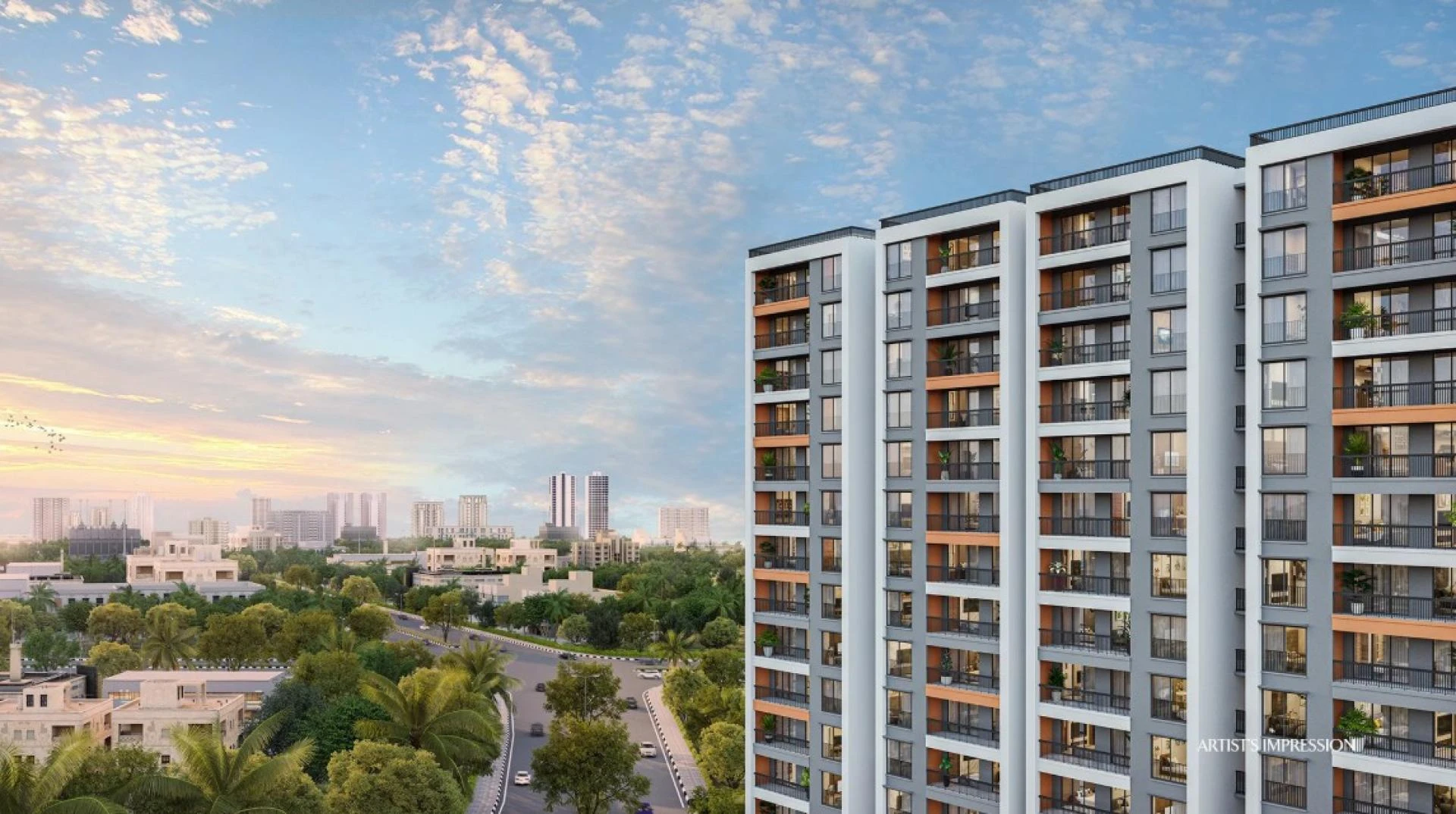
Mumbai’s property market has warmed up again, buyers are seeing steady price gains, but returns vary widely by location, asset type and buyer intent. Here’s a concise guide to what realistic appreciation and rental returns look like today, and how to set expectations if you’re hunting for the best project in Andheri or a 3 BHK in Malad East.
Recent market snapshot
Analysts expect modest, steady growth rather than a runaway boom: national polling and market reports put India’s annual home-price growth in the mid-single digits, with Mumbai typically tracking slightly below the national high, expect roughly 4-6% annual appreciation in many Mumbai micro-markets.
Infrastructure and redevelopment are the twin engines of appreciation in Mumbai. Nodes with new metro lines, highway upgrades and large-scale redevelopment projects have outperformed peers because they improve connectivity and attract corporate demand. Detailed market trackers by brokerage and research groups show such pockets delivering the strongest price momentum.
What appreciation looks like in Andheri & Malad
Price levels differ sharply across suburbs. Current listings and market portals show average asking rates in Andheri East in the ₹29k–₹33k per sq ft range, while Malad East is lower, averaging ₹21k–₹22k per sq ft, with wide variance depending on project grade, for a buyer focused on 3 Bhk in Andheri East or 3 BHK in Malad East, that translates into a broad purchase-price range rather than a single number.
Within these pockets, newer developments tend to be priced more firmly because of better layouts, amenities, and transit access. Projects like Luma in Andheri East by Dynamix are often noticed for this reason; they follow the newer design standards that buyers look for, which naturally influences pricing and long-term value. A similar pattern is visible in Malad East, where Astrum, by the same developer, has positioned itself well among recent launches, especially as homebuyers compare projects based on planning, ventilation, and connectivity to upcoming infrastructure.
If you buy in a well-located, transit-linked development, outperformance of 1-3 percentage points above the city average over a 3-5 year horizon is plausible, but this depends on micro-location, developer reputation and product (size, amenities, floor).
Rental yields: what to expect
Mumbai’s gross rental yields remain low compared with many global cities because prices are high relative to rents. Most market trackers put Mumbai’s typical gross residential yields in the 3–5% range; suburban pockets such as Andheri and north-west corridors often sit closer to 4–5% where tenant demand from corporate and media sectors is steady.
For flats aimed at the rental market, small units (1–2 BHK) usually produce higher percentage yields than large family flats simply because rental demand per sqft is stronger for compact, affordable units. That said, premium flats in Andheri with superior amenities can command higher rents and better occupancy, improving effective yield.
How to balance appreciation vs rental income
If your priority is capital growth, focus on connectivity, proposed infrastructure and reputed builders; these are the main drivers of price appreciation. If steady cash flow matters, target mid-segment areas with strong tenant pools; expect yields of ~4% as a baseline and plan for annual rent rises to improve total returns. Use transaction costs (stamp duty, GST on under-construction properties, brokerage) and periodic maintenance when calculating net yield.
For investors looking at real estate developers in Malad, compare historical delivery records, project timelines, and rental absorption in nearby completed projects. Past performance is not a guarantee, but it’s a practical guide to likely outcomes.
Bottom line
Mumbai today offers dependable, sustainable returns rather than speculative jumps. Buyers can expect moderate capital appreciation supported by ongoing infrastructure projects, along with predictable rental income driven by steady tenant demand. A well-chosen project in a transit-rich location, backed by strong planning and a trustworthy developer, is likely to deliver healthy long-term value both in terms of appreciation and rental stability.