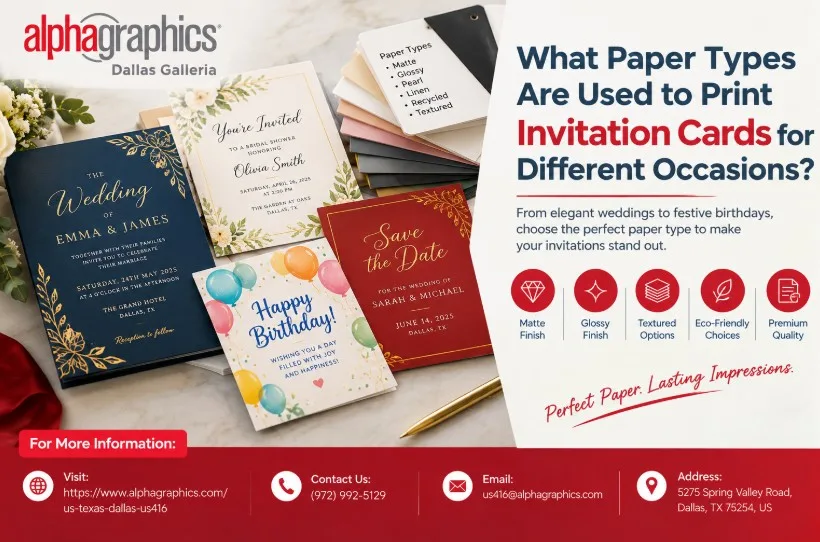
The right paper can make invitation cards look elegant, professional, and memorable. Common choices include cardstock, matte paper, glossy paper, textured stock, recycled paper, and specialty finishes. However, the best option depends on the occasion, design, printing method, and desired appearance. Wedding invitations often suit thick or textured cardstock. Birthday invitations can use colorful matte or glossy paper. Meanwhile, corporate events usually benefit from clean, premium paper stocks. Therefore, when you print invitation cards, consider both appearance and durability. A suitable paper choice can make your invitation feel special before guests even read it.
What Paper Is Best for Wedding Invitations?
Wedding invitations usually require a refined and substantial paper stock. For that reason, heavyweight cardstock remains a popular choice.
Cotton paper creates a soft, luxurious feel. Its natural texture works especially well with classic wedding designs.
Meanwhile, linen cardstock adds subtle texture without looking overly decorative. It can complement formal typography and traditional layouts.
For modern weddings, smooth matte cardstock offers a clean appearance. It also provides an excellent surface for detailed designs and readable text.
Couples seeking a more distinctive look can consider deckled or handmade paper. These options create an artistic appearance and suit intimate celebrations.
However, specialty papers may require careful printing preparation. Therefore, discuss your artwork and paper choice with a professional printer beforehand.
Which Paper Works Well for Birthday and Party Invitations?
Birthday and party invitations usually allow more creative freedom. Consequently, bright colors, playful graphics, and unique finishes can work particularly well.
Glossy cardstock can make vibrant colors appear more striking. It also provides a smooth surface that suits colorful photographs and illustrations.
Matte cardstock offers a softer appearance. Additionally, it reduces glare and makes text easier to read.
For children's parties, coated cardstock can provide a durable and colorful option. Meanwhile, teenagers and adults may prefer trendy textured or premium stocks.
The invitation's theme should guide the paper selection. For example, a tropical party could use bright colors and a smooth finish.
A professional graphic design Dallas TX service can also help match the design with the appropriate paper.
What Paper Should You Choose for Corporate Invitations?
Corporate invitations usually benefit from a professional and polished appearance. Therefore, smooth cardstock and premium uncoated paper remain practical choices.
A clean white or neutral stock can create a sophisticated foundation. It also works well with minimalist layouts and corporate branding.
For formal business events, heavyweight cardstock can provide a premium feel. However, extremely thick paper may not suit every mailing requirement.
Matte finishes often work well for professional invitations. They provide a refined appearance without distracting reflections.
Businesses can also consider recycled paper for sustainability-focused events. Its natural appearance can support environmentally conscious branding.
Before ordering, confirm your brand colors and design requirements. Paper selection should complement your logo, typography, imagery, and overall visual identity.
How Does Paper Texture Affect Invitation Design?
Texture can change how an invitation looks and feels. Therefore, it deserves attention alongside color and thickness.
Smooth paper creates a modern and polished appearance. It works especially well with detailed graphics, photographs, and fine typography.
Textured paper adds visual depth and a tactile element. Linen, felt, cotton, and laid textures can make invitations feel more distinctive.
However, heavily textured paper may affect small text and fine details. As a result, designers should adjust artwork accordingly.
If you want intricate graphics, smooth paper may provide better results. On the other hand, simple typography can look beautiful on textured stock.
A reliable print shop Dallas customers use can help evaluate paper options before production.
Does Paper Weight Matter When You Print Invitation Cards?
Paper weight affects both appearance and durability. Heavier cardstock generally feels more substantial than lightweight paper.
For example, lightweight stock can suit casual invitations and simple announcements. Meanwhile, thicker cardstock works well for formal occasions.
However, paper thickness can also affect postage costs. Extremely heavy invitations may require additional mailing charges.
Therefore, consider the complete invitation package before selecting a heavyweight stock. This includes envelopes, inserts, RSVP cards, and decorative elements.
Also, check whether your selected printer supports the desired paper weight. Some printing equipment performs better with specific paper ranges.
AlphaGraphics Dallas Galleria can help customers compare paper options based on design and printing requirements. Their team can also discuss suitable finishes for different invitation projects.
Which Paper Finish Should You Select?
Paper finish can significantly influence the final appearance. The three common choices include matte, glossy, and uncoated finishes.
Matte paper provides a smooth, non-reflective surface. It suits elegant invitations and designs containing substantial text.
Glossy paper produces brighter colors and sharper photographic images. Therefore, it can work well for colorful party invitations.
Uncoated paper offers a natural, traditional feel. It also works well with invitations that require handwritten notes.
Some invitations use specialty finishes for additional impact. Foil accents, embossing, and raised details can create a premium appearance.
However, these additions can increase production time and cost. Discuss your priorities with the printer before finalizing the design.
The right paper can transform a simple invitation into a memorable keepsake. Cardstock, cotton, linen, matte, glossy, and recycled papers each offer different benefits.
Therefore, choose your paper based on the occasion, design, and practical requirements. Consider texture, weight, finish, durability, and mailing needs together.
Before you print invitation cards, request paper samples and review your final design carefully. This step can help you achieve the appearance you want.
For professional printing guidance, you can discuss your project with AlphaGraphics Dallas Galleria. Their team can help you explore suitable paper and finishing options for your next event.
Frequently Asked Questions
What is the most popular paper for invitations?
Cardstock remains one of the most popular options. It offers good durability and works with many invitation designs.
Is matte or glossy paper better for invitations?
Matte works well for elegant designs and readable text. Glossy paper suits colorful graphics and photographic invitations.
What paper is best for luxury wedding invitations?
Cotton, linen, heavyweight, and textured cardstock can create a luxurious appearance. The final choice depends on the wedding style.
Can invitations use recycled paper?
Yes, recycled paper can provide an attractive and environmentally conscious option. Its natural texture can also support rustic designs.
Does thicker paper make better invitations?
Not necessarily. Thicker paper feels more substantial, but the ideal weight depends on the design, mailing needs, and occasion.
How Can You Choose the Right Invitation Paper?
Start by identifying the event and desired visual style. Then, consider your design, budget, quantity, and mailing requirements.
Next, compare paper samples before placing a large order. Physical samples can reveal differences that screens cannot show accurately.
Also, check how your chosen ink and finish will appear on the paper. Some stocks absorb ink differently than coated materials.
If the invitation includes photographs, select a paper that supports sharp image reproduction. For elegant typography, consider smooth or lightly textured cardstock.
AlphaGraphics Dallas Galleria can help you review suitable options before printing. A professional discussion can make the selection process simpler.