Creating an attractive outdoor space requires materials that offer both visual appeal and practical value. Whether you are designing a garden patio, building a pathway, or improving a courtyard, choosing the right paving can make a noticeable difference. indian sandstone paving slabs have become a popular choice for landscaping because of their natural colours, unique textures, versatility, and ability to complement different outdoor designs.
Natural stone brings warmth and character to outdoor areas. Unlike manufactured materials with uniform patterns, sandstone features natural variations that give every paving project its own appearance. From traditional gardens to modern outdoor spaces, it offers an attractive way to create functional and welcoming surroundings.
What Are Indian Sandstone Paving Slabs?
Indian sandstone is a natural sedimentary rock formed over long periods through the accumulation and compression of sand grains. It is extracted from quarries, cut into paving slabs, and prepared for use in outdoor landscaping.
One of its main attractions is its natural variation. Each slab can feature slightly different colours, markings, and textures, creating a distinctive surface when installed.
Compared with some manufactured paving options, natural stone offers an organic appearance that works well with plants, lawns, garden walls, and outdoor furniture.
Indian Sandstone Paving is also available in different finishes and sizes, giving homeowners and landscapers flexibility when planning outdoor projects.
Natural Colours and Textures That Enhance Outdoor Spaces
Colour is an important part of garden design. The paving you choose can influence the overall appearance of your outdoor space, especially when combined with surrounding plants, walls, and decorative features.
Indian sandstone is available in several natural shades, including:
- Buff and beige: Create a warm, light appearance that suits traditional and contemporary gardens.
- Grey: Offers a subtle, modern look that works well with minimalist landscaping.
- Brown: Adds earthy tones that complement wooden furniture and natural garden features.
- Raj green: Introduces a mixture of green and grey tones for a distinctive outdoor appearance.
- Multi-coloured sandstone: Combines different natural shades to create visual interest.
Texture also plays an important role. Some slabs have a smoother appearance, while others feature more noticeable natural surface variations.
These colour and texture choices make sandstone suitable for different landscaping preferences without relying on artificial patterns.
Why Indian Sandstone Paving Slabs Are Suitable for Landscaping
The popularity of indian sandstone paving slabs comes from their combination of appearance, versatility, and practical use.
Natural Beauty and Individual Character
Every sandstone slab has its own natural markings and colour variations. This creates a more organic finish compared with paving materials that look identical throughout.
The natural appearance blends easily with green lawns, flower beds, shrubs, and stone garden features. It can also help create a warm and welcoming outdoor environment.
Durability for Everyday Outdoor Use
When selected and installed correctly, sandstone can provide a durable paving surface for regular outdoor use. It is suitable for many residential landscaping projects, including patios, garden seating areas, and pathways.
However, its performance depends on factors such as stone quality, thickness, installation, drainage, and local weather conditions.
Choosing suitable slabs for the intended application is important. Proper preparation and maintenance can also help preserve their appearance over time.
Different Landscaping Applications for Sandstone Paving
One reason homeowners choose sandstone is its ability to suit different outdoor areas. It can be used to create connected spaces that look coordinated while serving different purposes.
Patios and Outdoor Seating Areas
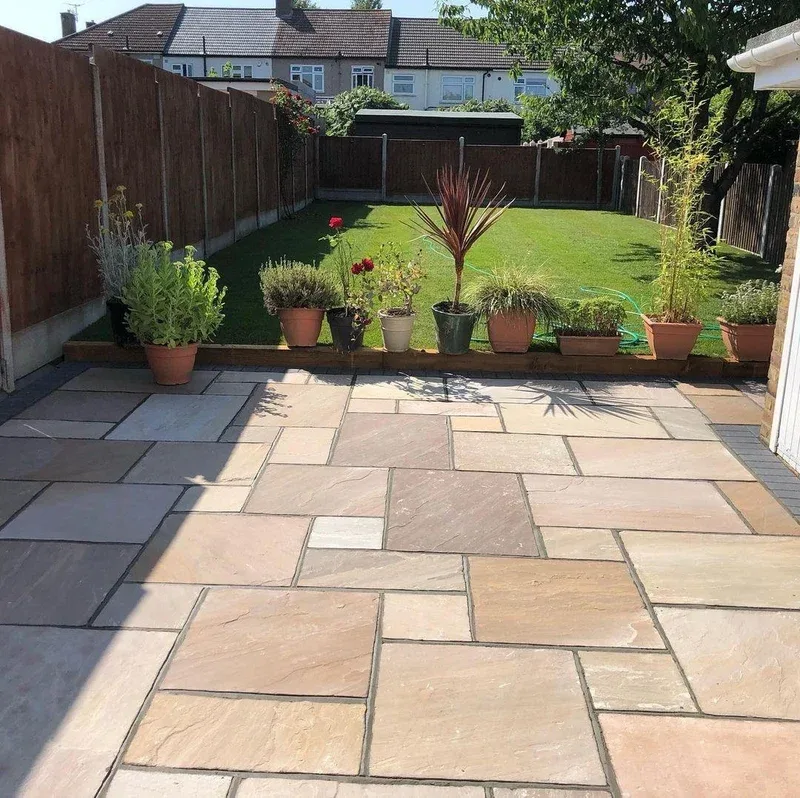
A patio provides a comfortable place for relaxing, entertaining guests, or enjoying outdoor meals. Sandstone Patio Slabs can create an attractive surface for garden furniture, dining tables, and seating arrangements.
Light-coloured sandstone can make a patio feel bright and welcoming, while darker shades can create a more contemporary atmosphere.
Garden Pathways
Garden paths connect different areas of an outdoor space. Sandstone paving can create clear walking routes between lawns, flower beds, entrances, and seating areas.
Choosing suitable slab sizes and leaving consistent joints can help create a neat and balanced pathway.
Courtyards and Decorative Areas
Courtyards often benefit from paving that adds character without making the space feel overcrowded. Sandstone can complement garden walls, planters, decorative lighting, and outdoor accessories.
It can also be used around selected seating areas to create a defined space within a larger garden.
Matching Sandstone with Different Garden Styles
The appearance of paving should complement the overall landscaping design.
For traditional gardens, warm beige, brown, and mixed sandstone shades can work well with brick walls, wooden benches, and established plants.
For contemporary gardens, grey and neutral finishes can create a cleaner appearance. Combining these shades with simple furniture, raised planters, and modern lighting can produce a balanced outdoor design.
Garden Paving Slabs should also complement the colours of surrounding buildings and outdoor features. Selecting a consistent colour theme helps different areas feel connected.
Importance of Proper Installation and Drainage
Even good-quality stone requires correct installation to perform well. Poor preparation can lead to uneven surfaces, movement, water accumulation, and problems with joints.
Before installation, the ground should be prepared according to the intended use of the paved area. A suitable base provides support and helps distribute weight.
Other important considerations include:
- Surface preparation: Remove unsuitable material and create a stable foundation.
- Base construction: Use an appropriate sub-base for the project and expected load.
- Jointing: Select suitable jointing materials to help keep slabs securely positioned.
- Drainage: Plan the surface fall so rainwater can drain away rather than collect.
- Slab selection: Choose suitable thickness and finish for the intended application.
For larger projects or areas with difficult ground conditions, professional installation can help achieve a more reliable finish.
Cleaning and Maintaining Sandstone Paving
Regular care helps preserve the appearance of natural stone. Although sandstone is a practical outdoor material, it should not be treated as maintenance-free.
Sweep the surface regularly to remove leaves, dirt, and loose debris. For general cleaning, use water and a suitable stone-safe cleaning product.
Avoid harsh chemicals unless they are specifically recommended for the stone. Remove spills and organic debris promptly to reduce the chance of staining.
Also inspect joints from time to time and address any loose or damaged areas. In suitable conditions, an appropriate stone sealer may help reduce water absorption and staining, although the correct product should be selected for the particular sandstone.
Choosing the Right Sandstone for Your Project
Before purchasing Outdoor Landscaping Materials, consider how the paved area will be used.
Think about the following factors:
- Thickness: Choose slabs suitable for the intended traffic and installation method.
- Colour: Select shades that complement your garden and property.
- Finish: Consider the surface texture and its suitability for the location.
- Size: Larger slabs can create a spacious appearance, while smaller sizes offer different layout possibilities.
- Maintenance: Consider how much cleaning and ongoing care the surface may require.
It is also helpful to view samples in natural daylight because sandstone colours can look different depending on lighting conditions.
Explore Natural Stone Paving at Universal Paving
Choosing suitable paving is an important step in creating an attractive and practical garden. Universal Paving is a relevant destination for exploring paving materials for different outdoor landscaping requirements.
Whether you are planning a new patio, improving an existing pathway, or redesigning a courtyard, consider the colour, finish, thickness, and intended use before selecting your stone.
Explore Universal Paving to discover options for your next outdoor project and find paving that complements your preferred landscaping style.
Also Read: Why Modern Grey Paving Slabs Are the Top Choice for Contemporary Landscaping
Conclusion
indian sandstone paving slabs remain a popular choice for landscaping because they combine natural beauty, attractive colour variations, practical durability, and design flexibility. From garden pathways and patios to courtyards and outdoor seating areas, they can enhance different spaces while creating a welcoming appearance.
With suitable slab selection, proper installation, and regular maintenance, sandstone can be a valuable addition to many outdoor projects. Explore Universal Paving to find paving options that suit your landscaping requirements and bring your outdoor design ideas to life.