
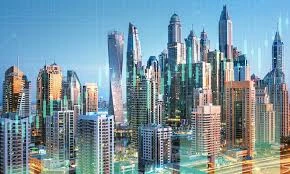
Global real estate markets share many common features. Every city has residential neighborhoods, commercial districts, and varying price points. But some markets stand apart. Dubai is one of them. The city's property market operates differently from London, New York, Singapore, or Mumbai in ways that surprise even experienced international investors.
Understanding what makes Dubai unique is not just an academic exercise. It is essential for anyone considering investing in the city. The same strategies that work in other markets may fail in Dubai. Conversely, opportunities that exist in Dubai may not be available anywhere else. From the regulatory environment to the buyer profile to the very concept of what a property represents, Dubai marches to its own beat.
For investors looking to navigate this distinctive landscape, working with unique property market experts Dubai can provide the specialized knowledge needed to succeed in a market that defies conventional wisdom.
Zero Taxes Across the Board
Most global cities tax real estate heavily. London imposes stamp duty land tax that can reach 15% for additional properties. New York has transfer taxes, mansion taxes, and annual property taxes that can exceed 2% of value. Singapore has additional buyer's stamp duties for foreigners that can double the purchase price.
Dubai has none of this. There is no annual property tax. No capital gains tax. No rental income tax. No wealth tax. The only significant government levy is a one-time 4% transfer fee paid by the buyer at purchase. For companies owning property, there is no corporate tax on real estate activities (though a general corporate tax of 9% applies to business profits above a threshold, real estate investment vehicles are often structured to minimize this).
This tax environment fundamentally changes investment math. A property yielding 7% gross rent in Dubai might deliver 6.5% net after fees. The same property in London might deliver 3-4% net after taxes. Over a decade, the difference is enormous. Dubai's tax advantage is not a small edge; it is a complete redefinition of what constitutes a good return.
The Dollar Peg Eliminates Currency Risk
Real estate investors in most global cities face currency risk. A British investor buying in New York must worry about the pound-dollar exchange rate. A Chinese investor buying in London must track the yuan-pound rate. These currency fluctuations can wipe out gains or create windfall profits unrelated to property fundamentals.
Dubai's dirham is pegged to the US dollar at 3.67 AED to 1 USD. For any investor whose home currency tracks the dollar (including many Gulf currencies, the Hong Kong dollar, and increasingly some commodities-linked currencies), there is zero exchange rate risk. For investors from other countries, the risk is simplified: they only need to track their home currency against the dollar, not against a separate floating dirham.
This stability is unique among major property markets. No other global city offers such direct, reliable dollar linkage. For investors seeking to preserve purchasing power and avoid currency complexity, Dubai stands alone.
Freehold Ownership for Foreigners
Many countries restrict foreign ownership. In Thailand, foreigners cannot own land directly. In Indonesia, foreign ownership is limited to long-term leases. In Switzerland, quotas restrict foreign buyers. Even in the UK and US, foreign ownership is unrestricted but tax treatment is unfavorable.
Dubai offers full freehold ownership to foreigners in designated areas. These areas include the city's most desirable neighborhoods: Downtown, Marina, Palm Jumeirah, Emirates Hills, Arabian Ranches, and many others. A foreign buyer owns the property outright, with the same legal rights as a UAE national. They can sell, lease, mortgage, or bequeath the property without restriction.
This open-door policy is rare and powerful. It signals that Dubai welcomes global capital. It eliminates the need for complex legal structures or local nominees. It provides certainty that ownership will be respected.
Off-Plan Market with Developer Payment Plans
Most cities have an off-plan market, but Dubai's version is unique. Developers offer payment plans that are exceptionally investor-friendly. A typical plan might require 10-20% down payment, with the balance paid in installments tied to construction milestones. Some developers offer post-handover payment plans, allowing buyers to pay over 5-10 years after receiving the keys.
These plans allow investors to leverage their capital significantly. An investor might control a $500,000 property with $50,000 down, paying the rest over three years. If the property appreciates 20% during that period, the investor's return on capital deployed is 200% (a $100,000 gain on $50,000 invested).
This leverage is not available in most mature markets, where off-plan purchases typically require substantial upfront payments and bank financing. Dubai's developer payment plans democratize access to leverage, creating opportunities for smaller investors.
A Market Driven by Global Wealth Flows
Most property markets are primarily local. In London, British buyers dominate. In New York, Americans drive demand. Foreigners play a significant role, but locals are the foundation.
Dubai is different. The majority of property buyers are international. They come from India, the UK, Pakistan, China, Russia, Saudi Arabia, Egypt, and dozens of other countries. This global buyer base makes Dubai's market less sensitive to local economic conditions and more sensitive to global trends: currency movements, geopolitical stability, and wealth migration patterns.
This unique dynamic means that Dubai real estate often behaves differently from other markets. When the global economy is uncertain, wealthy individuals from unstable regions seek safety in Dubai, driving demand. The market has a counter-cyclical element that sophisticated investors exploit.
Short-Term Rentals Are Legal and Regulated
Many global cities restrict short-term rentals. New York has effectively banned Airbnb in most residential buildings. London limits short-term rentals to 90 nights per year. Paris has registration requirements and nightly limits.
Dubai has embraced short-term rentals. Owners can list properties on Airbnb, Booking.com, and other platforms legally. The Dubai Tourism Department regulates the market, requiring registration and safety compliance, but does not ban or severely restrict it.
This creates a powerful income opportunity. A well-located studio in Dubai Marina or Downtown can generate significantly higher income through short-term rentals than through a traditional annual lease. Investors can capture tourist demand, not just residential demand.
High Rental Yields Compared to Global Peers
Dubai's rental yields are among the highest in the world. Gross yields of 6-9% are common in many neighborhoods. Compare this to London (3-4%), New York (3-5%), Singapore (3-4%), Hong Kong (2-3%), or Paris (3-4%). Dubai yields are roughly double.
These high yields make Dubai attractive to income-focused investors. A retiree can live off rental income from a single Dubai apartment in a way that would be impossible in most other global cities. The high yields also provide a margin of safety during market downturns.
The combination of high yields and zero taxes creates a powerful income proposition. An investor keeps almost all of what the property earns.
A Young, Fast-Growing Population
Dubai's population is young and growing rapidly. The median age is around 33 years. The population has grown from 1.5 million in 2005 to over 3.5 million today and is projected to reach 5.8 million by 2040.
This demographic profile drives housing demand. Young adults form households, rent apartments, and eventually buy homes. Unlike aging cities like Tokyo or many European capitals, Dubai has a natural demographic tailwind. The population is not just growing; it is growing with people in their prime earning and household-formation years.
For property investors, this is a fundamental positive. More people means more demand. Younger people means more renters. The demographic math works in Dubai's favor in a way it does not in many developed markets.
Master-Planned Communities as the Norm
In most cities, master-planned communities are exceptions. London has a few: Kings Cross, Greenwich. New York has Battery Park City. But most neighborhoods grew organically over centuries.
Dubai has taken the opposite approach. Most residential areas are master-planned communities. Arabian Ranches, Dubai Hills Estate, Emirates Hills, Jumeirah Golf Estates, The Meadows, The Springs—all were designed by a single developer, with coordinated infrastructure, landscaping, and amenities.
This creates a consistent, high-quality living environment. Every community has parks, pools, gyms, and retail. Roads are wide and well-maintained. Utilities are modern and reliable. For residents, this is a premium experience. For investors, it means predictable quality and strong tenant demand.
The Role of the Dubai Land Department
Dubai has invested heavily in regulatory infrastructure. The Dubai Land Department (DLD) registers every transaction and maintains a public database of ownership. Investors can verify title, check for mortgages, and confirm legal status online.
The Real Estate Regulatory Agency (RERA) sets rules for brokers, developers, and landlords. RERA publishes standard contracts, regulates service charges, and resolves disputes through the Rental Disputes Centre.
This transparency is rare among emerging markets and compares favorably with many developed countries. Investors can trust the system. They know their ownership is recorded and protected. They have recourse if something goes wrong.
A Market Still Maturing
Finally, Dubai's property market is young. The first freehold sales to foreigners occurred in the early 2000s. The market has experienced booms and busts, learning from each cycle. Regulations have been strengthened. Developer practices have improved. Investor sophistication has increased.
This maturing process means that Dubai today is a better-regulated, more transparent market than it was ten or fifteen years ago. The mistakes of the past have been addressed. The market is entering a more stable, sustainable phase of growth.
Working with Local Experts
Given how unique Dubai's market is, general real estate knowledge is not enough. Investors need specialists who understand the local nuances: which developers have good track records, which neighborhoods are overpriced, which payment plans are actually good deals.
That is why many international investors choose to work with unique property market experts Dubai (Note: The link is attached only to the first anchor text above; this second instance is plain text as requested). These professionals have navigated multiple market cycles, built relationships with developers, and developed analytical frameworks specific to Dubai.
A good expert will help you avoid the pitfalls that trap inexperienced buyers: overpaying for off-plan properties, underestimating service charges, or buying in neighborhoods with weak rental demand. They will also identify opportunities that outsiders miss.
Final Thoughts
Dubai's property market is genuinely unique. The tax environment, currency peg, foreign ownership rules, developer payment plans, global buyer base, short-term rental regime, high yields, demographic profile, master-planned communities, and regulatory framework combine to create a market that operates differently from any other global city.
For investors willing to understand these unique characteristics, Dubai offers opportunities that exist nowhere else. High returns, low taxes, currency stability, and a welcoming regulatory environment are a powerful combination. The market has matured, learned from past cycles, and entered a new phase of sustainable growth.
Whether you are a first-time buyer or a seasoned institutional investor, Dubai deserves a place in your portfolio. But come prepared to learn. The rules here are different. Those who understand them will thrive. Those who assume Dubai works like London or New York will struggle. Study the market, work with local experts, and embrace the uniqueness. The rewards are worth the effort.