Every decision, from pricing to customer satisfaction, may be improved with data. But simply having access to data is insufficient. The true power is in knowing it and using it effectively, which is why data analytics for managers is so vital.
Today, managers are expected to do more than merely lead teams and oversee projects. They are also required to make data-driven decisions that enhance performance, boost efficiency, and drive business growth. Whether you're managing a marketing campaign, a supply chain, or a financial portfolio, it is critical to success.
In this blog, we’ll explore why it is so essential for managers, how it helps in making better decisions, and how learning these skills can set you apart as a leader in the modern business world.
What Is Data Analytics?
Before understanding its importance, let’s define what data analytics really means.
Data analytics is the process of collecting, cleaning, interpreting, and visualizing data to uncover patterns and insights. These insights help businesses make informed decisions instead of relying on guesswork or intuition.
For example, imagine you are a sales manager. By analyzing sales data, you can identify which products perform well, which regions need attention, and which marketing strategies are effective. This knowledge allows you to make smarter choices that lead to better outcomes.
In simple terms, it turns raw numbers into meaningful insights that managers can use to plan and act with confidence.
Why Data Analytics Matters for Managers
Modern managers operate in environments filled with uncertainty. Competition is intense, customer preferences change quickly, and technology keeps evolving. In such a fast-paced world, intuition alone is not enough. It provides the clarity and direction needed to make decisions that truly matter.
Here are some of the key reasons why it is so important for managers:
1. Improved Decision-Making
Every day, managers make countless decisions, from budgeting and resource allocation to hiring and marketing. It helps transform these decisions from being based on “gut feeling” to being backed by solid evidence.
For instance, if a manager sees that a particular marketing channel is bringing in more conversions than others, they can invest more in that channel. Similarly, if data shows that certain products have declining sales, it signals that the strategy needs adjustment.
In short, it reduces uncertainty and allows managers to make faster, more accurate, and more confident decisions.
2. Better Understanding of Customers
Customers are the lifeline of any business. Understanding their behaviour, preferences, and needs is essential for growth. It helps managers gain deeper insights into customer patterns.
For example, analyzing customer data can reveal which demographics buy certain products, how often they purchase, and what feedback they leave. With these insights, managers can tailor products, pricing, and marketing efforts to better meet customer expectations.
A data-driven approach also helps predict future customer behaviour, allowing managers to stay one step ahead.
3. Enhanced Operational Efficiency
It doesn’t just improve strategy, it also helps streamline operations. By analyzing process data, managers can identify bottlenecks, reduce waste, and improve overall efficiency.
For instance, a manufacturing manager can use analytics to track production timelines and detect where delays occur. A logistics manager can use data to optimize delivery routes, reducing fuel costs and time.
With the right analytics tools, managers can visualize inefficiencies and take immediate steps to correct them. This leads to smoother workflows and better productivity.
4. Risk Management and Problem Solving
Every business faces risks, from market fluctuations to operational disruptions. Managers must identify potential risks early to minimize their impact. It allows managers to detect warning signs before problems escalate.
For example, analyzing sales trends can help predict downturns, while financial data can highlight areas of overspending. Predictive analytics even enables managers to foresee potential issues and prepare contingency plans.
In other words, it gives managers the foresight to manage risks effectively rather than reacting after damage is done.
5. Performance Measurement and Continuous Improvement
One of the greatest benefits of data analytics is its ability to measure performance accurately. Managers can track key performance indicators (KPIs) such as sales growth, employee productivity, and customer satisfaction.
By continuously analyzing these metrics, managers can identify what’s working and what needs improvement. This encourages a culture of continuous learning and performance enhancement within teams.
For example, if data shows that employee performance improves after specific training sessions, managers can implement similar programs across departments. Over time, these small data-driven improvements lead to significant organizational growth.
6. Strategic Planning and Forecasting
Strategic planning is the backbone of successful management. It provides the insights needed for better forecasting and long-term planning.
Using historical and real-time data, managers can identify patterns that inform future strategies. For instance, if data shows consistent growth in a particular region, a company might plan to expand operations there. Similarly, market trend analysis helps managers anticipate industry changes and adapt accordingly.
When managers use data analytics in planning, they align their strategies with actual trends and market realities, minimizing the chances of failure.
7. Empowering Teams and Building Data Culture
Managers are not just decision-makers; they are also leaders who guide their teams. When managers use it effectively, they set an example that promotes a culture of data-driven thinking across the organization.
By sharing insights, encouraging data literacy, and involving team members in data discussions, managers empower their teams to make informed contributions. This creates a more collaborative and efficient work environment.
Over time, such a culture helps the entire organization become more agile, responsive, and competitive.
Skills Managers Need to Excel in Data Analytics
To truly benefit from it, managers don’t need to become data scientists, but they do need to understand the basics. Some essential skills include:
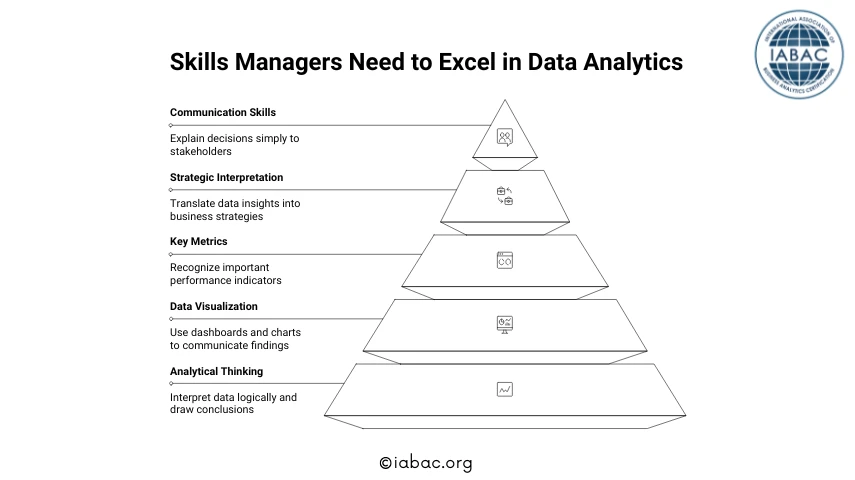
- Analytical Thinking: The ability to interpret data logically and draw meaningful conclusions.
- Data Visualization: Knowing how to use dashboards and charts to communicate findings clearly.
- Understanding Key Metrics: Recognizing which performance indicators matter most for your role or department.
- Strategic Interpretation: Translating data insights into actionable business strategies.
- Communication Skills: Explaining data-driven decisions in a simple way to team members and stakeholders.
Developing these skills can significantly improve a manager’s effectiveness and career growth.
Tools Managers Can Use
There are many user-friendly tools that help managers analyze data without deep technical expertise. Some popular options include:
- Microsoft Excel – Great for basic analysis and reporting.
- Power BI – Helps create interactive dashboards and visualizations.
- Google Analytics – Useful for understanding website and marketing performance.
- Tableau – A powerful tool for advanced visual analysis.
- SQL and Python (Basic Level) – Useful for working with large data sets and automating tasks.
Learning how to use these tools allows managers to quickly gather insights and make faster, smarter decisions.
The Future of Management Is Data-Driven
As businesses continue to evolve, it will become an even more essential part of management. Artificial intelligence and machine learning are making analytics smarter, helping managers predict outcomes with greater accuracy.
In the near future, managers who understand data will have a clear advantage. They will not only make better decisions but also lead organizations toward innovation and resilience.
In contrast, those who ignore it risk falling behind, as decisions based on intuition alone are no longer enough in a competitive, data-driven world.
How to Get Started in Data Analytics as a Manager
If you’re a manager looking to enhance your decision-making with data, the best place to start is with professional training. Learning from experts ensures you understand both the technical and strategic aspects of analytics.
One excellent option is the IABAC Data Analytics for Managers Certification, which provides managers with practical skills to interpret and apply data effectively in business contexts. This certification bridges the gap between management and analytics, helping leaders make smarter, evidence-based decisions.
Every decision, from pricing to customer satisfaction, may be improved with data. But simply having access to data is insufficient. The true power is in knowing it and using it effectively, which is why data analytics for managers is so important.
Today, managers are expected to do more than just lead teams and oversee projects. They are also required to make data-driven decisions that enhance performance, boost efficiency, and drive business growth. Whether you're managing a marketing campaign, a supply chain, or a financial portfolio, it is critical to success.