
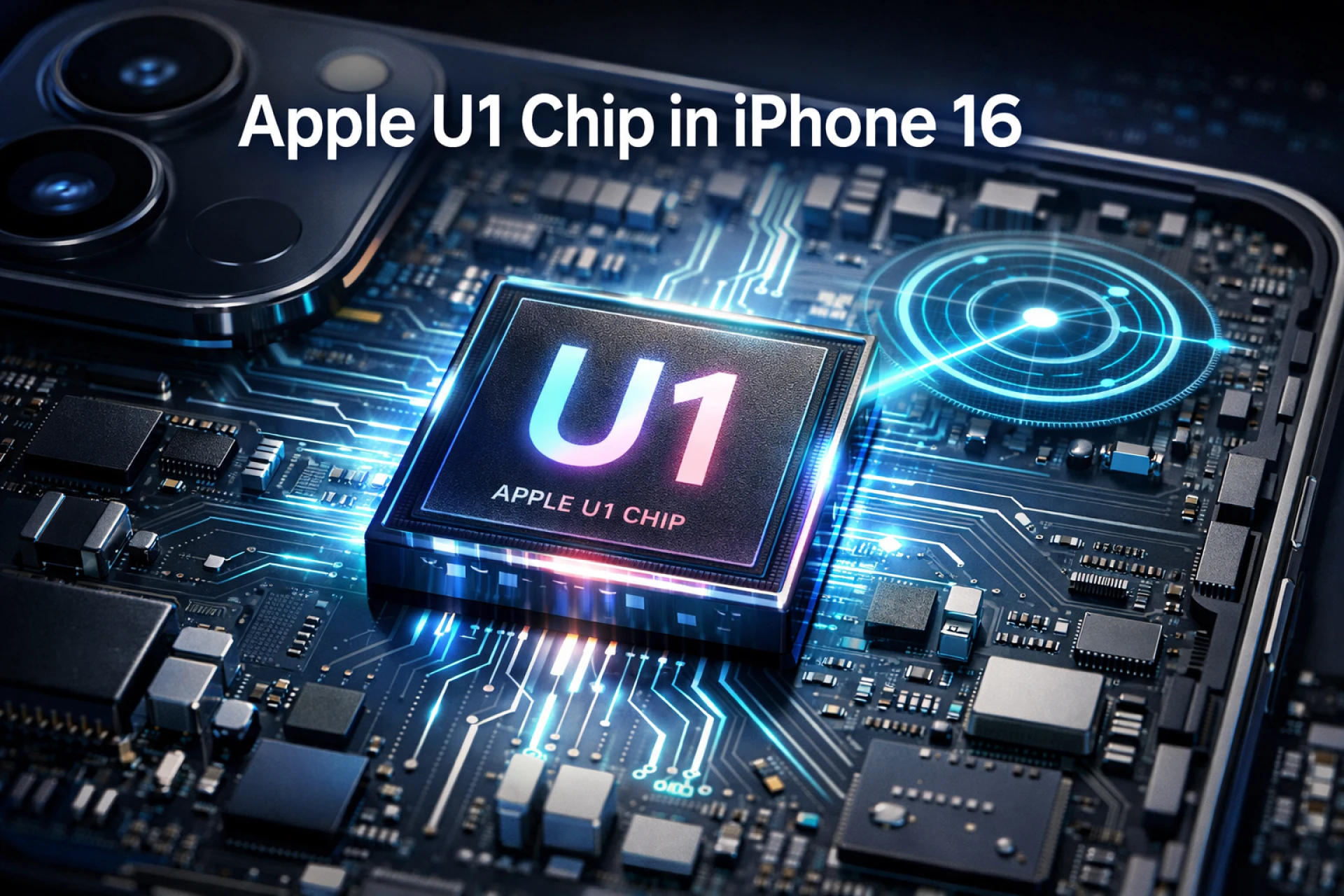
The iPhone 16 series represents a significant leap in Apple’s hardware evolution, but while the A18 chip often steals the spotlight, a smaller component—the Ultra Wideband (UWB) chip—is doing much of the heavy lifting for the modern user experience. While earlier models introduced the world to the U1, the iPhone 16 family leverages an advanced second-generation version of this technology. This chip acts as a "digital sense," providing the device with precise spatial awareness that standard Bluetooth or Wi-Fi simply cannot match.
Understanding the role of this technology is essential for anyone looking to invest in a high-performance smartphone. Whether you are browsing for a second hand iphone in india or looking at the latest flagship, the spatial intelligence provided by these chips is a game-changer for daily connectivity.
The Evolution of Spatial Awareness in iPhone 16
The original U1 chip was designed to give the iPhone a sense of its surroundings at a "living room scale." In the iPhone 16, this concept has been refined through a second-generation UWB chip that offers significantly better range and accuracy. Unlike traditional radio technologies that measure signal strength to estimate distance, Ultra Wideband uses "time-of-flight." This means the chip measures the exact time it takes for a radio pulse to travel between devices, allowing for distance calculations accurate to within a few centimeters.
This precision is what makes the iPhone 16 devices feel more intuitive. When you point your phone at another Apple device, the system knows exactly which one you are targeting. This is a foundational feature that impacts everything from file sharing to finding lost items in a cluttered room.
Enhancing the Find My Ecosystem and Precision Finding
One of the most practical reasons the UWB chip is important in the iPhone 16 is its integration with the Find My network. If you have ever misplaced your keys or a backpack equipped with an AirTag, you have likely used "Precision Finding." In the iPhone 16, this feature is more robust than ever.
The second-generation chip allows for a much wider search radius. Users can now find friends or devices in crowded environments, such as a stadium or a busy shopping mall, with directional arrows guiding them to the exact spot. This level of reliability is a major reason why even an iphone 16 refurbished model remains a top-tier choice for tech-savvy buyers; the hardware-level location tracking is simply a cut above older generations.
Revolutionizing Connectivity and AirDrop
AirDrop has long been a staple of the Apple experience, but the UWB chip makes it feel seamless. With the iPhone 16, the "point-to-share" capability is enhanced. By simply aiming your device at another person's iPhone, the U1-successor prioritizes that specific contact at the top of your sharing list. This eliminates the frustration of waiting for a list of nearby devices to populate or accidentally sending a sensitive file to the wrong person.
Furthermore, the chip facilitates "NameDrop," allowing users to swap contact information by bringing two iPhones close together. This proximity-based interaction is secure and fast, relying on the chip’s ability to verify that the two devices are physically near one another before initiating a data transfer.
The Role of UWB in the Smart Home and Automotive Tech
The importance of the UWB chip extends far beyond the phone itself. It serves as a digital key for the modern world. Apple’s CarKey feature uses this technology to allow users to unlock and start their vehicles without ever taking their phone out of their pocket. Because the chip knows exactly how far you are from the car, it can unlock the doors as you approach and prevent the engine from starting unless the phone is inside the cabin.
In the smart home, the iPhone 16 uses its spatial intelligence to interact with HomePods. As you walk toward a HomePod mini or a full-sized HomePod with your iPhone, the device can "hand off" music or podcasts with haptic feedback that gets stronger as you get closer. For those shopping at EasyPhones, these high-end features are a significant draw, proving that modern iPhones are more than just communication tools—they are central hubs for an automated lifestyle.
Why the iPhone 16 Pro Takes Spatial Tech Further
While the base models offer incredible utility, the iphone 16 pro refurbished units are particularly sought after for their integration of UWB with the A18 Pro’s advanced processing power. In the Pro series, the spatial data can be used more effectively in Augmented Reality (AR) applications.
Developers are increasingly using the UWB chip to create apps that can "see" where objects are in a room with mathematical precision. This is useful for everything from interior design apps that measure furniture placement to gaming experiences that turn your living room into a digital playground. The Pro models also benefit from better interference management, ensuring that even in "noisy" radio environments with many signals, your spatial tracking remains rock solid.
Summary of Benefits for the Daily User
In conclusion, the Apple U1 and its second-generation successors are not just "nice-to-have" extras; they are fundamental to the "it just works" philosophy of the Apple ecosystem. By providing the iPhone 16 with a precise sense of space, Apple has enabled a suite of features that save time and reduce friction.
From finding a lost AirTag under a couch to unlocking a luxury car or sharing high-resolution photos via AirDrop, the Ultra Wideband chip is the unsung hero of the iPhone 16 series. For consumers looking for these features at a more accessible price point, exploring the verified listings at EasyPhones ensures you get a device that is fully capable of navigating the increasingly connected and spatially-aware world of tomorrow.


