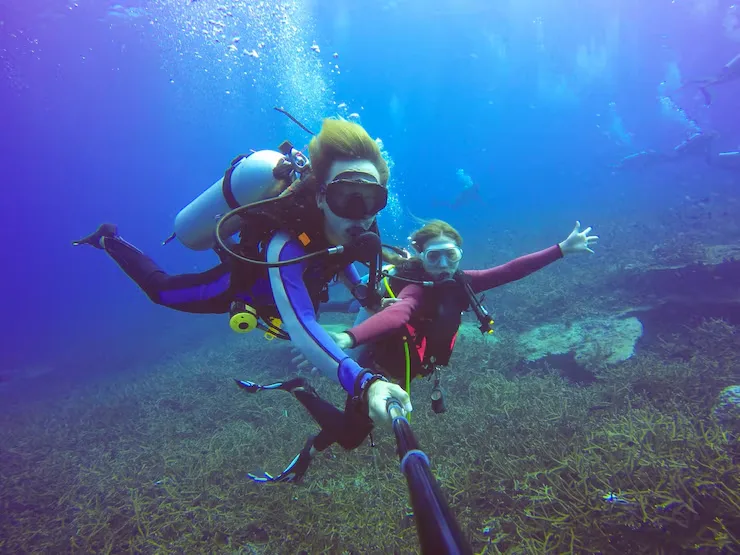
Koh Tao has built its reputation as one of the best places in the world to learn to dive — and for good reason. The island sits in the Gulf of Thailand, surrounded by warm, calm waters and reefs that are genuinely beginner-friendly. If you've been thinking about your open water diver certification, this is one of the few places where the setting does half the teaching for you.
But before you book, it helps to know what you're actually signing up for. The open water course isn't just an afternoon snorkelling session — it's a structured certification programme that qualifies you to dive anywhere in the world, to 18 metres, with a certified buddy. Here's how it works.
How the Course Is Structured
The PADI Open Water course is split into three components: theory, confined water skills, and open water dives.
- Theory covers dive physics, equipment use, safety principles, and how pressure affects the body. Most schools offer this through the PADI eLearning platform, so you can complete it before you even arrive on the island.
- Confined water sessions happen in a pool or shallow bay, where your instructor runs through the core skills — clearing your mask, recovering your regulator, buoyancy control, and emergency procedures. These sessions are not about testing you; they're about building muscle memory so you don't have to think during your ocean dives.
- Open water dives are the real thing. You'll complete four dives across two days, putting everything into practice in Koh Tao's bays and reef sites. Visibility is typically 10 to 20 metres, and water temperature stays around 28–30°C for most of the year.
What Makes Koh Tao Different for Open Water Training
Plenty of places offer PADI certification, but Koh Tao has a concentration of purpose-built dive schools, experienced instructors, and sites that progress naturally in difficulty. Training bays like Sairee and Aow Leuk are shallow, calm, and sheltered, which matters a lot when you're getting comfortable underwater for the first time.
The open water koh tao experience is also more relaxed in pace than dive courses in busier tourist destinations. Smaller class sizes mean instructors can move at the speed of the slowest diver — a proper advantage when you're a first-timer.
According to research published in diving safety literature, anxiety is the most common reason beginner divers struggle with their initial sessions. Warm water, good visibility, and a patient instructor resolve most of that. Koh Tao checks all three.
What You Should Bring and What's Provided
Your dive school will supply all the equipment: BCD, regulator, wetsuit, mask, fins, and tanks. What you need to bring is a swimsuit, a towel, sunscreen (reef-safe where possible), a logbook if you already have one, and any prescription medication relevant to diving.
It's worth arriving in good health. The diving medical standards aren't complicated, but conditions like ear infections, sinus problems, and some heart or lung conditions do affect your ability to equalise safely. If in doubt, check with a doctor beforehand.
How Long Does the Course Take?
Most students complete the open water course in three to four days. This gives enough time to work through theory, run two confined water sessions, and complete all four ocean dives without rushing. Some schools offer accelerated formats, but the standard pace is better for retention and comfort — especially if you've never been underwater with a regulator before.
FAQs
Do I need to be a strong swimmer to do the open water course?
You need to be able to swim 200 metres without stopping and tread water for 10 minutes. You don't need to be fast or particularly skilled — just comfortable in the water.
What happens if I fail a skill during the course?
You don't fail and get sent home. If a skill needs more practice, your instructor will give you additional time until you're confident. The goal is certification, not a pass/fail exam.
Can I use my open water certification anywhere?
Yes. PADI open water certification is recognised by dive operators worldwide. Once certified on Koh Tao, you can dive in the Maldives, the Red Sea, the Great Barrier Reef — anywhere that's within recreational dive limits.
Is the open water course hard?
It is challenging in the sense that learning any physical skill takes effort. Most students find the first confined water session the most uncomfortable, and by their final open water dive they feel confident and in control.