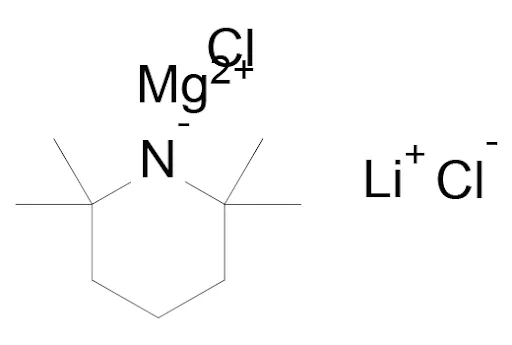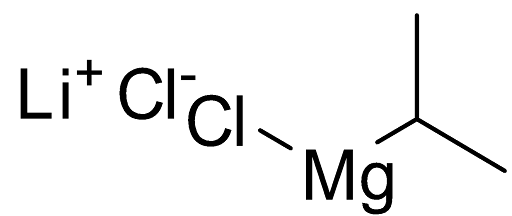
Modern organic synthesis requires specialized chemical reagents that offer improved reactivity, selectivity, and flexibility in chemical transformations. Among these, Isopropylmagnesium chloride lithium chloride complex has gained considerable attention in organometallic chemistry. Commonly known as Turbo Grignard reagent or i-PrMgCl·LiCl, this organomagnesium compound is widely recognized for its enhanced reactivity compared with conventional Grignard reagents. Its unique chemical characteristics make it valuable in pharmaceutical research, fine chemical production, and the development of functionalized organic compounds.
What Is Turbo Grignard Reagent?
Turbo Grignard reagent is an organomagnesium complex consisting of isopropylmagnesium chloride combined with lithium chloride. Its chemical formula is commonly represented as (CH₃)₂CHMgCl·LiCl. The reagent is typically commercially available as a solution in tetrahydrofuran (THF), with a commonly supplied concentration of 1.3 M.
The term "Turbo Grignard" refers to its enhanced reactivity compared with conventional Grignard reagents. The addition of lithium chloride significantly influences the behavior of the organomagnesium species in solution, making the reagent particularly useful in specialized organic transformations.
The reagent is associated with the development of more efficient synthetic approaches involving functionalized organomagnesium compounds. Its applications have been explored extensively in modern organometallic chemistry.
Understanding the Role of Lithium Chloride
Lithium chloride plays an important role in the distinctive behavior of this reagent. Conventional Grignard compounds can form aggregated structures in ethereal solvents, influencing their availability and chemical reactivity.
The presence of lithium chloride changes the solution-state speciation and increases the proportion of more reactive organomagnesium species. This effect helps explain the improved reactivity observed with Turbo Grignard reagents.
Researchers have investigated the structural and kinetic behavior of i-PrMgCl·LiCl to understand how lithium chloride influences its chemical properties. Although the exact solution structures can be complex, the beneficial effect of LiCl on organomagnesium reagent reactivity is well established in the scientific literature.
This combination has expanded the possibilities for preparing functionalized organometallic intermediates under comparatively mild reaction conditions.
Key Chemical Characteristics of i-PrMgCl·LiCl
Several characteristics distinguish this reagent from conventional organomagnesium compounds:
- Chemical composition: A combination of isopropylmagnesium chloride and lithium chloride.
- Common abbreviation: i-PrMgCl·LiCl.
- Molecular weight: Approximately 145.24 g/mol.
- Common solvent: Tetrahydrofuran (THF).
- Commercial concentration: Commonly available as a 1.3 M solution in THF.
- Chemical category: Organometallic and Grignard reagent.
- Common name: Turbo Grignard reagent.
These properties make it important for research organizations and specialty chemical manufacturers working with organometallic chemistry. Buyers should always verify the concentration, product identity, and specifications provided in the manufacturer's technical documentation.
Important Applications of Turbo Grignard Reagent
Turbo Grignard chemistry has contributed to several developments in organic synthesis. Its enhanced reactivity and useful selectivity make it relevant to different chemical transformations.
1. Halogen-Magnesium Exchange Reactions
One of its important applications is halogen-magnesium exchange. This transformation allows chemists to convert selected organic halides into organomagnesium intermediates that can participate in further synthetic reactions.
Such approaches are particularly valuable when preparing functionalized aromatic and heteroaromatic compounds.
2. Pharmaceutical Intermediate Development
The pharmaceutical industry relies on specialized reagents for developing complex organic molecules and advanced intermediates. Turbo Grignard chemistry provides useful opportunities for constructing carbon-based molecular frameworks and preparing functionalized intermediates.
Its role in synthetic research makes it relevant to pharmaceutical development and fine chemical manufacturing.
3. Functionalized Organometallic Compounds
Another important application involves the preparation of functionalized organomagnesium compounds. These intermediates can serve as valuable building blocks for subsequent chemical transformations.
The ability to work with selected functional groups under suitable reaction conditions makes this reagent interesting for synthetic organic chemistry.
4. Advanced Organic Synthesis
Turbo Grignard reagents have also been investigated in various carbon-carbon bond-forming transformations and other organometallic applications. Their distinctive reactivity has supported the development of synthetic methods for preparing structurally diverse organic compounds.
Turbo Grignard Reagent vs. Conventional Grignard Reagents
Although both belong to the organomagnesium reagent family, Turbo Grignard reagents have an important compositional difference.
Conventional Grignard reagents generally consist of an organomagnesium halide, represented as RMgX. Turbo Grignard reagents additionally contain lithium chloride, which influences their solution-state behavior and reactivity.
This difference can provide advantages in selected transformations, particularly when improved reactivity and functional-group compatibility are important considerations.
However, the performance of either reagent depends on the substrate, reaction conditions, solvent, and intended chemical transformation. Therefore, reagent selection should be based on the requirements of the specific application.
Storage, Handling and Quality Considerations
As a moisture-sensitive organomagnesium reagent, i-PrMgCl·LiCl requires appropriate storage, handling, and transportation practices. Exposure to moisture can affect product quality and chemical performance.
Buyers should evaluate important quality parameters before procurement, including:
- Product identity and concentration.
- Batch-specific Certificate of Analysis (COA).
- Safety Data Sheet (SDS).
- Packaging integrity and compatibility.
- Storage and transportation requirements.
- Batch traceability and technical specifications.
Following the manufacturer's safety instructions and applicable chemical handling regulations is essential when working with organometallic solutions.
Why Choose Vasista Life Sciences for Isopropylmagnesium Chloride Lithium Chloride Complex?
Vasista Life Sciences is an Indian specialty chemical manufacturer involved in the production and supply of fine chemicals, pharmaceutical intermediates, metal reagents, and Grignard reagents.
The company offers Isopropylmagnesium chloride lithium chloride complex in a 1.3 M solution in THF, catering to customers seeking specialized organometallic reagents for research and industrial requirements.
With its focus on specialty chemical manufacturing and product quality, Vasista Life Sciences serves customers looking for dependable chemical sourcing options. Buyers can connect with the company to discuss product specifications, documentation, commercial quantities, and supply requirements.
To explore the product details, visit the Isopropylmagnesium chloride lithium chloride complex product page.
Conclusion
Turbo Grignard reagent i-PrMgCl·LiCl represents an important development in organometallic chemistry. The combination of isopropylmagnesium chloride and lithium chloride provides distinctive reactivity that has made it useful in halogen-magnesium exchange reactions, functionalized organometallic chemistry, and advanced organic synthesis.
For pharmaceutical companies, research laboratories, and specialty chemical buyers, selecting a dependable source of Isopropylmagnesium chloride lithium chloride complex is important for maintaining product consistency and procurement reliability. Partnering with an experienced manufacturer such as Vasista Life Sciences can help businesses access specialized reagents that support their research and industrial chemical requirements.
Other Recommendations: CAS No: 898838-07-8 Manufacturers