
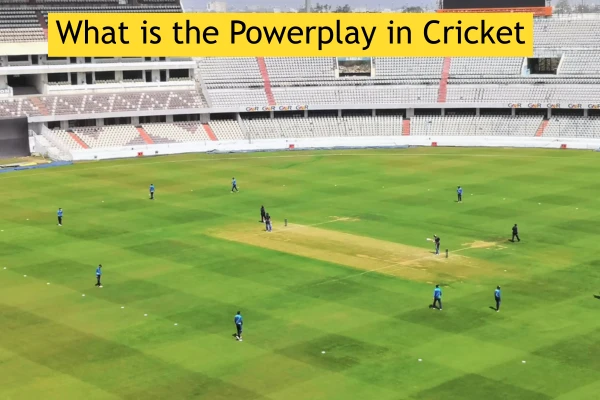
Cricket is a sport known for its balance between bat and ball, and one of the most strategic aspects of limited‑overs cricket is the Powerplay. It shapes the flow of the game, impacting how teams plan their innings and decide field placements. To truly appreciate modern one‑day and T20 matches, understanding the concept of the Powerplay is essential.
Meaning and Origin of the Powerplay
The Powerplay refers to specific overs during an innings when restrictions are placed on where fielders can be positioned. This rule was introduced to make the game more exciting by giving batsmen a greater chance to score boundaries early on, while also testing bowlers’ skills under pressure.
Powerplays were first implemented in One‑Day International (ODI) cricket in 2005. Before that, only a general fielding restriction applied for the first 15 overs. The International Cricket Council (ICC) modified this rule over time to keep the game balanced and entertaining. The concept was later adapted into the Twenty20 (T20) format and even domestic leagues like the Indian Premier League (IPL).
Objective of the Powerplay
The main goal of the Powerplay is to create a fair contest between bat and ball. When fielding restrictions are active, captains cannot station too many players on the boundary, forcing bowlers to take risks while batsmen can capitalize on scoring opportunities.
This period often determines the momentum of an innings. A strong Powerplay start lays the foundation for a high total, while disciplined bowling and early wickets can shift the match in the bowling team’s favor.
Powerplay Rules in One‑Day Internationals (ODIs)
In ODIs, which consist of 50 overs per innings, the Powerplay is divided into three distinct phases. The current rule (as per ICC’s latest playing conditions) is as follows:
- First Powerplay (Overs 1‑10):
- Only two fielders are allowed outside the 30‑yard circle. This phase encourages openers to attack and maximize runs against the new ball. Bowlers, in contrast, focus on swing and seam movement to take early wickets.
- Second Powerplay (Overs 11‑40):
- Up to four fielders can be placed outside the 30‑yard circle. Teams usually consolidate during this stage, rotating strike and preserving wickets for the final attack.
- Third Powerplay (Overs 41‑50):
- A maximum of five fielders can be outside the circle. This is typically the “death overs” phase, where batters aim for big hits and bowlers rely on variations like yorkers and slower balls.
Over the years, the ODI Powerplay format has undergone several revisions. For instance, between 2005 and 2011, captains could choose when to use “batting” and “bowling” Powerplays, offering more strategy. However, this sometimes slowed down play, so the ICC simplified it to the current three‑phase structure for better flow and balance.
Powerplay Rules in Twenty20 (T20) Cricket
In the shorter T20 format, the Powerplay lasts for only the first six overs of each innings. During this period, only two fielders are allowed outside the 30‑yard circle.
This rule creates thrilling starts in T20 contests. Openers try to make the most of the limited fielders on the boundary by going for aggressive shots, while bowlers aim to pick up quick wickets to halt momentum. In leagues like the IPL, how teams perform in the Powerplay often decides match outcomes.
Strategic Importance of the Powerplay
The Powerplay is not just a rule—it’s a chess move in every innings. For batsmen, the Powerplay offers a window to build momentum and exploit gaps, while for bowlers, it’s the time to attack with aggressive lines rather than defend.
Key strategies during Powerplay include:
- Batsmen targeting weaker bowlers: Teams identify bowlers they can hit early and set clear scoring targets for the first 6 or 10 overs.
- Bowlers attacking upfront: Fast bowlers use swing and pace to remove top-order batters before they settle.
- Field placements: Captains use innovative positions—like short third man or slip—to apply pressure.
- Run rate management: Batting teams aim for at least 45‑55 runs in the Powerplay in ODIs, and around 50‑60 in T20s, depending on pitch conditions.
Impact on Match Outcomes
Powerplay performance often dictates the tone of the rest of the innings. A powerful start can lift team morale and put the opposition under pressure. Conversely, losing early wickets can slow momentum and force teams to rebuild.
For example, teams scoring above 55 runs in the Powerplay on average win more T20 matches than those who begin cautiously. Similarly, a side restricting opponents to under 40 in the opening phase often gains early control of the game.
Powerplay in Women’s Cricket and Domestic Leagues
Women’s cricket follows similar Powerplay rules as men’s cricket, both in ODIs and T20s. The growing popularity of tournaments such as the Women’s Premier League (WPL) and Women’s Big Bash League (WBBL) has showcased how top players adapt these strategies.
Domestic tournaments like the IPL, The Hundred, and CPL have introduced unique variations. The Big Bash League in Australia, for example, allows teams to take a “Batting Power Surge” — a two‑over mini powerplay after the 11th over, when only two fielders are outside the circle. Such innovations keep the format fresh and tactically interesting.
Evolution and Future of the Powerplay
The Powerplay will likely continue evolving as cricket experiments with new formats like T10 and The Hundred. The core idea remains unchanged—to ensure spectators watch a thrilling blend of risk and reward, where both batsmen and bowlers face immense tactical pressure.
Modern analytics further emphasize the Powerplay’s importance. Teams now use data to optimize match-ups, decide batting orders, and measure success rates in this phase. As cricket grows more technology‑driven, mastering Powerplay strategies could be the key to consistent winning performances.
CricTak: Cricket News and Analysis Platform
CricTak is a cricket-focused digital platform and YouTube channel known for delivering timely cricket news, match analyses, and expert insights. Run by a reputed journalist, it offers match updates, player statistics, and detailed reports on international and domestic cricket. CricTak appeals to fans who want up-to-date cricket news and in-depth commentary from India’s vibrant cricket community.
Other Cricket Platforms with Features
1. Cricbuzz
Cricbuzz is a leading cricket website and app providing live cricket scores, ball-by-ball commentary, player stats, and comprehensive news coverage. It covers all international and major domestic tournaments, including the IPL and T20 leagues. It also offers expert analysis, video highlights, and a user-friendly interface for cricket fans worldwide.
2. ESPNcricinfo
ESPNcricinfo is one of the most authoritative cricket platforms globally, known for its exhaustive match reports, statistics, and live score updates. It offers deep historical data as well as live blogs and breaking news from the cricketing world. Its coverage spans international cricket, domestic tournaments, and women’s cricket.
3. Cricket.com
Cricket.com is a comprehensive app and platform featuring live scores, ball-by-ball commentary, player and team rankings, and advanced analytics like predictive algorithms for match outcomes. It includes fantasy cricket advice, player performance insights, and extensive news content, making it a holistic resource for fans.
Conclusion
The Powerplay in cricket represents more than a set of fielding rules—it embodies the game’s tactical heartbeat. It challenges teams to strike a balance between aggression and caution, creating the dramatic swings that make limited-overs cricket so compelling. Whether in ODIs, T20s, or leagues like the IPL, success in the Powerplay often sets the stage for the rest of the game. Understanding its dynamics allows fans to better appreciate the high-stakes strategies that define modern cricket.