Pillow plates and traditional plates are widely used in heat exchange applications across various industries, including food processing, pharmaceuticals, and industrial cooling systems. While both serve the fundamental purpose of heat transfer, their design, manufacturing, and efficiency differ significantly. This blog explores the key differences between pillow plates and traditional plates, highlighting their advantages, applications, and considerations when choosing between them.
Understanding Pillow Plates
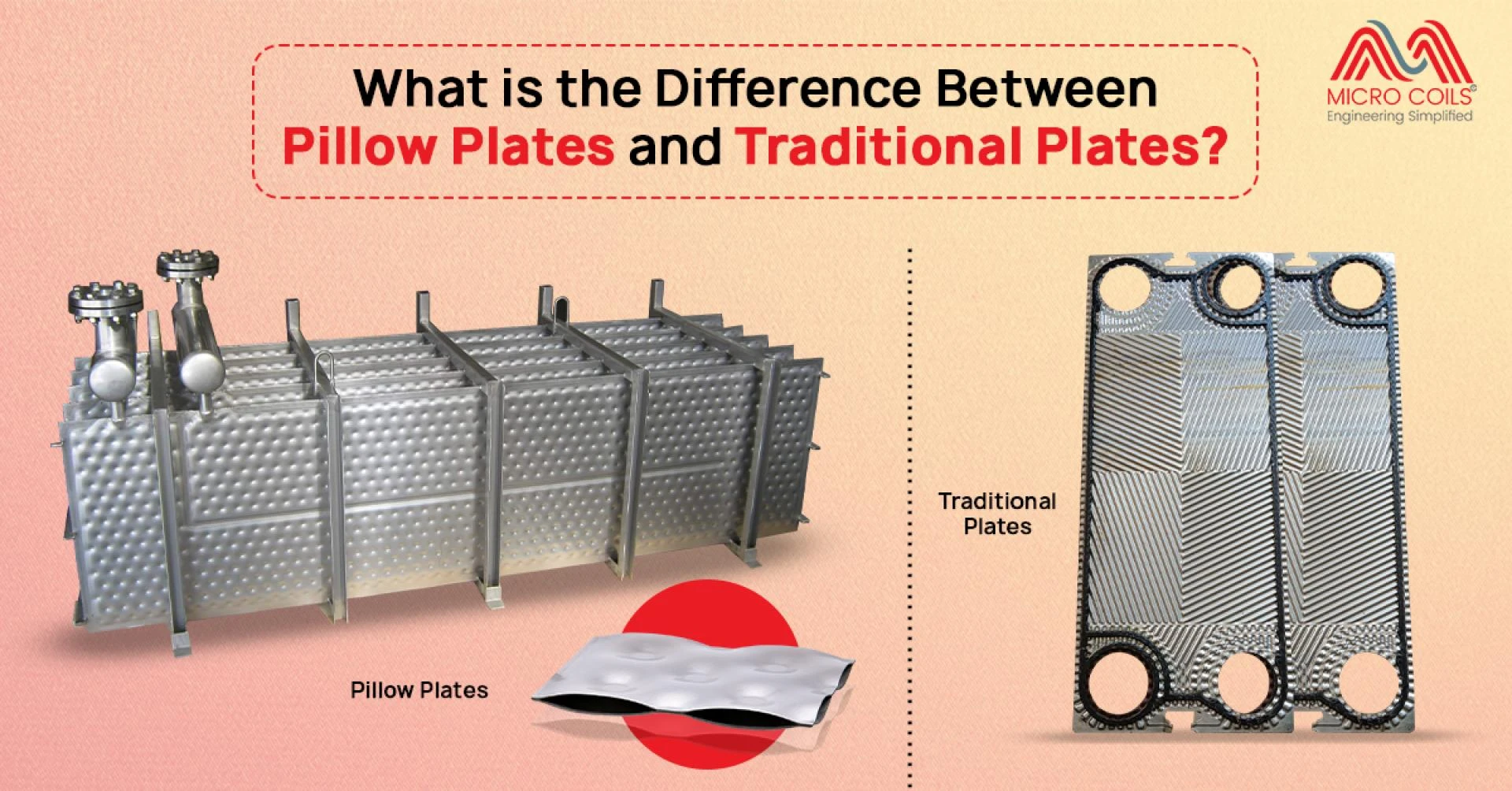
Pillow plates are a type of heat exchanger plate characterized by their inflated, dimpled structure. They are made by pillow plates manufacturers in India by laser welding two thin sheets of metal together in a predefined pattern and then inflating them to create flow channels between the sheets. These channels allow efficient heat exchange between the working fluids.
Key Features of Pillow Plates:
- Inflated Structure – The welded and expanded plates form a pillow-like shape, optimizing surface area for heat exchange.
- Efficient Heat Transfer – The dimpled design increases turbulence, enhancing heat transfer efficiency.
- Lightweight and Compact – Pillow plates require less material while providing high heat exchange efficiency, making them ideal for compact installations.
- Customizable Design – Can be tailored for specific applications, including cylindrical tanks, jackets, and immersion cooling.
- Self-Cleaning Properties – The smooth, rounded surfaces reduce fouling and scaling, minimizing maintenance requirements.
Understanding Traditional Plates
Traditional plates refer to flat or corrugated heat exchanger plates used in conventional plate heat exchangers (PHEs). These plates are assembled in a frame and sealed with gaskets or brazed together, forming a series of flow channels for heat exchange.
Key Features of Traditional Plates:
- Flat or Corrugated Design – Traditional plates feature embossed patterns to increase turbulence and improve heat transfer.
- Modular Assembly – Plates can be added or removed to adjust capacity and performance.
- Higher Pressure Drops – Due to the gasketed or brazed structure, traditional plates may experience higher pressure losses.
- Regular Maintenance Needed – Gaskets wear out over time and need periodic replacement.
- Common in Plate Heat Exchangers – Used extensively in industries requiring moderate to high heat exchange efficiency.
Recommended Read - The Purpose of an Evaporator in a Refrigeration System
Key Differences Between Pillow Plates and Traditional Plates
1. Manufacturing Process
- Pillow Plates: Fabricated using laser welding, then inflated to form internal channels.
- Traditional Plates: Produced through stamping or pressing, then assembled using gaskets or brazing.
2. Heat Transfer Efficiency
- Pillow Plates: Provide high turbulence and increased surface contact, leading to efficient heat exchange.
- Traditional Plates: Also offer efficient heat transfer, but may have limitations in handling high-viscosity fluids compared to pillow plates.
3. Structural Strength and Durability
- Pillow Plates: Stronger due to their welded construction, making them resistant to pressure and mechanical stress.
- Traditional Plates: Susceptible to gasket wear and potential leaks over time.
4. Maintenance Requirements
- Pillow Plates: Require minimal maintenance due to their self-cleaning properties and lack of gaskets.
- Traditional Plates: Need regular maintenance, especially for gasket replacement and cleaning of narrow channels.
5. Application Suitability
- Pillow Plates: Ideal for immersion cooling, jacketed tanks, and industrial applications requiring high reliability.
- Traditional Plates: Commonly used in plate heat exchangers for food processing, HVAC systems, and chemical industries.
Applications of Pillow Plates vs. Traditional Plates
Pillow Plate Applications:
- Dairy and Beverage Industry – Used in milk coolers, fermentation tanks, and beverage processing units.
- Pharmaceutical Industry – Suitable for sterilization and controlled cooling applications.
- Industrial Cooling Systems – Employed in high-efficiency chillers and process cooling.
- Energy Sector – Used in heat recovery systems to enhance energy efficiency.
- Cryogenic Applications – Essential in cooling solutions for gases and liquefied natural gas (LNG) processing.
Recommended Read - Everything You Need to Know About AC Heat Exchangers
Traditional Plate Applications:
- HVAC Systems – Found in air conditioning and heating systems for buildings and industrial setups.
- Food Processing – Utilized in pasteurization and thermal processing of food products.
- Chemical Processing – Helps regulate temperatures in chemical reactions and fluid handling.
- Marine Industry – Applied in seawater cooling and onboard heat exchange systems.
- Oil and Gas Industry – Used in heat recovery and refining processes.
Choosing Between Pillow Plates and Traditional Plates
When selecting the appropriate heat exchanger plate type, consider the following factors:
- Fluid Type and Viscosity – Pillow plates work better for high-viscosity and challenging fluids.
- Maintenance Considerations – If minimal maintenance is a priority, pillow plates are a better choice.
- Pressure and Temperature Requirements – Pillow plates handle higher pressures without leaks.
- Space Constraints – Pillow plates offer a more compact design suitable for tight installations.
- Long-Term Cost Efficiency – While traditional plates may have lower initial costs, pillow plates provide better durability and lower maintenance expenses over time.
Conclusion
Both pillow plates, dry coolers, and traditional plates play significant roles in heat exchange applications. The choice between them depends on factors such as application requirements, maintenance needs, efficiency, and long-term durability. Pillow plates are ideal for applications requiring compact, durable, and low-maintenance solutions, whereas traditional plates remain a preferred choice in industries that need modular and customizable heat exchange systems. Understanding their differences helps industries select the most suitable option to optimize energy efficiency and operational performance.