Selecting the right residential security camera system is one of the more practical decisions a homeowner can make. The market has dozens of options, from basic single-camera kits to full property setups managed through a mobile app. The challenge is not finding a camera system. The challenge is knowing which features matter for a specific home and how to compare them without getting pulled into product claims.
This article covers what makes a residential security camera system effective, what separates reliable systems from weaker ones, and what homeowners should work through before committing to any setup.
Why the Right System Varies by Property
No single residential security camera system works the same way for every home. A one-story house on a quarter-acre lot has different coverage needs than a two-story property with a detached garage, a back fence line, and multiple entry points.
Before comparing systems, it helps to walk the property and take note of a few things: how many entry points exist, which areas have poor natural lighting, how far coverage needs to reach, and whether the home already has structured wiring in place. Those answers shape which camera types, how many units, and what storage method will actually work for that property.
Core Components of a Residential Security Camera System
Cameras
Cameras are the most visible part of any setup, but they vary more than most buyers expect. A few distinctions worth understanding:
Fixed vs. PTZ: Fixed cameras point in one direction and cover a defined area. PTZ (pan, tilt, zoom) cameras can rotate and cover a wider zone but cost more and need more configuration to perform well.
Bullet vs. Dome: Bullet cameras are cylindrical and aimed at a specific area. Dome cameras sit flush against a surface and are harder to redirect or tamper with. For exterior locations that are within reach, dome designs tend to be more durable.
Indoor vs. Outdoor Rated: Outdoor cameras carry an IP rating that shows how well they resist dust and water. IP65 and IP67 are the most common outdoor ratings. IP67 cameras can handle short periods of submersion, which matters in areas with heavy rain.
Recorders
Most wired systems use either a DVR (Digital Video Recorder) or an NVR (Network Video Recorder). DVRs work with analog cameras over coaxial cable. NVRs work with IP cameras over Ethernet or Wi-Fi. NVR systems generally support higher-resolution footage and are easier to expand over time.
Storage
Footage needs a place to go. Local storage keeps recordings on-site using an NVR, DVR, or SD card. Cloud storage sends recordings to a remote server. Hybrid systems use both. Local storage avoids monthly fees but can be lost if hardware is stolen. Cloud storage is accessible from anywhere, but it depends on internet connectivity and a recurring subscription.
Connectivity
Wired systems transmit data and power through physical cables. This makes them more stable and less vulnerable to interference. Wireless systems are easier to install but depend on Wi-Fi signal quality, which is not consistent across every part of a property.
Resolution and Image Quality
Resolution determines how much detail a camera captures. Most systems sold record today at 1080p (Full HD) or higher. Some record at 4K, which produces sharper images but requires more storage and processing capacity.
For a residential security camera system, 1080p is sufficient in most cases to identify a face, read a license plate at a normal driveway distance, and capture usable detail. 4K becomes worth considering when monitoring a large yard, a long driveway, or a property with entry points that are far from the camera.
Night Vision
Most property crimes happen after dark. Night vision quality is one of the most important specs to review when comparing any residential security camera system.
Infrared (IR) night vision is the standard. It produces black and white footage by emitting invisible light. Effective range varies from about 30 feet to over 100 feet, depending on the camera and lens. Color night vision uses visible light LEDs or low-light sensors to capture footage in full color after dark, but it requires more ambient light to work well.
In most residential settings, a camera with a solid IR range and good low light sensitivity is more useful than a color night vision camera with a limited range.
Motion Detection and Alerts
Most modern cameras include motion detection. The quality varies a lot between systems. Basic motion detection triggers on any movement in the frame, including blowing leaves or a passing car. More advanced systems use AI-based detection to identify people or vehicles specifically, which cuts down on irrelevant alerts.
Push notifications to a phone let homeowners review activity as it happens. Some systems include two-way audio, so the homeowner can speak through the camera when someone approaches a door or gate.
Home Security Camera Installation: Wired vs. Wireless
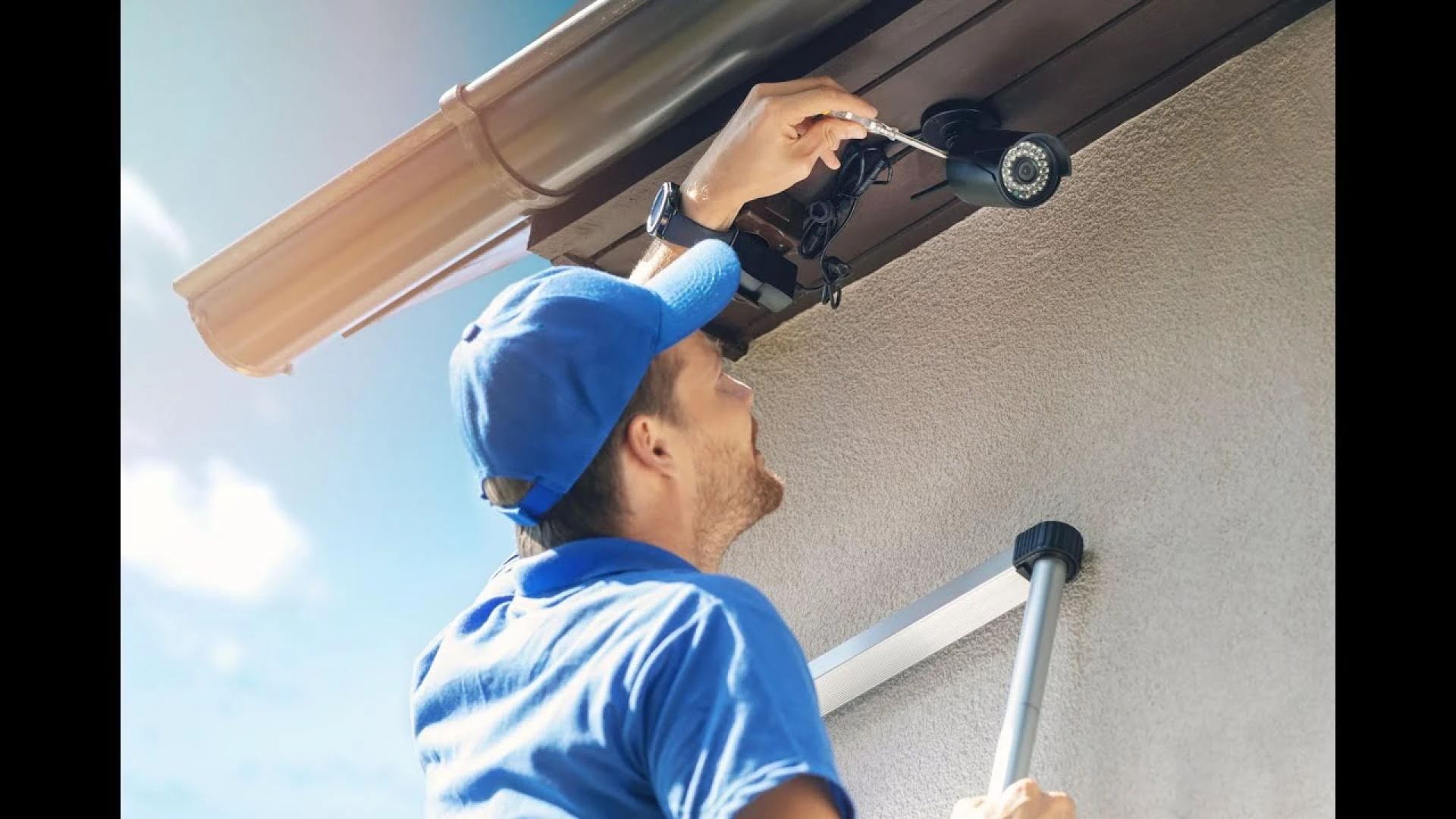
The choice between wired and wireless affects both performance and convenience over time. Home security camera installation for a wired system involves running cable through walls, attics, or conduit to each camera location. It is more disruptive to install, but it produces a stable result that does not depend on a wireless signal.
Wireless home security camera installation is simpler. Cameras connect to a Wi-Fi network, and most mount with just a few screws and a power connection. The tradeoff is dependence on wireless signal quality and, for battery-powered models, periodic recharging.
For homeowners who want a permanent setup with consistent coverage, a wired system installed by a professional is worth the additional effort. For renters or homeowners who want flexibility, wireless is a reasonable option.
Smart Home Integration
Many residential security camera systems now connect with smart home platforms such as Amazon Alexa, Google Home, and Apple HomeKit. This lets homeowners view live feeds on a smart display, adjust the system through a voice assistant, or build automation rules that trigger lights or locks when motion is detected.
Not all cameras work with all platforms. Before purchasing, homeowners should confirm that the cameras they are considering are compatible with any smart home devices already in use.
Professional Monitoring
Some residential security camera systems offer professional monitoring as an optional service. A monitoring center reviews alerts and contacts emergency services if a threat is confirmed and the homeowner does not respond within a set window.
This adds a layer of coverage that self-monitored systems cannot provide, particularly when the homeowner is away from home, asleep, or unavailable. It typically comes with a monthly or annual fee in addition to the base equipment cost.
How Many Cameras Are Needed?
A practical starting point for most homes covers the front door, back door, garage, and any secondary entry points such as side gates or ground-floor windows in less visible areas.
Larger properties may need corner-mounted cameras to cover side yards and rear fence lines. Detached structures, such as a workshop or guesthouse, typically need their own camera coverage as well.
The goal is to close off the most likely points of entry while keeping the system manageable to review and maintain.
Why Professional Installation Matters
A residential security camera system with good equipment will still have blind spots if cameras are mounted at the wrong angle, placed too low, or positioned without accounting for lighting conditions. Professional installers assess the property, determine the most effective mounting locations, and handle wiring or network configuration as part of the job.
Centex Security Cameras provides residential installation services across Central Texas. The team conducts on-site assessments before any installation begins and sets up each system around the actual layout of the property. For homeowners who want a system set up correctly from the start and maintained by someone local, working with a regional company like Centex Security Cameras is a practical path. Home security camera installation done by experienced technicians reduces the risk of coverage gaps, wiring errors, and configuration issues that affect performance over time.
Summary
The best residential security camera system depends on property size, layout, and how much active monitoring the homeowner plans to do. Resolution, night vision, motion detection, storage, and connectivity are the five specifications worth comparing most closely.
Wired systems are more stable. Wireless systems are more flexible. Professional monitoring adds a safety net when the homeowner is unavailable. And professional home security camera installation, handled by someone familiar with the property and the local conditions, reduces the chance of a setup that looks complete on paper but leaves real gaps in coverage.
Homeowners in Central Texas who want a site-specific assessment and a system configured to their property can reach out to Centex Security Cameras directly.