Organizations often retire old technology when they replace, reuse, resell, recycle, or dispose of workplace equipment. The question: what is IT asset disposition? describes how firms manage technology through each stage of retirement. It also helps businesses address data security before equipment leaves their control. Moreover, asset recovery can help firms retain value from technology that still has useful life. Proper documentation can then support clear records throughout the equipment handling process.
Businesses also need responsible ways to manage equipment after its useful workplace life ends. Secure IT asset disposition can help firms protect data while supporting reuse, recovery, and recycling. The process can also guide firms through inventory checks and data destruction steps. Then, businesses can assess whether equipment should return to use, find another owner, or enter recycling. The following sections explain each stage and show what firms should understand before managing retired technology.
What Does IT Asset Disposition Involve?
Organizations must manage retired technology through clear steps that protect data and preserve useful equipment value. Secure IT asset disposition brings these steps together through tracking, data security, and reuse planning. The process can also help firms decide how each device should move forward after retirement.
1. Asset Identification and Inventory
Firms should identify retired computers, servers, storage devices, phones, and other technology before processing begins.
These records can help teams track each device and maintain clear control throughout its handling:
- Device types can show which equipment entered the asset management process.
- Asset details can help teams match equipment with existing business records.
- Tracking information can support accountability when devices move between different handling stages.
2. Data Security and Destruction
Stored information should receive secure treatment before equipment leaves organizational control or enters another stage. During this step, an electronic data destruction company may handle devices that contain sensitive business information. The chosen method should match the device and ensure its stored data becomes inaccessible.
3. Equipment Reuse or Resale
Working equipment can support refurbishment, redeployment, resale, or donation when organizations no longer need it. Reuse can extend equipment life while helping firms recover value from technology that remains useful. Then, businesses can assess each device before deciding whether it should serve another purpose.
How Does the IT Asset Disposition Process Work?
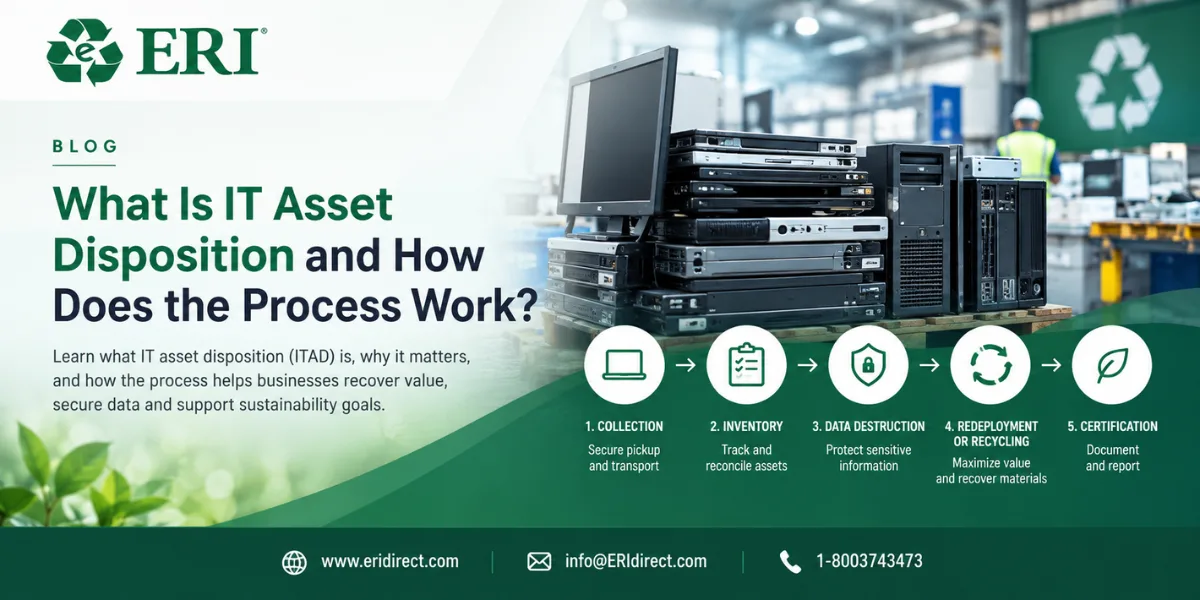
Retired technology moves through several stages that help firms protect information and manage equipment with care. Asking what is IT asset disposition? can guide firms from collection through reuse while keeping each stage organized. The process also helps teams track equipment as it moves through secure handling and review. The following stages explain how firms can collect, process, document, and recover retired technology.
1. Collect and Transport Equipment
Firms should collect retired devices through planned steps that keep equipment secure during movement between locations. Teams should maintain chain of custody so each device remains tracked throughout transportation. Clear handling records can then show where equipment moved and who managed it during transit.
2. Process and Document Assets
Teams can sort, test, track, and prepare devices while following the required data security steps. An electronic data destruction company may handle data-bearing equipment before teams move it toward reuse or recovery. Detailed records can also help organizations track each device and confirm how it was processed.
3. Recover Value Where Possible
Usable equipment can return to service through refurbishment, reuse, resale, or other recovery paths when appropriate. This approach can help firms retain value from devices that still support useful business tasks. Moreover, recovery can reduce unnecessary disposal by keeping functional equipment in use for longer periods.
How Does Responsible Asset Disposition Address Environmental Concerns?
Responsible asset disposition can limit waste by guiding retired technology toward suitable reuse, recovery, or recycling paths. It also helps firms consider how discarded equipment affects material use and waste handling. Moreover, careful processing can support safer handling when devices contain parts that need special care. The following stages explain recycling, material risks, and downstream processing practices that support responsible technology management.
1. Recycle End-of-Life Electronics
Unusable equipment can enter suitable recycling streams after teams complete required data and asset checks. This approach can help firms manage retired technology while supporting more efficient material recovery.
2. Manage Hazardous Materials
Some electronic parts contain materials that need controlled handling during recycling or final disposal. Proper controls can limit unsafe exposure and support safer treatment throughout the waste process. These practices also help explain how does e-waste affect the environment? when firms retire electronic equipment.
3. Support Responsible Downstream Processing
Firms should understand how recyclers and downstream processors manage equipment and materials after initial processing ends. Clear downstream practices can help teams track where recovered materials move after leaving their control.
What Should Businesses Know Before Retiring IT Equipment?
Businesses should review each device before retirement to decide its next suitable path. Clear planning can help teams protect information while keeping useful technology in circulation. Moreover, firms can assess device condition and business needs before choosing the right handling route.
Teams should also consider recovery options before sending usable equipment toward final disposal. This approach can support better control over retired technology while reducing unnecessary waste. Ultimately, careful planning helps businesses manage each device according to its condition, purpose, and remaining value.
Frequently Asked Questions (FAQs)
1. What happens to technology that still works after a business retires it?
Working devices can support new users or business needs, while firms can first check their condition and fit.
2. Can businesses recover value from retired technology?
Yes, firms can review useful devices for resale or redeployment, while keeping recovery goals aligned with business needs.
3. Why should businesses track devices during the disposition process?
Clear tracking helps teams match equipment with records, while also showing each device’s status throughout its handling journey.
From Retirement to Recovery: Where Every Device Goes
For businesses, what is IT asset disposition? means managing technology from retirement through its final outcome. Moreover, firms can track inventory, protect data, and move equipment through each planned stage. This process includes transportation, documentation, reuse, resale, recycling, and responsible downstream handling. A secure asset disposition approach can help protect information while keeping asset records clear. It can also help firms recover value from useful equipment instead of discarding it too soon. Ultimately, structured handling helps organizations manage obsolete electronics through suitable recycling or disposal channels.