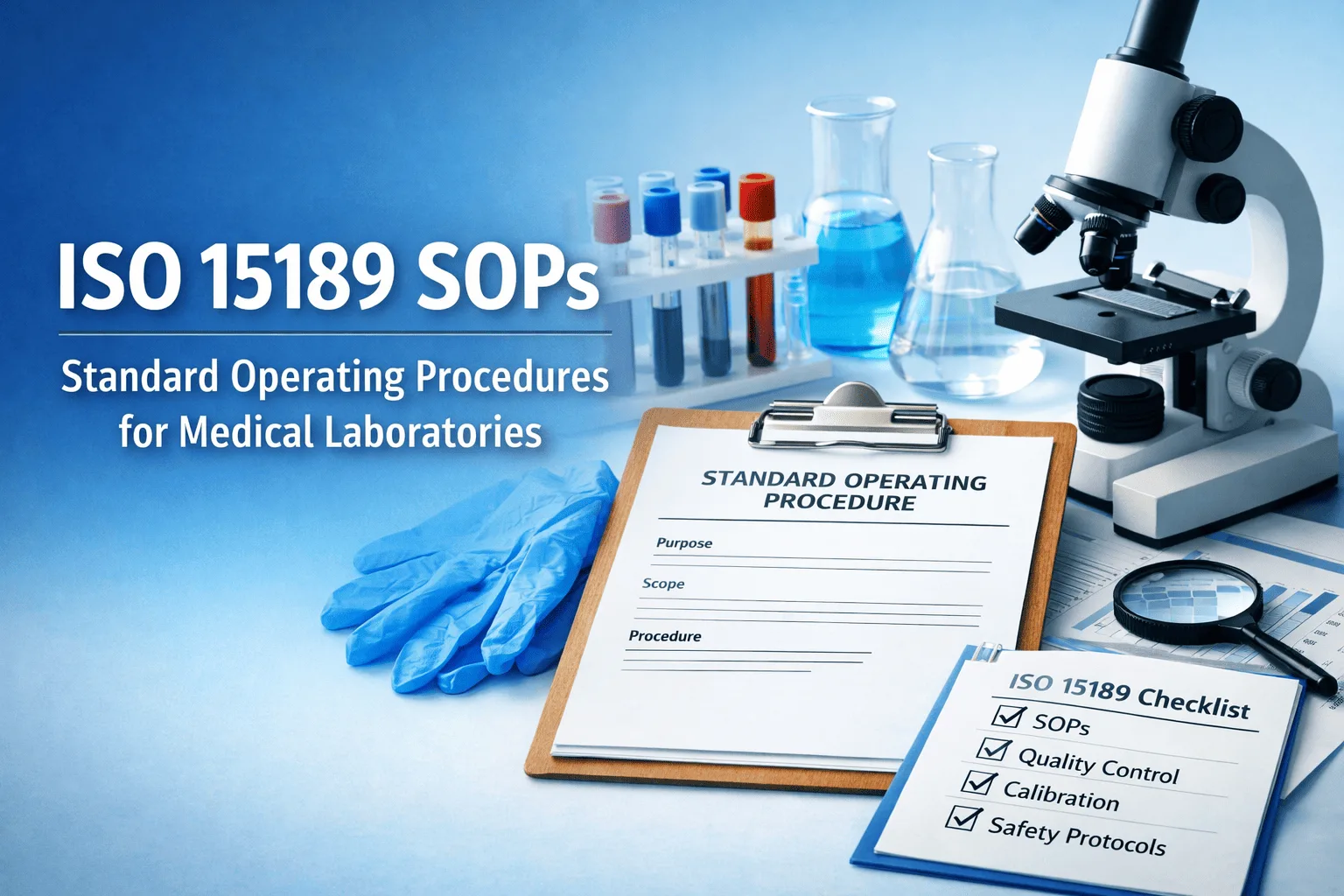
ISO 15189 SOPs (Standard Operating Procedures) are controlled, written instructions that define how specific laboratory activities must be performed to ensure quality, consistency, and compliance. In medical laboratories, these SOPs are a critical part of the ISO 15189 documents required for achieving and maintaining accreditation. They help standardize every step of laboratory operations so that results remain accurate, traceable, and reliable.
ISO 15189 concentrates on competence and quality of medical testing laboratories, while the SOPs form the basis for putting into practice the requirements of the standard. The document helps maintain consistency by ensuring that lab personnel carry out their work using a consistent approach, which minimizes any errors in testing patients.
These standard operating procedures are written instructions that define laboratory procedures to ensure quality, consistency, and compliance with accreditation requirements.
The Importance of SOPs in ISO 15189 Accreditation
In any medical laboratory seeking accreditation, SOPs play a central role. Accreditation bodies evaluate whether laboratories have documented and implemented procedures that comply with international standards.
Properly prepared SOPs help laboratories:
- Ensure consistent execution of laboratory activities
- Improve accuracy of test results and reporting
- Maintain compliance with ISO 15189 document requirements
- Support audit readiness and inspection success
Strengthen the laboratory quality management system (QMS)
Without well-defined SOPs, a laboratory may face nonconformities during audits, delaying approval.
Key Areas Covered in ISO 15189 SOPs
A complete set of ISO 15189 SOPs typically includes all phases of laboratory operations:
- Sample collection and patient identification procedures
- Specimen handling, transport, and storage
- Analytical testing methods and validation
- Equipment calibration, maintenance, and verification
- Quality control (internal and external) procedures
- Result reporting and interpretation
Safety, biohazard management, and waste disposal
Each standard procedure must be clearly documented, version-controlled, and regularly reviewed to ensure continued compliance with quality and regulatory requirements.
How to Create ISO 15189 SOPs Step-by-Step
Developing SOPs aligned with ISO 15189 requires a structured and systematic approach:
1. Identify Laboratory Processes
Begin by mapping all laboratory activities, including pre-analytical, analytical, and post-analytical stages.
2. Define SOP Format
Each SOP should follow a standard structure:
- Purpose and scope
- Responsibilities
- Detailed step-by-step procedure
- Required equipment and materials
- Safety precautions
Records and documentation requirements
3. Align with ISO 15189 Requirements
Ensure that each SOP supports compliance with ISO 15189 documents, including document control, traceability, and risk management.
4. Write Clear Procedures
Use simple, precise language so laboratory personnel can easily understand and follow the procedures without ambiguity.
5. Review and Approval
All SOPs must be reviewed by qualified technical personnel and approved by authorized management before implementation.
6. Training and Implementation
Staff training ensures that all procedures are correctly understood and consistently applied in daily laboratory operations.
7. Regular Updates
SOPs must be periodically reviewed and updated based on changes in equipment, methods, or accreditation requirements.
Supporting ISO 15189 Documentation
Creating SOPs from scratch can be time-consuming, especially for laboratories preparing for accreditation. Many organizations prefer structured documentation kits to simplify implementation and ensure compliance.
Properly designed ISO 15189 documents include ready-to-use SOPs, quality manuals, forms, and checklists that align with standard requirements. These documents help laboratories reduce preparation time, maintain consistency, and ensure alignment with international quality and compliance standards.
Conclusion
ISO 15189 SOPs are essential components of laboratory quality systems and form the backbone of effective laboratory operations. They ensure accuracy, consistency, and compliance across all activities. Properly developed SOPs not only support successful accreditation but also improve overall laboratory performance, reliability, and patient safety standards effectively.