
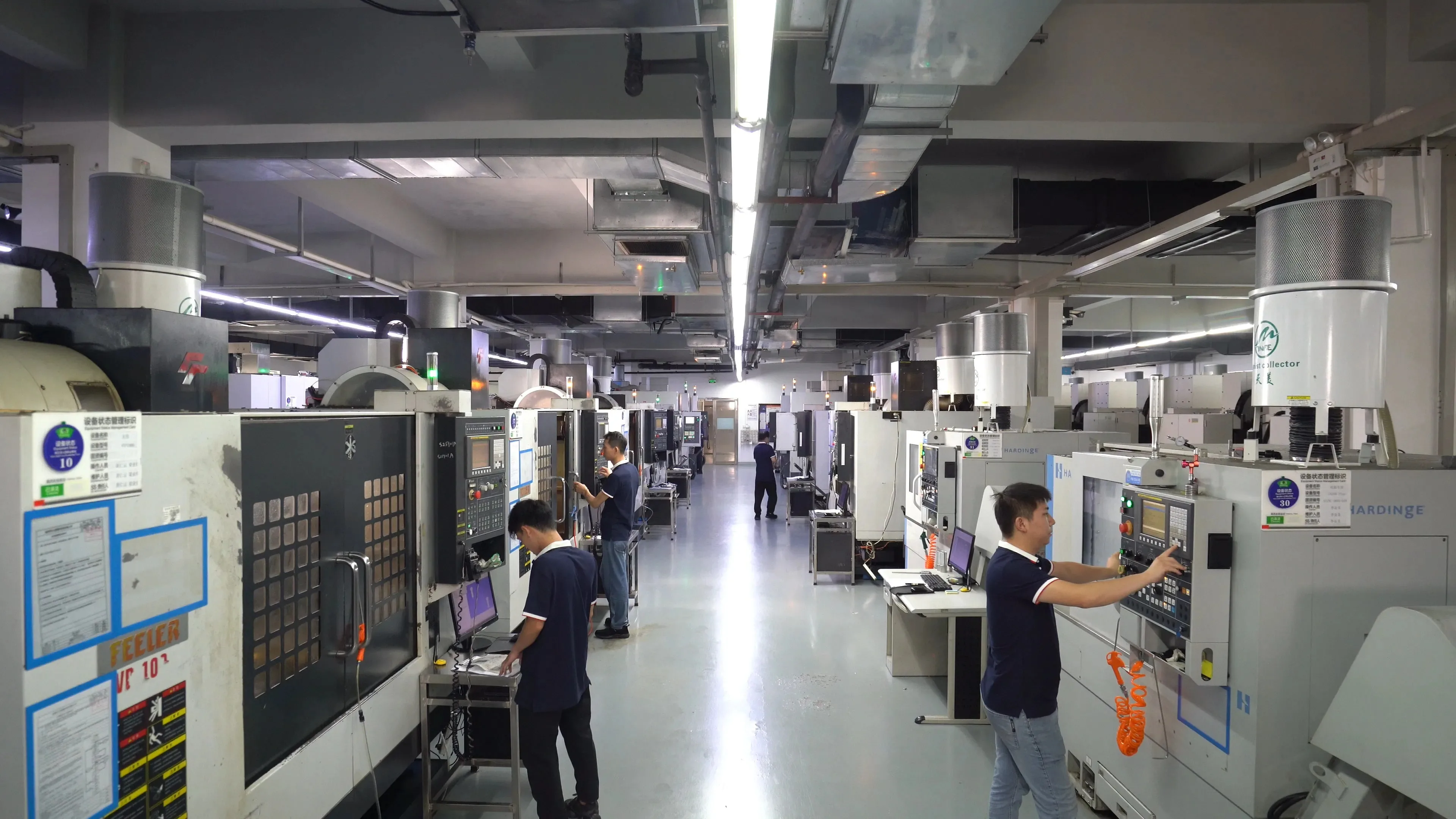
If you have ever held a smartphone, driven a car, or used a medical device, you have already benefited from CNC machining, even if you never heard the term. CNC machining is one of the most widely used manufacturing technologies in the world today, and for good reason. It produces parts with remarkable accuracy, consistency, and speed.
In this guide, we break down exactly what CNC machining is, how it works, what industries rely on it, and how modern CNC machining solutions are making precision manufacturing more accessible than ever before.
What Is CNC Machining?
CNC stands for Computer Numerical Control. CNC machining is a subtractive manufacturing process in which pre-programmed computer software controls the movement of factory tools and machinery. Unlike manual machining, where a human operator manually guides cutting tools, CNC machining automates the entire process using digital instructions.
The result is a manufacturing method capable of producing highly precise, complex parts from a wide variety of materials including metals, plastics, and composites, with tolerances as tight as ±0.001 inch.
At its core, CNC machining works by removing material from a solid block (called a workpiece or stock) using cutting tools, drills, and lathes that move along multiple axes. The machine follows a set of coded instructions, typically written in a language called G-code, to carve the exact geometry specified in a CAD (Computer-Aided Design) file.
How Does CNC Machining Work? Step by Step
Understanding the CNC machining process helps engineers and product designers make better decisions when ordering parts. Here is how the process works from start to finish:
Step 1: CAD Design
Everything starts with a 3D digital model created in CAD software (such as SolidWorks, Fusion 360, or AutoCAD). This file defines every dimension, feature, hole, and surface finish of the part. The CAD file is the blueprint that the CNC machine ultimately follows.
Step 2: CAM Programming
The CAD file is imported into CAM (Computer-Aided Manufacturing) software, which translates the 3D model into machine-readable instructions, primarily G-code. The CAM program defines tool paths, cutting speeds, depth of cuts, and tool selection.
Step 3: Machine Setup
A machinist sets up the CNC machine by securing the workpiece into place, installing the correct cutting tools, and loading the G-code program. Proper setup is critical for ensuring alignment and accuracy throughout the machining run.
Step 4: Machining
The CNC machine executes the programmed instructions automatically. Cutting tools move along X, Y, Z, and sometimes additional rotational axes to remove material from the workpiece. Depending on the complexity of the part, this step may involve multiple tool changes and machining operations.
Step 5: Quality Inspection
After machining, the finished part undergoes dimensional inspection using tools like CMM (Coordinate Measuring Machines) and calipers to verify that all features meet the required tolerances and specifications.
Quick Fact
Modern CNC machining centers can operate continuously 24 hours a day, 7 days a week, making them ideal for both rapid prototyping and high-volume production runs.
Main Types of CNC Machining Operations
CNC machining is not a single process, it is a family of related operations. The most common include:
- CNC Milling: A rotating cutting tool moves across a stationary workpiece to remove material and create flat surfaces, slots, pockets, and complex 3D geometries.
- CNC Turning: The workpiece rotates against a stationary cutting tool on a lathe. Ideal for cylindrical or round parts such as shafts, bolts, and bushings.
- CNC Drilling: Precise holes are drilled into the workpiece at exact locations and depths.
- Wire EDM (Electrical Discharge Machining): A thin wire uses electrical sparks to cut through conductive metals with extreme precision, ideal for intricate shapes and hard materials that are difficult to machine conventionally.
- 5-Axis Machining: The cutting tool moves along five axes simultaneously, enabling the production of highly complex geometries in a single setup without repositioning the part.
What Materials Can Be CNC Machined?
One of the greatest strengths of CNC machining is its material versatility. Common materials include:
- Metals: Aluminum, stainless steel, titanium, brass, copper, Inconel, magnesium
- Plastics: ABS, Delrin (POM), Nylon, PEEK, Polycarbonate, UHMW
- Composites: Carbon fiber reinforced polymers
- Specialty alloys: Tool steels, bronze, kovar
The choice of material depends on the application, required mechanical properties, weight constraints, and budget. For example, aluminum is widely preferred for aerospace and consumer electronics due to its excellent strength-to-weight ratio and ease of machining.
Why CNC Machining Is the Right Choice for Precision Parts
Not all manufacturing processes are created equal. CNC machining stands out for several critical reasons:
- Extreme precision: CNC machines achieve tolerances as tight as ±0.001 inch, making them essential for applications where even a fraction of a millimeter matters, such as in aerospace components, surgical instruments, and automotive fuel systems.
- Repeatability: Once a program is set, every single part produced is identical. This is crucial for production runs where consistency is non-negotiable.
- Speed: Modern CNC machining centers can produce complex parts within hours, with some services offering 1-day lead times for urgent prototypes.
- Material flexibility: CNC machining works with a broader range of materials than 3D printing or casting, giving engineers more design freedom.
- No minimum order quantity: Unlike injection molding, CNC machining requires no expensive tooling, making it cost-effective for single prototype parts all the way through to low-volume production.
Industries That Rely on CNC Machining
CNC machining is the backbone of modern manufacturing across virtually every industry. Key sectors include:
- Aerospace & Defense: Flight-critical components like brackets, housings, and structural parts demand the tight tolerances that only CNC machining can reliably deliver.
- Automotive: Engine components, transmission parts, fuel system components, and EV battery housings are routinely CNC machined for performance and reliability.
- Medical & Dental: Surgical instruments, implants, and diagnostic device housings require biocompatible materials and ISO 13485 certified manufacturing, standards CNC machining is built to meet.
- Robotics: Precision motor mounts, gear housings, and structural frames for robots demand complex geometries that multi-axis CNC machining handles with ease.
- Consumer Electronics: Enclosures, heat sinks, and internal structural components for devices from laptops to cameras are commonly CNC machined from aluminum.
How to Access CNC Machining Solutions Online
Historically, sourcing CNC machined parts meant navigating a complex supply chain, calling multiple machine shops, and waiting weeks for quotes. That has changed dramatically with digital manufacturing platforms.
Today, companies like FlagShip (fsproto.com) offer on-demand CNC machining solutions that let engineers upload a CAD file and receive an instant quote within minutes. With 16+ years of manufacturing experience, ISO 9001 and IATF 16949 certifications, and a network of 800+ vetted suppliers, FlagShip delivers precision CNC machined parts with lead times as fast as 1 day.
Whether you need a single aluminum prototype or a batch of 10,000 stainless steel components, the right CNC machining platform removes the friction from the procurement process, so your team can focus on engineering, not logistics.
Conclusion
CNC machining is a cornerstone of modern precision manufacturing. From its foundations in computer-controlled automation to its ability to produce complex geometries across hundreds of materials, it remains the go-to process for engineers who demand accuracy, consistency, and speed.
As digital platforms continue to democratize access to manufacturing, getting high-quality CNC machined parts has never been easier. Whether you are developing a prototype for the first time or scaling a production run, understanding the fundamentals of CNC machining puts you in a far stronger position to make informed decisions and bring better products to market, faster.
Looking for Fast, Reliable CNC Machining?
FlagShip provides end-to-end CNC machining solutions for prototypes and production parts. Upload your CAD file and get an instant quote today.