
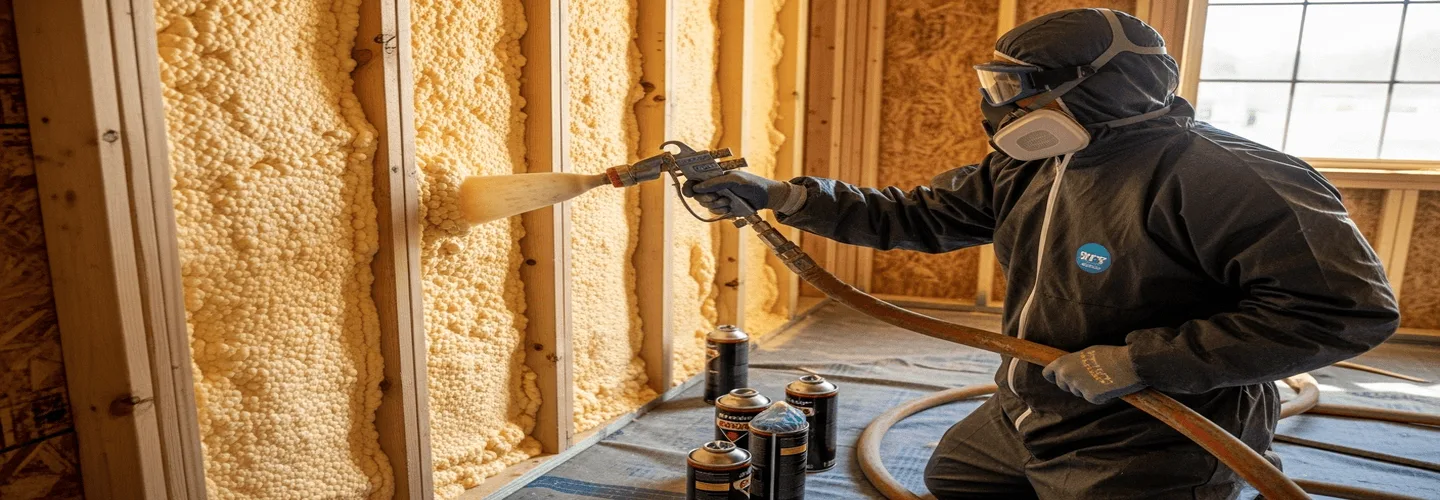
Blown-in insulation is a method of filling wall cavities and attic spaces by using a specialized machine to spray loose-fill materials through a long hose. This process allows small particles of insulation to settle into tight corners, gaps, and irregularly shaped areas that standard batts might miss.
This article provides a detailed look at how this material functions and why it suits the specific needs of Florida residents. With years of field experience in thermal management, professionals have found that this approach offers a practical way to manage heat transfer and moisture in humid environments.
How does blown-in insulation actually work in your home
The installation process for Blown-In Insulation in Pensacola involves a high-powered blower that loosens and distributes insulation material through a delivery hose. Once applied to an attic or wall cavity, the material forms a dense, uniform layer that helps resist heat transfer and improve overall energy efficiency.
In Pensacola’s hot and humid climate, Blown-In Insulation in Pensacola acts as an effective barrier against intense summer heat. Because the insulation is loose-fill, it easily settles around electrical boxes, plumbing lines, and roof framing, helping eliminate gaps that can lead to uneven temperatures throughout the home.
This insulation method is especially beneficial for upgrading older homes where installing traditional fiberglass batts would require significant demolition. With Blown-In Insulation in Pensacola, technicians can often drill small access holes and fill wall cavities with insulation, providing a cleaner, faster, and less invasive installation process while improving indoor comfort year-round.
Primary materials used in loose-fill systems
When looking at what is blown-in insulation, you will typically find two main varieties: cellulose and fiberglass. Both materials are processed into small chunks or fibers that are ideal for the blowing process, though they differ in their physical properties.
- Cellulose: This is primarily recycled newsprint that has been treated with boric acid for fire and pest resistance.
- Fiberglass: This consists of spun glass fibers that are naturally fire-resistant and do not settle as much as organic materials.
- Mineral Wool: While less common, this stone-based material offers superior sound dampening and fire protection.
Comparison of common blown insulation types
FeatureCelluloseFiberglassPrimary MaterialRecycled PaperSpun GlassFire ResistanceChemical TreatmentNaturally Non-combustibleR-Value per Inch3.2 to 3.82.2 to 2.7Settling Over TimeCan settle up to 20%Very minimal settlingPest ResistanceHigh (Boric Acid)Low
Why Pensacola homeowners choose this method
Living in Northwest Florida means dealing with extreme humidity and high temperatures for most of the year. What is blown-in insulation doing for your comfort? It specifically targets the heat that radiates from your roof into your living space.
Because the Gulf Coast experiences high moisture levels, the density of blown-in insulation material helps prevent air from circulating too freely in the attic. This reduces the workload on your air conditioning unit, which can often account for more than half of your monthly utility costs during July and August.
Bonus Tip: If you choose cellulose, ensure it is "dense-packed" in walls to prevent the material from sagging over time due to gravity and humidity.
What is blown-in insulation made of for maximum efficiency
Manufacturers design these products to be lightweight but thermally dense. For instance, high-quality blown-in insulation material often includes additives that deter nesting insects like silverfish or ants, which are common in Florida attics.
The fiberglass version uses recycled glass melted and spun into thin strands. These strands trap pockets of air, and since air is a poor conductor of heat, the insulation keeps the warmth out of your house. It is a simple concept that relies on high-quality manufacturing to stay effective for decades.
The installation process for your property
The process begins outside the home, where a large hopper is filled with the chosen material. One person stays with the machine to break up the compressed bags while another person handles the hose inside the attic space.
- Technicians seal air leaks around chimneys and light fixtures before starting.
- Baffles are installed near the eaves to ensure that the new material does not block the soffit vents.
- The installer moves backward from the furthest corner of the attic, spraying an even layer.
- Rulers are often attached to the wooden framing to verify that the depth meets local building codes.
Factors to review before you start an insulation project
Before you commit to a specific material or contractor, you should evaluate the current state of your attic. If there is evidence of past roof leaks or mold, the wet insulation must be removed entirely before adding new layers.
Check for existing moisture
Wet material loses its ability to block heat and can cause structural rot.
Verify electrical safety
Older knob-and-tube wiring should not be covered by any insulation without a professional inspection.
Evaluate attic access
Ensure the opening is large enough for a hose and that there is sufficient headroom for the installer to work.
Consider future storage
If you use your attic for storage, you may need to build a raised platform so the insulation is not compressed.
Bonus Tip: Always ask for a post-installation report that includes the number of bags used, as this is the only way to verify the R-value achieved.
Long-term benefits for your utility bills
Recent data suggests that properly sealing and insulating a home can save a resident roughly 15% on heating and cooling costs. In a climate like Pensacola's, where the AC runs almost year-round, these savings accumulate quickly, often paying for the installation within a few years.
Furthermore, a consistent layer of what is blown-in insulation reduces the "stack effect." This is when cold air escapes through the bottom of the house while hot air is pulled in through the top. By stopping this cycle, the temperature remains much more stable from room to room.
How to maintain your attic after installation
Once the material is in place, it requires very little maintenance. However, you should avoid walking on it, as compression ruins the air pockets that provide thermal resistance. If you need to have electrical work or plumbing repairs done, remind the workers to fluff the material back into place when they finish.
Periodic checks after major storms are also a good idea. In Florida, heavy wind-driven rain can sometimes find its way through vents. If the material becomes soaked, it may need to be replaced to prevent mold growth and maintain its effectiveness.
Achieving the best results for your home
To get the most out of your investment, focus on the depth of the material. In Northwest Florida, the Department of Energy often recommends an R-value of R-38 to R-60 for attics. This usually equates to a depth of about 12 to 17 inches, depending on the specific product used.
The choice of material often comes down to personal preference regarding budget and environmental impact. Both fiberglass and cellulose are excellent options, provided they are installed at the correct density and depth to combat the Florida sun.
Professional assistance for your insulation needs and a free quote
If you are ready to improve the comfort of your home and lower your monthly energy expenses, seeking expert guidance is the best next step. You can reach out to the team at Prestige Insulation Solutions to discuss your specific needs and receive a detailed assessment of your property. They offer professional advice on which materials will work best for your attic configuration and local climate. To get started with a free quote and a clear plan for your home, you can contact them at (850) 429-4969 or send an email to [email protected] for more information.You can also refer to the map below for their location and service area information.
Common questions about loose-fill insulation systems
How long does the installation usually take?
Most standard residential attics can be completed in about 2 to 4 hours, depending on the size of the space and the depth required.
Is the material safe for people with allergies?
Modern materials are designed to be low-dust, and once they settle, they do not circulate through the home's air vents if the attic is properly sealed.
Can you blow new insulation over the old stuff?
Yes, as long as the existing insulation is dry and free of mold or pests, it can serve as a base layer for new material.
Does blown insulation lose its effectiveness over time?
While some settling occurs, especially with cellulose, the thermal resistance remains largely stable for 20 to 30 years if kept dry.
What is the difference between R-value and thickness?
R-value measures the resistance to heat flow; thickness is simply the physical depth. Different materials require different depths to reach the same R-value.