
In today’s fast-moving business environment, reliable communication is the backbone of success. As companies look for smarter and more budget-friendly solutions, VoIP (Voice over IP) technology has become the go-to choice. One essential device that helps businesses switch from traditional phones to internet-based calling is the 8 Port VoIP Gateway. Whether you run a small office or manage a branch network, this device offers a smart and affordable way to modernize your communication setup.
What is an 8 Port VoIP Gateway?
An 8 Port VoIP Gateway is a hardware device that connects up to eight analog devices—such as landline phones or fax machines—to a VoIP network. It acts as a bridge between your traditional communication equipment and modern IP telephony systems. There are two primary types of VoIP gateways: FXS and FXO. FXS (Foreign Exchange Subscriber) gateways connect analog devices to a VoIP system, while FXO (Foreign Exchange Office) gateways connect the VoIP system to traditional telephone lines. For most small and medium-sized businesses, the 8 Port FXS Gateway is ideal because it lets you use your existing analog phones over a VoIP network without upgrading to IP phones.
How Does It Work?
The 8 Port FXS VoIP Gateway works by converting analog voice signals from your phones into digital packets that can be transmitted over the internet. You connect your analog phones to the eight FXS ports on the gateway. The gateway then transforms the analog audio into VoIP signals and routes them through your internet connection to your SIP server, IP PBX, or VoIP provider. This process allows traditional phones to make and receive internet-based calls. It’s a simple and efficient way to transition to VoIP while retaining the hardware you already have.
Key Features of an 8 Port VoIP Gateway
A good 8 Port VoIP Gateway comes with features designed to improve communication quality, simplify management, and ensure compatibility. It typically supports SIP protocol for VoIP communication. Echo cancellation and noise reduction help deliver clear voice quality. Some gateways include web-based interfaces for easy configuration and monitoring. Advanced call routing allows businesses to control how calls are directed based on time, number, or destination. Most devices support remote management, firmware upgrades, and integration with popular VoIP platforms. Security features like password protection, TLS, and SRTP help protect voice traffic from unauthorized access.
Business Benefits of Using an 8 Port VoIP Gateway
One of the biggest advantages of using an 8 Port VoIP Gateway is cost savings. Instead of buying new IP phones, you can use your existing analog phones. This reduces upfront investment and makes the switch to VoIP more affordable. The gateway also simplifies migration, letting you upgrade at your own pace without disrupting business operations. Another benefit is reliability. Many gateways offer failover capabilities, so if one network path goes down, the call can be routed through a backup. You also get flexibility in managing internal and external calls through advanced routing and integration features.
Where Can You Use an 8 Port VoIP Gateway?
An 8 Port VoIP Gateway is ideal for many industries and environments. In small and medium-sized offices, it connects legacy desk phones to a central VoIP system. In hotels, it can be used to connect room phones to the main reception or call center. In educational institutions, it links old analog phones in administrative areas to modern VoIP solutions. In call centers, it allows small teams to operate with existing phones. Even in manufacturing plants or warehouses, the gateway can connect communication points where IP connectivity is limited.
What to Consider Before Buying
Before choosing an 8 Port VoIP Gateway, ensure it’s compatible with your existing SIP server, IP PBX, or VoIP service provider. Look for features like call routing, echo cancellation, and support for T.38 fax over IP if you use fax machines. Check if the device supports remote management and dual power options for higher reliability. Some gateways offer PoE (Power over Ethernet) support for simpler installation. Also consider the level of technical support and firmware updates provided by the brand. A stable, secure, and easy-to-manage gateway will save time and reduce maintenance headaches in the long run.
Why Choose Dinstar’s 8 Port VoIP Gateway?
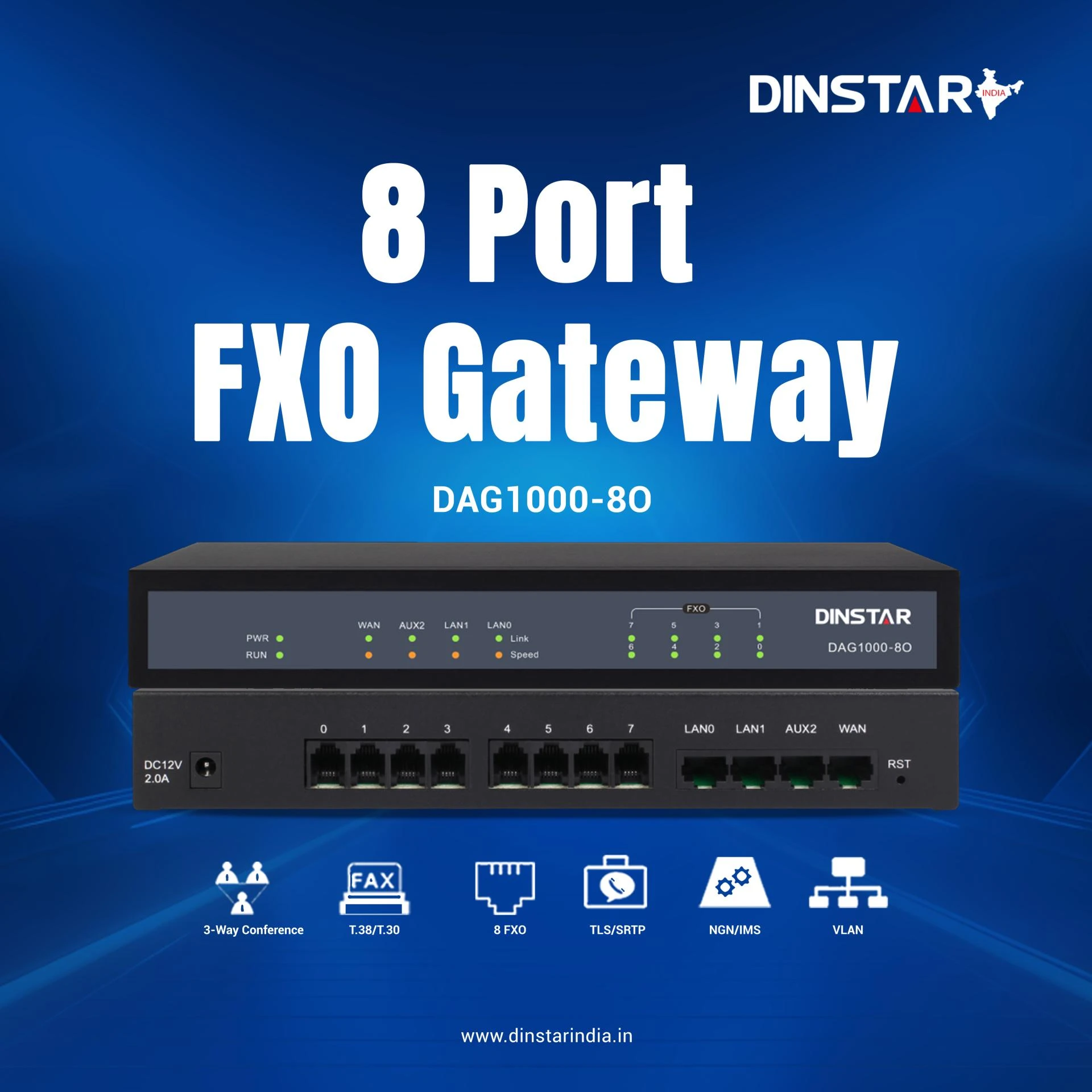
Dinstar is a trusted name in VoIP hardware, known for its reliable and easy-to-integrate gateways. Their 8 Port FXS Gateway is designed for businesses that want to maintain their analog phones while adopting modern IP communication. It supports SIP protocol, offers advanced voice processing features, and is compatible with popular VoIP systems. The device comes with a user-friendly web interface, strong security features, and excellent voice quality. Whether you are setting up a new office or upgrading your existing phone network, Dinstar’s VoIP Gateways can help reduce costs and improve communication efficiency.
Conclusion
An 8 Port VoIP Gateway is a simple and effective tool that helps businesses bridge the gap between analog and digital communication. It allows you to continue using your existing phones while enjoying the benefits of VoIP, such as lower call costs, improved flexibility, and advanced features. Whether you're a small business owner, hotel manager, school administrator, or call center supervisor, this gateway can make your transition to modern telephony smooth and budget-friendly. Choosing the right gateway—like the one offered by Dinstar—ensures reliable performance, easy setup, and long-term value for your communication infrastructure.