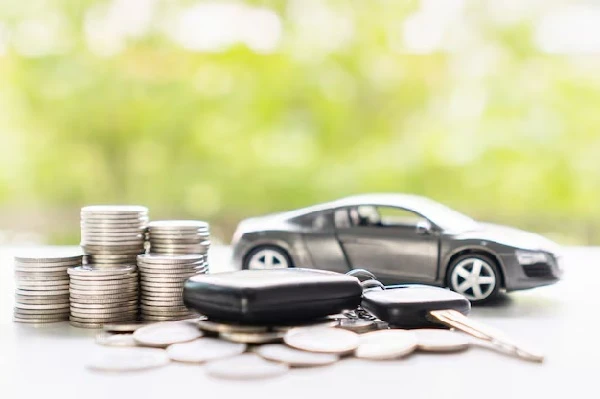
A zero down payment option on second-hand car loans allows you to buy a used car without making any upfront payment. Normally, car buyers need to contribute a down payment of 10%–30% of the vehicle’s value. The lender then finances the remaining portion. In this case, however, the lender covers the entire purchase price, leaving you with no initial outflow.
For instance, if a used car is priced at ₹5 Lakhs, you would not need to pay ₹50,000–₹1.5 Lakhs as a down payment. Instead, the lender funds the complete amount, and you repay it through monthly instalments.
How Does It Work?
Zero down payment on second-hand car loans works much like traditional car loans, with one key difference: the entire cost of the vehicle is financed.
- The lender evaluates the car’s market value, your income, and your credit score
- If you qualify, the loan covers the full value of the vehicle
- You repay the amount in equated monthly instalments (EMIs) over a fixed tenure, with interest
Example: If a car is valued at ₹5 Lakhs, and the lender offers 100% financing at 12% interest for 5 years, your EMI would be approximately ₹11,122. Without a down payment, this figure remains higher than standard loans, where part of the cost is already paid up front.
Benefits of Zero Down Payment for Used Cars
Choosing this financing route has some clear advantages:
Liquidity preservation
You can keep your savings intact for emergencies or other priorities
Faster access
Without arranging funds for a down payment, you can get your vehicle sooner
Ideal for first-time buyers
Those with limited savings can still secure a car
Useful for urgent requirements
If you need a car immediately for commuting to work or supporting a family business, this option speeds up the process.
Risks and Limitations to Consider
While attractive, zero down payment loans come with certain drawbacks:
Higher EMIs
Since the loan amount is larger, your monthly repayment will be more burdensome
Greater interest outgo
Over the loan tenure, the total interest paid is significantly higher compared to loans with partial down payments
Eligibility restrictions
Only borrowers with strong credit profiles and stable income are usually approved
Depreciation risk
Cars lose value quickly, and with no upfront contribution, your outstanding loan may exceed the car’s resale value for some years.
Eligibility Criteria and Documents Required
Though requirements vary between lenders, the general criteria include:
- Age: Usually 21–65 years
- Income: Regular and verifiable monthly income
- Credit Score: A good track record of repayment, often 700 or above
- Car Age: Many lenders restrict financing for vehicles older than 7–10 years
The documents typically required are:
- Identity proof (Aadhaar, passport, or voter ID)
- Address proof (utility bill, Aadhaar, or passport)
- Income proof (salary slips, bank statements, or ITRs)
- Car documents (RC book, insurance, pollution certificate)
How to Apply for a Used Car Loan with Zero Down Payment?
The process is straightforward if you meet eligibility requirements:
- Research lenders offering zero down payment options for used cars
- Check your eligibility by calculating EMIs and the loan-to-income ratio
- Submit your application with personal, income, and car details
- Provide the required documents for verification
- Loan approval and disbursal take place, often within a few days
Example: A borrower choosing a Bajaj Finance used car loan may get structured financing covering the complete purchase value. This enables the buyer to drive home a vehicle worth ₹4 Lakhs without paying anything upfront, subject to approval and terms.
Alternatives to Zero Down Payment Loans
Not every buyer will qualify for zero down payment financing. Alternatives include:
Regular used car loans
You pay 10%–30% as a down payment, and the rest is financed
Personal loans
It can be used for buying a car, but interest rates may be higher
Car leasing or subscription models
These allow vehicle usage without ownership and can be cost-effective in the short term
Calculation of Zero Down Payment Loan
To understand the financial impact, consider the following scenario:
- Car price: ₹4 Lakhs
- Tenure: 5 years
- Interest rate: 11% p.a.
Case 1: Zero Down Payment
- Loan Amount: ₹4 Lakhs
- EMI: Around ₹8,700
- Total Interest: About ₹1.22 Lakhs
- Total Outgo: ₹5.22 Lakhs
Case 2: With ₹50,000 Down Payment
- Loan Amount: ₹3.5 Lakhs
- EMI: Around ₹7,615
- Total Interest: About ₹1.07 Lakhs
- Total Outgo: ₹4.57 Lakhs
This example shows how even a modest down payment reduces EMIs and total repayment.
Key Points to Keep in Mind
- Always assess whether EMIs fit within your budget
- Compare offers from multiple lenders to ensure better terms
- Factor in insurance, maintenance, and resale value
- Avoid stretching your tenure excessively, as it increases interest outgo
- Consider making a part-payment later to reduce the outstanding balance
Conclusion
Zero down payment loans for second-hand cars are useful if you want immediate access to a vehicle without upfront costs. They work best when you have a strong repayment capacity and prefer conserving liquidity. However, the higher EMIs and interest burden demand careful consideration. Whenever possible, making even a small down payment can help lower costs and improve long-term affordability.