
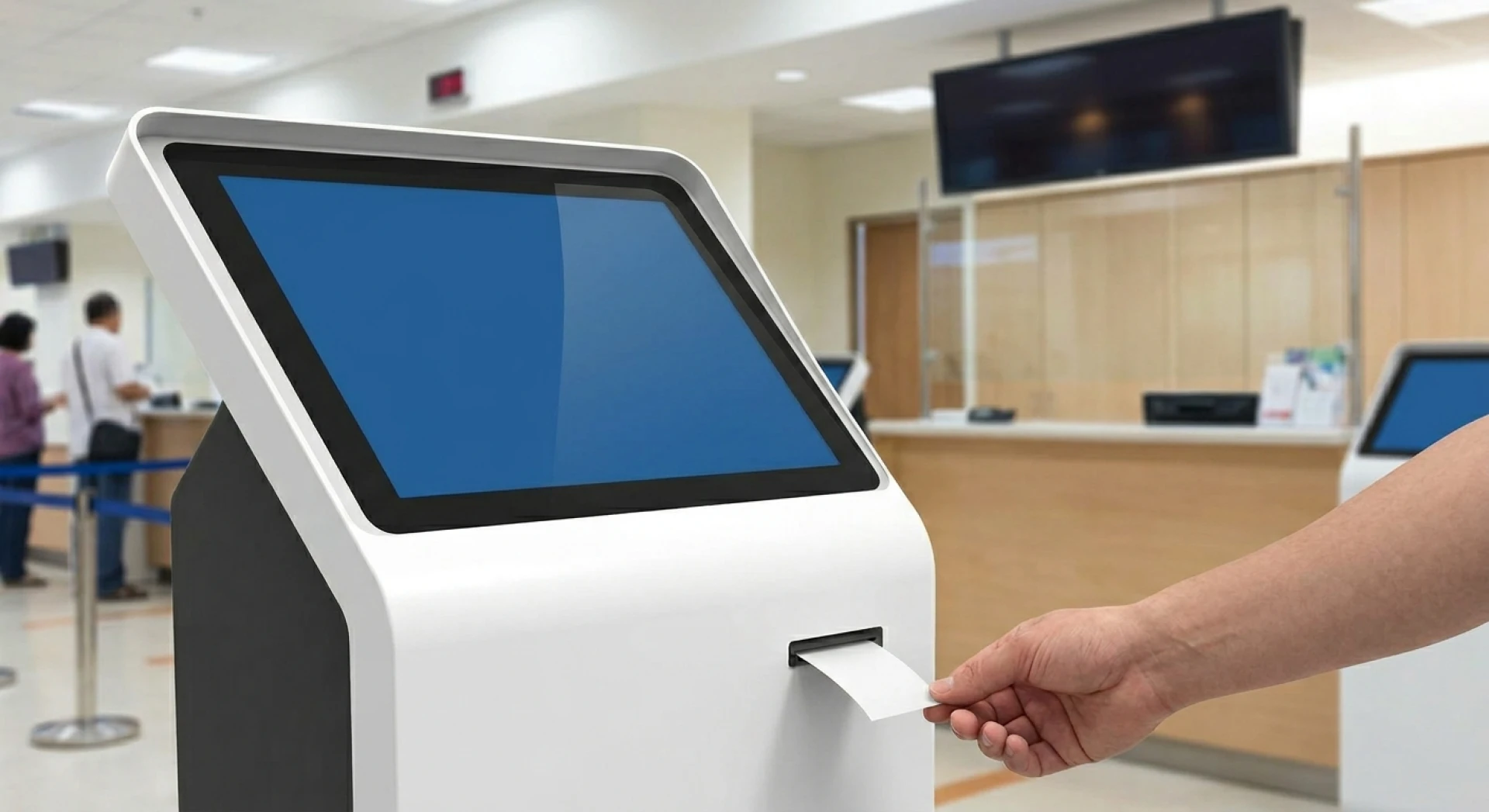
A queue management system (QMS) is a software and hardware solution that controls the flow of customers waiting for service. It assigns customers to queues, tracks their position in real time, and directs them to the right service point when it is their turn. Businesses use QMS to cut wait times, reduce crowding, and improve service delivery.
What Problems Does a Queue Management System Solve?
Long, unorganized queues cost businesses more than just time. Studies show that 75% of customers will leave a business after waiting too long, and a poor waiting experience is one of the top reasons customers do not return. A QMS addresses this by bringing order to customer flow and giving both staff and customers clear visibility into the service process.
Common problems a QMS solves include:
• Unpredictable wait times that frustrate customers
• Overcrowded waiting areas that cause safety and comfort issues
• Unequal service distribution where some counters handle far more customers than others
• Lack of data on peak hours, service times, and staff performance
How Does a Queue Management System Work?
A standard QMS works in four steps. First, a customer arrives and gets a ticket, either from a physical kiosk, a mobile app, or an online booking portal. Second, the system assigns the customer a number and an estimated wait time. Third, digital displays and audio announcements call customers when it is their turn. Fourth, service staff mark the transaction as complete, and the system moves to the next customer.
Modern platforms like Q-SYS go further by connecting multiple service counters, tracking performance metrics, and generating reports that help managers make staffing decisions based on real data.
What Are the Main Types of Queue Management Systems?
Not every business needs the same setup. There are three main types:
1. Linear queue systems - customers wait in a single line and move forward as each person is served. This is the most basic setup.
2. Virtual queue systems - customers check in remotely via a mobile device and wait anywhere they choose. They receive an alert when their turn is close. This is increasingly common in banking, telecom, and healthcare.
3. Appointment-based systems - customers book a specific time slot in advance. The system manages arrivals by time, reducing on-site wait times significantly.
Which Industries Use Queue Management Systems in Kenya?
Queue management systems are used across a wide range of industries in Kenya, including banking, healthcare, government offices, retail, and telecom. These are sectors where high customer volumes, limited staff, and strict service standards make queue control a practical necessity.
For example, banks handle hundreds of transactions daily across multiple branches. Without a QMS, managing customer flow consistently across locations is nearly impossible. Healthcare facilities face similar pressure, especially in public hospitals where patient volumes are high and clinical staff are stretched.
What Should You Look for in a QMS Platform?
A reliable queue management platform should offer real-time tracking, multi-counter and multi-location support, data analytics and reporting, and the ability to connect with existing systems like CRM or appointment tools. Scalability matters too, the system should handle a 10-counter branch and a 100-counter network with equal reliability.
Queue management solutions built specifically for Kenyan markets, like those offered through Q-SYS, are designed with the operational realities of the continent in mind including variable connectivity, diverse service models, and multi-language support.
Queue management is no longer a luxury for large enterprises. Any business that serves customers in person can benefit from a structured approach to managing their time and experience.