
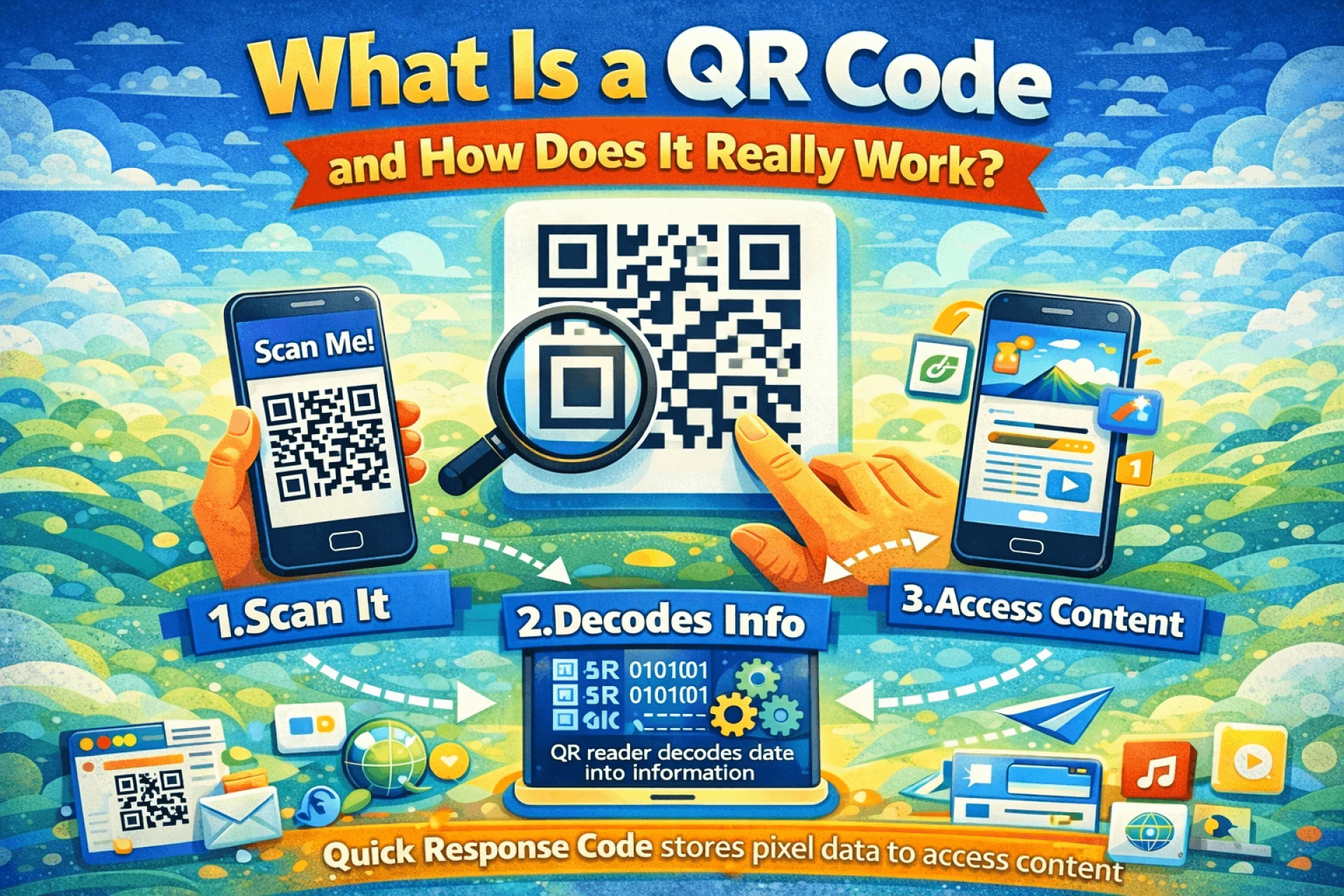
QR codes have quietly become part of everyday communication. You’ll find them on packaging, posters, receipts, menus, and websites, all serving the same purpose: fast access to information. While scanning a QR code feels simple, the technology behind it is often overlooked.
Understanding how QR codes work makes it easier to use them effectively and avoid common setup mistakes.
A Simple Explanation of QR Codes
A QR code, meaning Quick Response code, is a two-dimensional barcode made up of a square grid. Unlike older barcodes that only store information in one direction, QR codes store data both horizontally and vertically.
This layout allows QR codes to hold more information while remaining easy to scan with modern smartphones.
What Information Can Be Stored in a QR Code?
QR codes are flexible and can store many different types of data, including:
- Web page links
- Short text content
- Phone numbers
- Email addresses
- Wi-Fi network details
- App installation links
- Map locations
In most real-world cases, QR codes are used to open websites, which makes them ideal for connecting offline content with online destinations.
What Happens When a QR Code Is Scanned?
When someone scans a QR code, a few quick steps take place:
- The phone’s camera detects the grid pattern
- The pattern is decoded into digital data
- The device performs an action based on that data
That action might be opening a website, displaying information, or launching a phone call.
Why QR Codes Are Hard to Break
QR codes are built with error correction. This feature allows them to work even if parts of the code are scratched, faded, or partially blocked.
Because of this, QR codes remain reliable on printed materials that may not always stay in perfect condition.
Static and Dynamic QR Codes Explained Simply
There are two main types of QR codes:
- Static QR codes, which contain fixed data that cannot be changed
- Dynamic QR codes, which use a redirect link that can be updated later and may allow scan tracking
Dynamic QR codes are often preferred for long-term use, campaigns, or situations where flexibility is important.
How QR Codes Are Made
QR codes are created using online generators that convert information into a scannable visual format. Some tools only offer basic black-and-white codes, while others allow color, branding, and design adjustments.
Platforms such as QRColor allow users to create customized QR codes that fit branding needs while remaining easy to scan.
You can see an example here:
Why QR Codes Continue to Be Used
QR codes make access effortless. Instead of typing long URLs or searching manually, users can reach content instantly with a single scan.
This simplicity is the main reason QR codes continue to be used across industries.
When QR Codes Are Most Useful
QR codes are especially effective when:
- Users are already on mobile devices
- Space for information is limited
- Speed and convenience matter
- Physical content needs a digital extension
Used correctly, QR codes reduce friction rather than create it.
Conclusion
- A QR code is more than a graphic — it’s a fast and reliable way to share information. Understanding how QR codes work helps you choose the right type and use them more intentionally.