
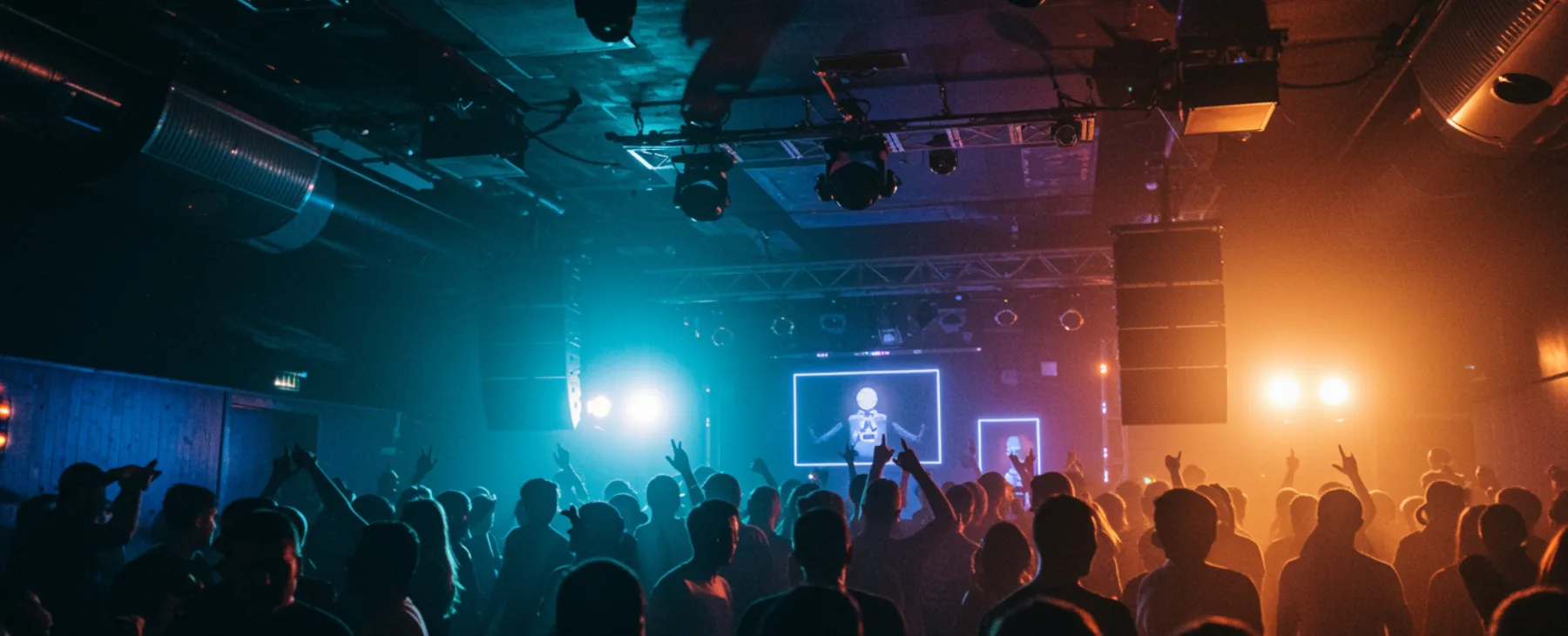
A nightclub sound system is a professionally integrated audio architecture combining line array speakers, high-excursion subwoofers, Class-D amplifiers, and DSP (Digital Signal Processor) controllers to deliver consistent, distortion-free audio at high SPL (Sound Pressure Levels) across every zone of the venue. A well-designed system directly increases guest dwell time, DJ bookings, and repeat footfall.
Why a Good Quality Sound System Matters for Nightclubs
A nightclub is an experience before it is a space. The bass frequency hits before the lights register.
If that first impression is muddy, distorted, or uneven, the guest will not return, regardless of the venue's aesthetics or pricing. According to industry benchmarks, venues with calibrated, professional audio systems report 25–40% longer average guest dwell times and significantly higher DJ and event booking rates compared to venues with uncalibrated setups.
Key Components of a Professional Nightclub Sound System
A high-performance nightclub PA system is not a single product — it is an integrated ecosystem of precision-matched components. Each element plays a defined role:
Line Array Speakers (Full-Range Coverage)
Line array speakers use multiple vertically stacked transducer elements to project sound across long distances with controlled directivity. Unlike point-source speakers, line arrays maintain consistent SPL over the entire coverage zone, preventing volume drop-off at the back of the room. Standard coverage angles of 90° horizontal × 60° vertical are typical for mid-size nightclub configurations.
High-Excursion Subwoofers (20Hz – 120Hz)
Subwoofers handle the low-frequency extension that creates the physical impact of electronic and dance music. Dual 18" or 21" high-excursion drivers in ported or cardioid configurations are the standard for club environments. Cardioid subwoofer arrays are preferred where rear-wall reflections and bass buildup are a concern.
Class-D Amplifiers (Efficiency & Power)
Class-D amplifiers deliver high power output (1,000W–10,000W per channel) at significantly higher efficiency (>85%) compared to Class-AB designs. This translates to less heat generation, smaller footprint, and lower power consumption — critical for venues running systems at full load for 6–10 hours per night.
DSP — Digital Signal Processor (System Intelligence)
DSP controllers are the brain of the system. They manage crossover frequencies, parametric EQ for room correction, delay alignment between speaker arrays, and dynamic limiting to protect components. Leading DSP platforms used in professional installations include Dante-networked systems and AES3 digital audio frameworks for low-latency signal routing.
Mixers, Audio Interfaces & Signal Chain
DJ-facing infrastructure includes digital mixers with multi-band EQ and compressor sections, DI boxes for instrument-level input, and balanced XLR signal routing throughout. A clean signal chain with Signal-to-Noise Ratio (SNR) ≥ 100dB ensures that the audio arriving at the amplifiers is free from interference and noise floor artefacts.
Acoustic Treatment (Room Correction)
Acoustic panels, bass traps, and diffusers address the room's natural reverb characteristics. Without acoustic treatment, even the best speaker system will produce muddy audio due to flutter echo, comb filtering, and low-frequency room modes. Our team always conducts an acoustic analysis using measurement-grade software before finalising any system design.
Read more:- https://www.techvault.co.in/blog/article/why-a-good-quality-sound-system-matter-for-nightclubs