You have an app idea. You think it could work. But should you build the whole thing first?
Most founders answer this wrong. They spend months on features nobody asked for. Then they run out of money before they learn anything useful.
This is where an MVP comes in. It saves you from that trap. Many teams offering app development services push this step for a reason.
What Does MVP Actually Mean?
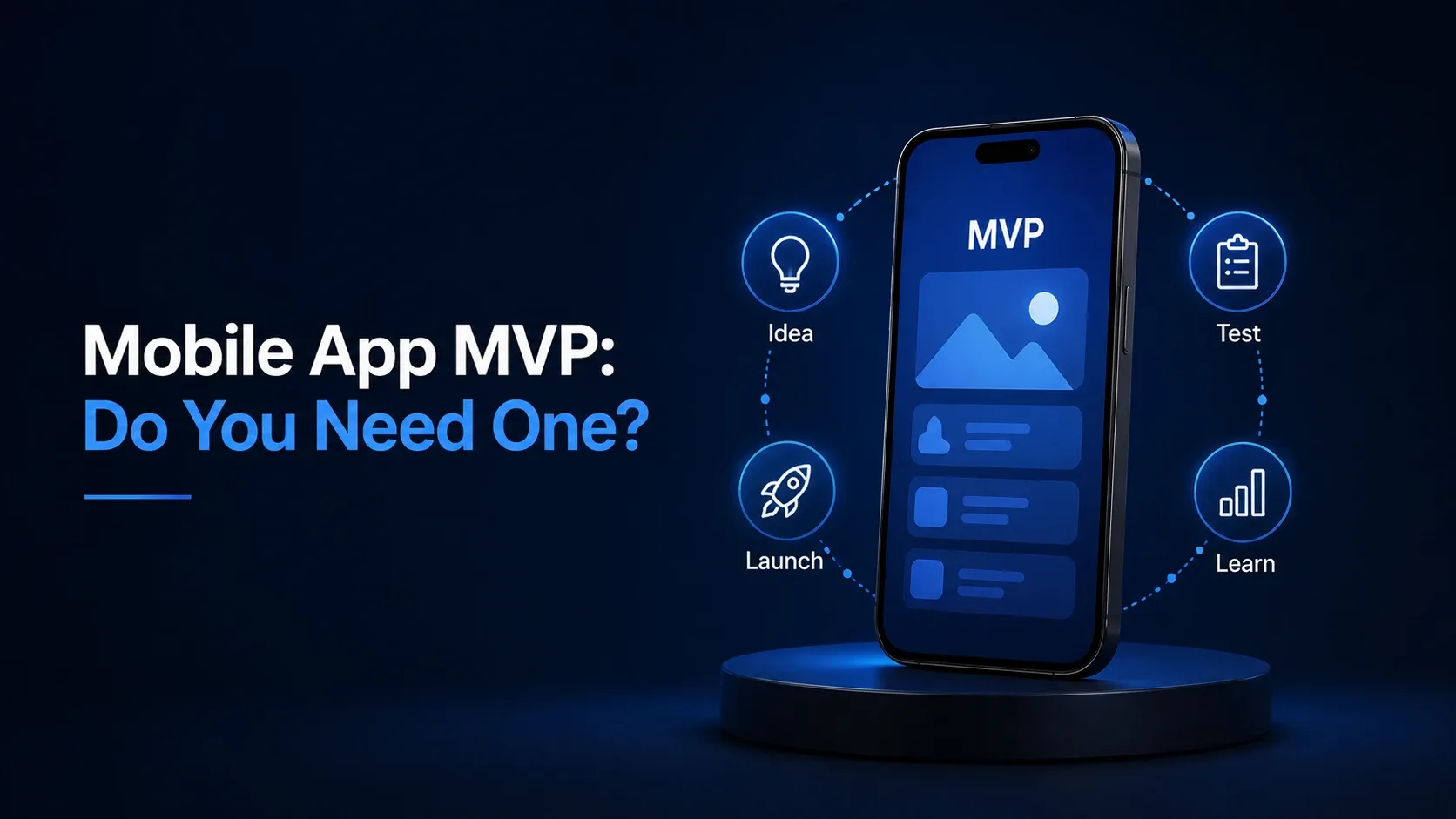
MVP stands for Minimum Viable Product. It is the smallest version of your app that still works.
Not a sketch. Not a mockup. A real app people can actually use.
The idea came from the Lean Startup method, a way of building products through testing instead of guessing. You build one core feature. You release it fast. Then you watch what real users do.
What Makes an MVP "Viable"?
The word "minimum" gets all the attention. People forget the second word.
Viable means it actually works. Not a broken demo. Not a fake button that does nothing when tapped.
A viable MVP solves one real problem, start to finish. A user opens the app, does the one thing it promises, and gets real value. If that loop is missing, it isn't an MVP. It's just an unfinished app with a nicer name.
Why Startups Build an MVP First
Here is a hard truth. Most new products fail. Not because the tech was bad. Because nobody wanted them.
A CB Insights study found poor product-market fit tops the list of startup failure reasons. Founders build first and ask questions later. That order is backward.
An MVP flips it. You ask the market a question before you spend the big money. The app itself becomes the question.
MVP vs Full App: A Quick Comparison
PointMVPFull AppFeaturesOne or two core onesEverything plannedBuild timeWeeksMonths, sometimes yearsGoalTest the ideaServe the whole marketCostLowHighFeedbackEarly, from real usersLate, after launchRiskSmallBig
The table looks simple. The decision behind it usually isn't.
Real Apps That Started Small
Uber didn't launch as the app you use today. Early versions let people request a black car in one city. No driver ratings. No food delivery. Just one button that worked.
Dropbox skipped building anything at first. The founder made a short video showing how the file-syncing idea would work. Sign-ups jumped overnight, before a single line of the real product existed.
Airbnb began even smaller. Two guys rented air mattresses in their own apartment. That tiny test became a company worth billions.
Instagram has a similar story. The app began as a cluttered check-in tool called Burbn. It had games, plans, and photo sharing all mixed together. Almost nobody used most of it.
The founders looked at the data instead of their original plan. One feature got used far more than the rest. Photos. So they cut everything else and rebuilt around that single feature.
None of these started polished. They started small and testable.
What Does an MVP Cost?
This changes a lot by app type, so treat any exact number with caution. Still, a few things hold true across most projects.
A simple MVP with one core feature costs far less than a full app with logins, payments, and admin panels. Fewer screens mean fewer hours. Fewer hours mean a smaller bill.
Cost also depends on platform choices. One platform first, instead of both iOS and Android at once, cuts the budget again. Many teams launch on a single platform, test it, then expand once they see real demand.
Skipping this step doesn't save money. It just moves the spending later, usually after you've already built the wrong thing.
Do You Actually Need One?
Not every idea needs an MVP. Ask yourself a few honest questions first.
- Is this a brand new idea, or a proven one?
- Do you have real users waiting, or just a guess?
- Can you afford to build the wrong thing twice?
- Is your budget tight enough that mistakes would hurt?
If you answered yes to most of these, you probably need one. If your idea already has paying customers waiting, you might skip straight to a fuller build.
Signs You Can Skip the MVP
Sometimes you already know enough. A few situations change the math:
- You're rebuilding an app that already has proven demand.
- Competitors have already validated this exact market.
- A client is paying for the full scope upfront.
- You have years of data from a similar product.
In these cases, testing again just wastes time. You already have your answer.
How MVP Development Works?
MVP development usually follows a rough pattern, though every team bends it differently.
First, you pick one problem. Not five problems. One.
Then you strip the feature list down hard. Ruthlessly hard. Whatever isn't needed to solve that one problem gets cut, even if it feels painful.
Next comes a short build sprint. Weeks, not months. The goal isn't perfect code. The goal is something real users can touch.
After launch, you watch closely. Downloads, drop-off points, support messages, angry reviews. All of it teaches you something the whiteboard never could.
Then you decide. Keep building, change direction, or stop. That last option scares people, but it saves the most money.
Common MVP Mistakes
Teams get this wrong more often than you'd think.
Adding too much. An MVP with ten features isn't minimum anymore. It's just a smaller full app, and it still takes months.
Skipping real users. Testing with your own team doesn't count. Friends and coworkers are too polite to tell you the truth.
Treating it as final. An MVP is a starting point, not the finished product. Teams that stop here confuse a test with a launch.
Ignoring the data. Some founders build the MVP, get mixed feedback, then launch the big version anyway. That defeats the entire point.
A Quick Gut Check
If you're still unsure, picture this. Would you rather find out your idea is wrong in six weeks, or in eighteen months?
Most people say six weeks once you ask it that way. That's the whole argument for an MVP in one sentence.
Building small first isn't about thinking small. It's about learning fast, spending less, and building something people actually want next.