
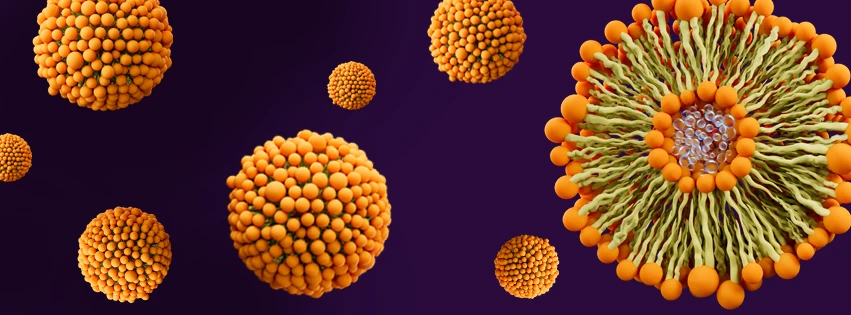
Microscopic in size but mighty in potential, liposomes are at the heart of some of today’s most exciting advances in medicine, nutrition, and skincare. These tiny, bubble-like structures act as carriers for nutrients, drugs, and other active ingredients, protecting them and helping them reach their intended targets more effectively. To understand why liposomes are revolutionizing multiple industries, it’s worth exploring what they are, how they work, and where they’re making the biggest impact.
Defining a Liposome
A liposome is a spherical vesicle composed of one or more phospholipid bilayers, which are the same type of fatty molecules that make up human cell membranes. Picture a miniature soap bubble: its shell consists of a double layer of fat molecules, while its core holds water or another liquid. This structure gives liposomes a unique ability to carry both water-soluble and fat-soluble substances at the same time.
- Hydrophilic (water-loving) compounds such as vitamin C can sit safely inside the liposome’s watery center.
- Hydrophobic (fat-loving) compounds like certain herbal extracts can embed themselves within the fatty membrane.
This dual capability makes liposomes highly versatile carriers for a wide variety of ingredients.
How Liposomes Work
The true brilliance of liposomes lies in their similarity to the cells of the human body. Because our cell membranes are also made of phospholipid bilayers, liposomes can merge seamlessly with them. This allows the substances they carry to slip directly into cells.
Key aspects of their functionality include:
- Protection of Active Ingredients
- Many nutrients and medicines degrade quickly when exposed to stomach acid, digestive enzymes, or oxygen. A liposomal coating shields these delicate compounds until they reach their intended destination.
- Enhanced Bioavailability
- Bioavailability refers to how much of a substance is absorbed and used by the body. Liposomes can bypass many of the barriers that reduce absorption, dramatically increasing the amount of an ingredient that reaches the bloodstream and, ultimately, the cells.
- Targeted Delivery
- Liposomes can be engineered to release their payload in specific areas—such as the small intestine or certain tissues—making them highly effective for focused therapies.
- Controlled Release
- Some liposomes are designed to release their contents gradually, helping maintain steady nutrient or drug levels over time.
Together, these traits explain why liposomes have become an essential tool for improving the efficiency of everything from dietary supplements to advanced medicines.
Where Liposomes Are Used
Though first described in the 1960s, liposomes have found applications across several industries, each benefiting from their protective and delivery-enhancing properties.
1. Pharmaceuticals and Medicine
Liposomes have been a breakthrough in drug delivery. They are used to:
- Improve cancer therapies by carrying chemotherapy drugs directly to tumor cells, reducing damage to healthy tissues.
- Enhance vaccine effectiveness, as seen in certain COVID-19 vaccines where lipid nanoparticles (a close cousin of liposomes) protect fragile mRNA and help it enter cells.
- Deliver antifungal or antimicrobial medications more precisely, minimizing side effects.
Their ability to transport therapeutic agents safely and efficiently has saved countless lives and opened new frontiers in treatment.
2. Dietary Supplements
Nutritional products increasingly feature liposomal technology to boost absorption. Popular examples include:
- Vitamin C: Liposomal vitamin C is absorbed far more efficiently than standard tablets or powders, offering stronger immune and antioxidant support.
- Glutathione: This powerful antioxidant is easily broken down in the digestive tract unless protected by a liposomal coating.
- Botanical extracts such as curcumin or resveratrol, which have notoriously poor natural bioavailability, benefit significantly from liposomal encapsulation.
For consumers, this means smaller doses can yield greater effects, often with fewer digestive side effects.
3. Skincare and Cosmetics
Liposomes also excel in topical applications. High-end skincare products use liposomes to deliver vitamins, peptides, and antioxidants deep into the skin. Because liposomes can penetrate the skin’s natural barrier, they improve hydration, reduce signs of aging, and enhance overall product effectiveness.
How Liposomes Are Made
Creating liposomes requires sophisticated techniques to ensure uniformity and stability. Common methods include:
- Thin-Film Hydration: Phospholipids are dissolved in a solvent, dried to form a thin film, then rehydrated with a solution containing the active ingredient, forming spherical vesicles.
- High-Pressure Homogenization or Sonication: These processes reduce the size of the vesicles to the nanoscale, improving stability and absorption.
- Quality Control: Rigorous testing ensures consistent particle size, encapsulation efficiency, and purity to meet pharmaceutical or nutritional standards.
Because manufacturing is complex, reputable producers follow strict Good Manufacturing Practices (GMP) and provide Certificates of Analysis to verify quality.
Advantages of Liposomes
Liposomes provide a range of important benefits:
- Superior Absorption: They dramatically increase the amount of a nutrient or drug that reaches the bloodstream.
- Lower Required Doses: Better absorption often means smaller amounts are needed for the same or greater effect.
- Reduced Side Effects: By targeting delivery and protecting sensitive tissues, liposomes minimize the risk of irritation or gastrointestinal discomfort.
- Versatility: They can carry both water- and fat-soluble compounds, allowing complex formulations.
Challenges and Considerations
Despite their many advantages, liposomes do present some challenges:
- Cost: The production process is more complex and expensive than making traditional tablets or capsules.
- Stability: Liposomes can be sensitive to temperature, light, and oxidation, requiring careful storage and packaging.
- Quality Variation: Not all products labeled “liposomal” contain true liposomes or the optimal particle size. Consumers should look for transparent testing and third-party verification.
Being aware of these factors helps both consumers and healthcare providers choose effective and reliable liposomal products.
The Future of Liposomes
Research into liposome technology is advancing rapidly. Scientists are exploring:
- Personalized medicine and nutrition, tailoring liposomal formulas to individual genetic or metabolic profiles.
- Hybrid nanoparticles, combining liposomes with other carriers for even more targeted delivery.
- Sustainable production methods, such as plant-based phospholipids and eco-friendly manufacturing processes.
These developments promise even more precise and powerful applications in the coming years.
Final Thoughts
A liposome may be microscopic, but its impact on modern health and science is enormous. By protecting delicate ingredients, enhancing absorption, and enabling targeted delivery, liposomes have changed how we approach nutrition, medicine, and skincare. Whether delivering life-saving cancer treatments, boosting the effectiveness of a daily vitamin, or improving a moisturizing serum, liposomes exemplify how small-scale science can have far-reaching effects.
Understanding what is a liposome —and how it works—offers a glimpse into the future of wellness and therapeutic innovation, where smarter delivery systems ensure that every nutrient and medication performs at its very best