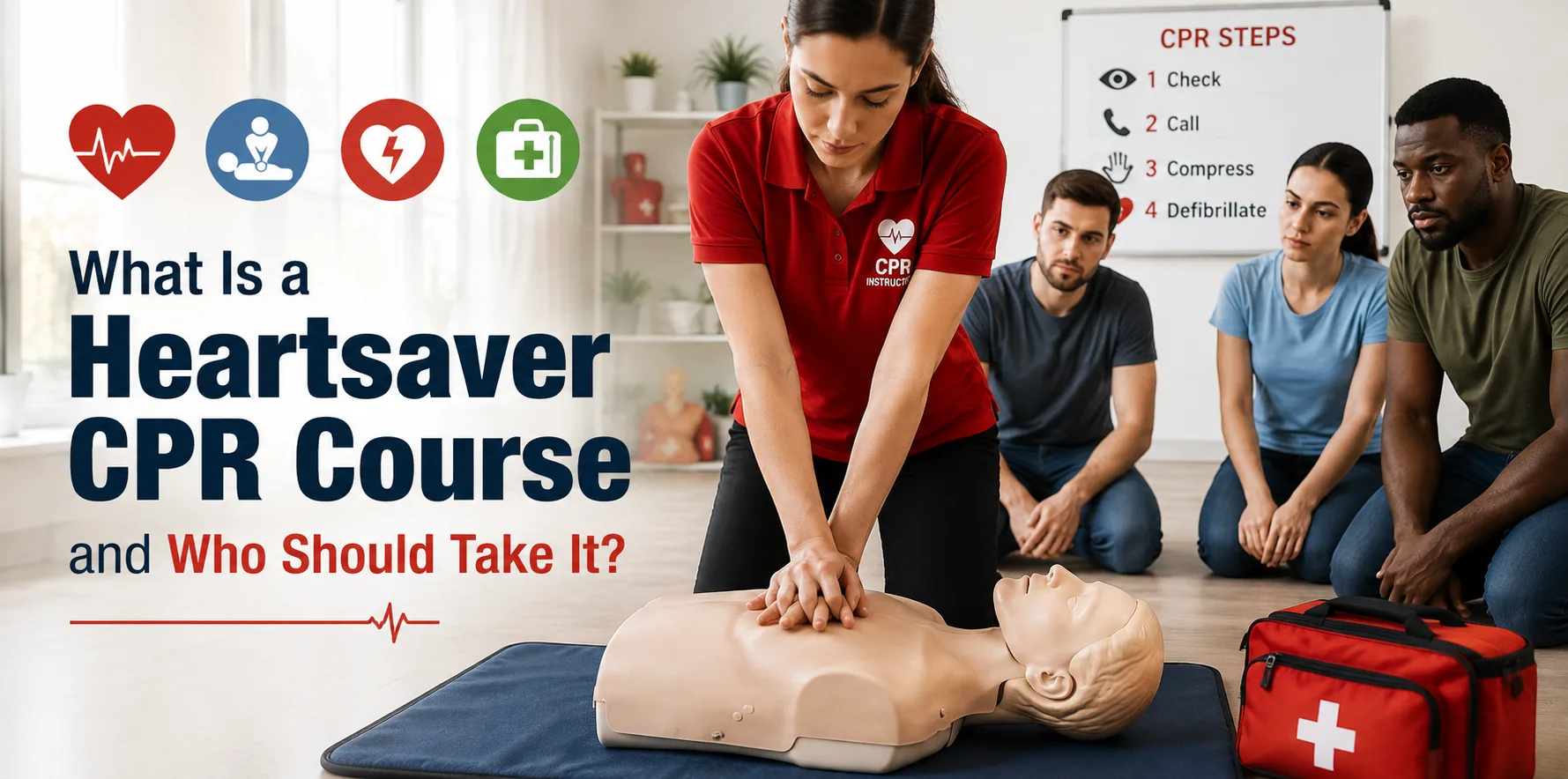
Emergency response training exists in several forms, each designed for a different audience and level of clinical responsibility. Among these, the Heartsaver CPR course is one of the most widely completed programs, developed for individuals who are not healthcare providers but may still need to respond to a medical emergency. This article explains what the course covers, who typically completes it, and how ongoing CPR recertification supports long-term skill retention.
Defining the Heartsaver CPR Course
The Heartsaver CPR course is a certification program developed under American Heart Association guidelines, intended for members of the general public rather than clinical professionals. Unlike provider-level courses such as Basic Life Support, which are designed for healthcare workers operating within a clinical environment, this course focuses on practical skills that can be applied by anyone in a workplace, school, or community setting.
The course typically covers adult, child, and infant CPR, use of an automated external defibrillator, and basic choking response. Some versions of the course also include first aid instruction, expanding the scope to cover injuries such as burns, cuts, and allergic reactions.
How It Differs From Provider Level Training
Provider-level courses assume a certain amount of clinical background and often include more advanced content, such as team-based resuscitation and medication administration. The Heartsaver CPR course does not require any prior medical training and is structured around simple, repeatable steps that a layperson can apply confidently during an emergency.
Who Typically Completes This Course
While anyone can benefit from this training, certain groups complete it more frequently due to workplace requirements or personal responsibilities.
- Teachers, school staff, and administrators
- Daycare providers and nannies
- Fitness instructors and personal trainers
- Office employees designated as workplace safety responders.
- Coaches and youth activity leaders
- Parents and caregivers seeking general preparedness
Many employers require this certification for staff who interact regularly with children, older adults, or the general public, even when those roles do not involve direct medical care.
What the Course Involves
Course Content
A typical Heartsaver CPR course includes instruction and hands-on practice in the following areas.
- Recognizing the signs of cardiac arrest
- Performing chest compressions correctly for adults, children, and infants
- Delivering rescue breaths using proper technique
- Operating an automated external defibrillator
- Responding to choking emergencies across different age groups
- Basic first aid procedures, depending on the specific course version
Instructional Format
Most programs combine short instructional segments with extended hands-on practice using training manikins. This format allows participants to physically rehearse compressions and rescue breathing rather than relying solely on verbal or visual instruction. Repeated practice during the course helps reinforce correct technique before participants apply these skills in an actual emergency.
Certification Duration and the Need for Renewal
Certification through a Heartsaver CPR course is generally valid for two years. After this period, CPR recertification is required to maintain an active credential. This time limit reflects research indicating that CPR skills, including compression depth and rate, decline measurably without periodic reinforcement.
Why CPR Recertification Matters
CPR recertification allows participants to review any updates to national guidelines and refresh the physical skills covered in their original course. Because national guidelines are periodically reviewed and updated based on new resuscitation research, recertification also ensures that certified individuals remain aligned with current recommended practices rather than relying on outdated techniques.
What Recertification Typically Involves
CPR recertification is often shorter than the original course, since it functions as a refresher rather than a full introduction to the material. Participants generally review key concepts, practice hands-on skills again, and complete a brief assessment to confirm continued competency.
Verifying Certification After Completion
Upon completing a Heartsaver CPR course, participants typically receive a certification card indicating the specific course completed, the issuing organization, and the valid date range. This documentation serves as proof of training for employers, licensing bodies, or personal record-keeping.
What to Confirm on a Certification Card
Participants should verify that their certification card clearly states the course name, completion date, and expiration date. This information allows an employer or organization to confirm training status without requesting additional verification from the training provider.
Addressing an Expired Certification
If a certification lapses before a participant completes CPR recertification, most providers require the full course to be repeated rather than offering an abbreviated version. For this reason, tracking the expiration date and scheduling renewal in advance is generally more efficient than allowing certification to expire.
Group and Workplace Training Considerations
Many organizations arrange Heartsaver CPR course sessions for multiple employees at once rather than sending individuals to separate public classes. This approach allows an entire team, such as school staff or office employees, to complete training together on a schedule that fits their organization.
Coordinating Training for Teams
When arranging group sessions, organizations typically confirm the number of participants, preferred location, and whether on-site training is available. Group format also allows employers to standardize training across departments, ensuring that all staff members receive instruction from the same course version and certifying organization.
Choosing a Provider for This Training
Because certification requirements can vary by employer or state, individuals are encouraged to confirm which specific version of the course and which certifying organization is required before enrolling. Some employers accept general Heartsaver certification, while others require a more specific course version aligned with their industry.
Factors to Consider
When selecting a provider, several factors can affect the overall quality of the training experience.
- Confirmation that the course is recognized by the American Heart Association
- Availability of hands-on practice rather than video-only instruction
- Instructor experience and ability to answer practical questions
- Flexible scheduling options, including evening, weekend, or group sessions
- Clear information on certification duration and renewal requirements
Regional Availability of Training
Access to this training varies depending on location, with larger metropolitan areas typically offering more provider options. In the greater Houston area, organizations such as KT Global CPR offer Heartsaver CPR course options alongside additional certifications, including Basic Life Support, Advanced Cardiovascular Life Support, and Pediatric Advanced Life Support. Training in this region is also available beyond central Houston, extending to nearby communities and additional locations across Texas and Louisiana.
This regional availability allows individuals and organizations to schedule initial training as well as CPR recertification without significant delays or extensive travel.
Conclusion
The Heartsaver CPR course provides a practical entry point for individuals without a clinical background who want to be prepared to respond to a medical emergency. Its structure, focused on adult, child, and infant CPR along with automated external defibrillator use and choking response, makes it accessible to a wide range of participants across workplaces, schools, and community organizations. Because these skills decline over time without practice, timely CPR recertification remains an important part of maintaining readiness. Selecting a course based on accreditation, instructional format, and provider reliability helps ensure that certification reflects genuine preparedness rather than a formality.