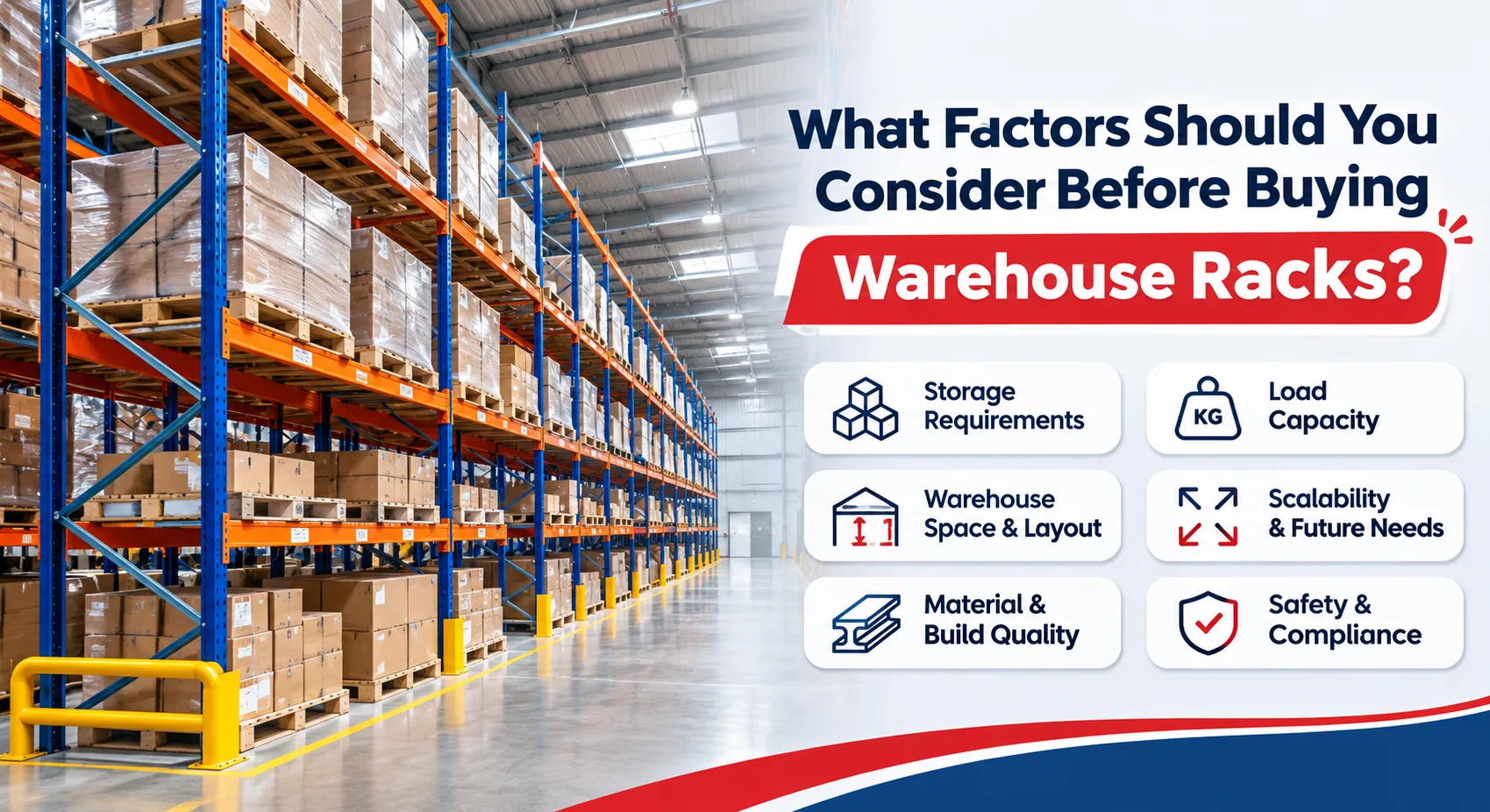
A well-organised warehouse plays an important role in managing inventory, improving productivity, and ensuring smooth daily operations. Proper storage arrangements help businesses use available space efficiently while keeping products safe and accessible. Choosing the right storage equipment is therefore an important decision for warehouse owners, distributors, manufacturers, and logistics companies. A suitable storage arrangement can reduce clutter, simplify stock management, and make everyday warehouse activities more organised.
Selecting the right racking system for warehouse operations requires careful planning because every business has different storage requirements. Factors such as available floor space, product dimensions, load capacity, accessibility, and future expansion should be considered before making a purchase. Understanding these requirements helps businesses select a practical storage solution that supports their operations without creating unnecessary costs.
1. Understand Your Warehouse Storage Requirements
Before purchasing warehouse racks, identify the type of products you need to store. Different products require different storage arrangements depending on their size, weight, shape, and handling requirements. For example, businesses storing small cartons may need shelving units, while companies handling heavy industrial materials may require heavy-duty pallet racks.
You should also consider whether your inventory contains fast-moving products, seasonal goods, or items that need long-term storage. Understanding these details makes it easier to select a suitable rack design and avoid investing in equipment that does not match your operational needs.
2. Check the Available Warehouse Space
Space utilisation is one of the most important factors when planning warehouse storage. Before buying racks, measure the warehouse's total floor area, ceiling height, aisle width, and available loading areas.
Vertical storage can help businesses make better use of unused space. Instead of expanding horizontally, companies can consider taller storage structures where building conditions and safety requirements permit. However, sufficient clearance should be maintained for forklifts, material-handling equipment, lighting, and sprinkler systems.
A proper warehouse layout should also provide enough space for workers to move products safely and complete daily activities without unnecessary obstacles.
3. Evaluate Load-Bearing Capacity
Every storage rack has a specific load-bearing capacity. Exceeding this limit can damage the structure and create serious workplace safety risks. Therefore, businesses should understand the weight of individual products and the total load that each shelf or rack level will carry.
Consider the following points before making a decision:
- Maximum weight of individual products.
- Total load capacity required for each rack level.
- Weight distribution across the storage structure.
- Strength and quality of the materials used.
- Manufacturer-provided load ratings.
Always select racks with clearly specified load capacities and ensure that the installation follows the manufacturer's instructions.
4. Choose the Right Rack Design
Different warehouse operations require different rack configurations. Selecting an appropriate design helps improve storage efficiency and product accessibility.
Some commonly used warehouse storage options include:
Selective Pallet Racking: This design provides direct access to individual pallets and is suitable for warehouses handling different product categories.
Drive-In Racking: This system allows forklifts to enter storage lanes, making it useful for businesses storing large quantities of similar products.
Cantilever Racking: These racks are designed for storing long and bulky materials such as pipes, timber, and metal sections.
Mezzanine Storage Systems: These structures create additional storage or working space by using the available vertical height.
Each design has different advantages, so the final selection should depend on inventory type, available space, and handling requirements.
5. Consider Material Quality and Durability
The quality of materials directly affects the durability and performance of warehouse racks. Strong steel structures are commonly preferred because they can support heavy loads when properly designed and installed.
Before purchasing, check the thickness of the steel, surface finishing, welding quality, protective coating, and overall construction. Powder-coated or appropriately protected surfaces can help reduce corrosion and maintain the structure over time.
It is also important to understand the warehouse environment. Facilities exposed to moisture, temperature variations, or chemicals may require specialised protective finishes.
6. Prioritise Safety and Easy Accessibility
Warehouse safety should never be overlooked when purchasing storage equipment. Poorly designed racks, incorrect loading, and insufficient aisle space can increase the risk of workplace accidents.
Make sure the selected racks include suitable safety features such as column protectors, rack guards, safety locks, and appropriate anchoring arrangements wherever required.
Products should also be easy to identify, access, and retrieve. A well-planned layout reduces unnecessary movement and helps employees complete picking, packing, and loading activities more efficiently.
Regular inspections and maintenance are equally important for identifying damaged components before they become serious safety concerns.
7. Compare Installation Costs and Future Requirements
The purchase price should not be the only factor when comparing warehouse storage solutions. Businesses should also consider transportation, installation, maintenance, and possible modification costs.
A low-cost option may not always provide the best long-term value if it requires frequent repairs or cannot support changing inventory requirements.
Think about future business expansion as well. If stock volume increases, a flexible storage arrangement can make it easier to add additional racks or modify the existing layout. Discussing installation requirements, warranties, and after-sales support with the supplier can also help businesses make a more informed decision.
Also Read :- What Are the Different Types of Warehouse Shelving Systems?
Conclusion
Choosing suitable warehouse storage equipment requires attention to space availability, load capacity, material quality, rack design, accessibility, and workplace safety. Businesses should evaluate their current inventory requirements while considering future operational growth. A carefully planned storage arrangement can improve inventory organisation, reduce space wastage, and support smoother warehouse activities. Working with an experienced storage solution provider such as Stormat Systems can help businesses understand their requirements and select suitable storage solutions for their operational needs.