
Why The Humble Door Matters Way More Than You Think
Most people don’t think about a door until it slams, squeaks, or sticks. Or until they walk into someone else’s place and think, “wow, why does this feel so put together,” without realizing half of that feeling is the doors doing quiet work in the background. A door is not just a slab on hinges. It’s a line between public and private, between “come in” and “not today.” It frames how you move through your house every single day, and you probably stopped noticing it years ago. But buyers notice. Guests notice. You notice the second you rip one out and put the right one in. That’s when it hits you how much a bad door has been dragging the whole place down, visually and practically. Your eye might go to paint color or furniture first, but doors are the bones. Mess those up and nothing else quite lands.
How Door Style Shapes First Impressions Inside Your Home
Walk through your front door and pause for a second. What do you see right after the entry? For a lot of homes, you get three big cues at once: the main door itself, the flooring, and whatever’s happening with that first interior opening—maybe a hallway, maybe a living room opening, maybe a stair going up. The style of that first door is doing more emotional heavy lifting than you’d think. A solid, heavy, dark door says “closed, private, traditional,” whether you meant that or not. A simple flat panel door with a cheap knob says “builder basic, we’ll fix it later,” even if everything else is nice. Swap it for a clean, modern slab with good hardware, or a glass‑paneled door that pulls light deeper into the house, and the whole energy changes. Same square footage, same furniture, totally different mood. When designers fuss over sightlines, this is what they’re really talking about. What do you see through and past that door when it’s open. What color, what light, what lines. Doors are like camera frames; they control the shot.
Picking The Right Interior Door For Real Life, Not Pinterest
Here’s where people screw it up: they pick doors for the photo, not for their actual life. Barn doors are the classic example. They look cool online. Rustic, “modern farmhouse,” all that. In the real world, they leak sound, light, and privacy like crazy if they’re not detailed right. That’s fine for a pantry, not amazing for a bathroom next to the living room. Same with full‑glass doors. Gorgeous, airy… until someone’s trying to sleep, shower, or hide from a Zoom meeting. When you’re choosing a door, the first question isn’t “what’s trendy,” it’s “what does this room actually need to do?” Bedrooms want quiet and privacy. Offices might want some separation but still a sense of connection, so maybe a door with frosted glass instead of clear. Closets can tolerate simpler, cheaper slabs as long as they line up visually. Once you’ve answered the function honestly—privacy, sound, light, security—then you attack the look. Panel style, color, trim details, hardware. Pretty is nice, but it has to survive kids, pets, guests, and that one cousin who slams everything.
Door Materials: What Actually Holds Up, What Just Looks Good
Not all doors are created equal, no matter what the showroom guy tells you. Solid wood feels incredible. Heavier, warmer, more substantial. It also moves with humidity and needs a bit more babying depending on your climate. MDF and solid‑core composite doors hit a good middle ground for a lot of interiors: they’re stable, they block sound better than hollow‑core junk, they paint clean. Then there’s hollow‑core interior doors, which are pretty much the “fast fashion” of door land. Cheap, light, perfectly fine for some low‑impact rooms, but you’ll feel the difference every time you close one. You also want to look at the frame and casing, not just the slab. A nice modern door jammed into a warped, dinged‑up frame with 90s trim around it looks like lipstick on a pig. If you’re already doing the work, think through the whole opening: jamb, casing, hinges, latch, the reveal lines. Modern design especially is unforgiving; when you go for crisp minimal lines, a sloppy install screams at you every time the light hits wrong.
Framing Views: How A Door Connects Rooms And Stairs
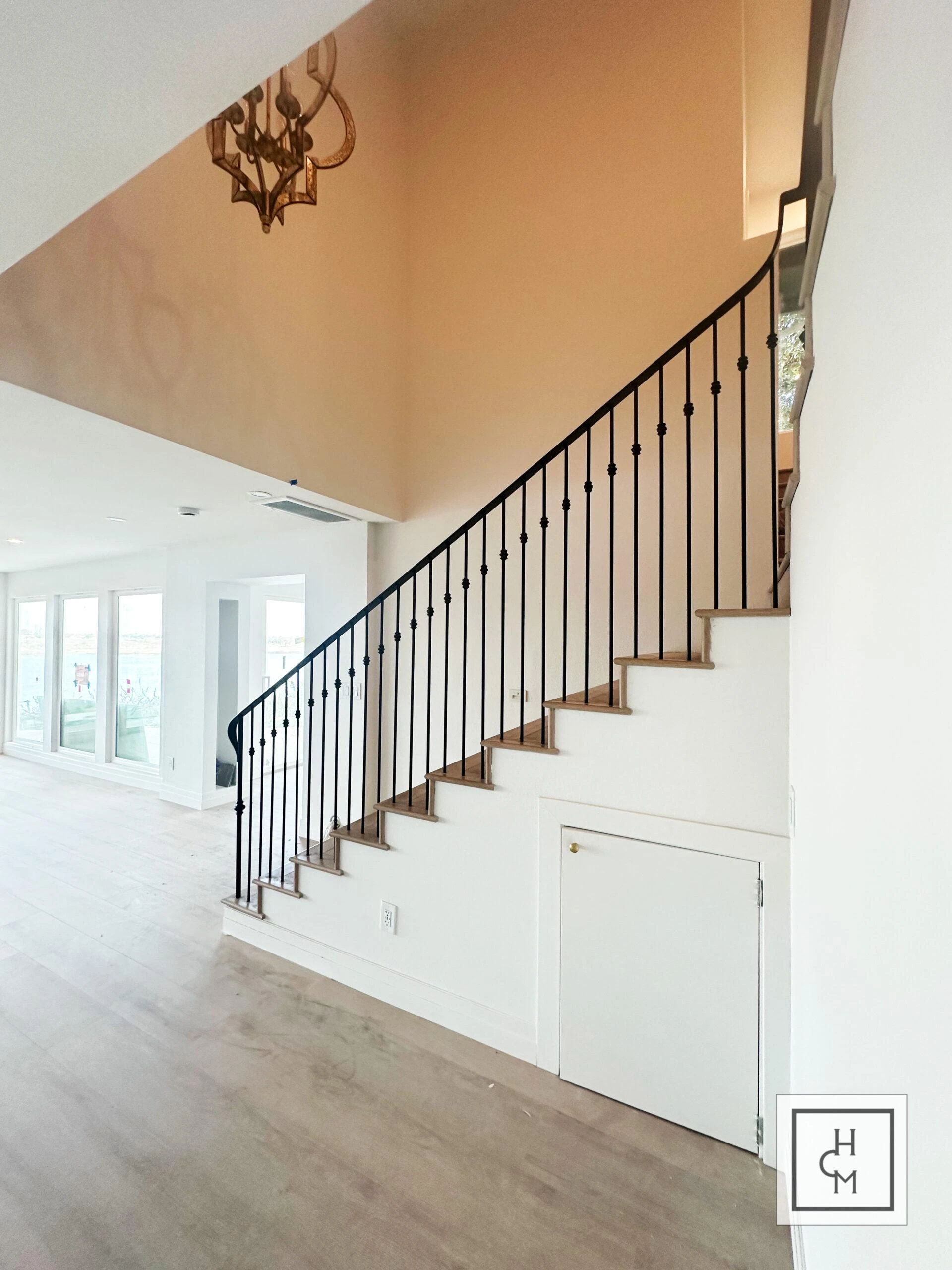
One thing people don’t talk about enough: how doors and stairs play off each other. You walk through a door, you catch a slice of whatever’s ahead—maybe the living room, maybe the kitchen, maybe a run of steps going up with some kind of railing. That composition really matters. A clean, modern front Door feeding into a hallway with beat‑up carpet and heavy, traditional balusters is visual whiplash. The styles don’t talk to each other, so the whole thing just feels off, even if you can’t say why. Match the language and suddenly it feels intentional. A simple flush door with a slender black lever handle makes sense feeding into an entry where you see slim metal balusters or glass guarding the stair. A more classic four‑panel painted door feels right with a wood handrail and squared newel posts. You don’t have to be an architect to get this; just stand at the entry and look toward the stair. If the door says “sleek gallery” and the railing says “1994 subdivision,” you’ve got a mismatch. The fix is usually choosing one design direction—modern, traditional, or a clean transitional middle—and letting the door and the stair read from the same script.
Remodeling Flow: Updating One Door Versus The Whole House
Everyone wants to know, “can I just replace this one ugly door and call it a day,” and the honest answer is: sometimes. If it’s a main entry Door and the rest of your interior doors are sort of neutral, you can absolutely upgrade just that and get a big visual payoff. New front door, better hardware, maybe side lights or a transom, and boom, curb appeal jumps. But once you start swapping interior doors, especially in hallways where you see multiple openings at once, mixing too many styles looks chaotic. A shaker door here, a six‑panel next to it, then a glass French door down the hall, plus one random louvered closet? That’s not eclectic, that’s “we did this in stages and never made a plan.” If the budget is tight, pick a zone. Maybe you do all the doors on the main level first, keep the upstairs for later. Or you focus on the public areas: entry, living, kitchen, powder room. Just try to keep what you can see in a single view fairly consistent. Your brain likes rhythm: same heights, same panel patterns, same color. Get that right and the house suddenly feels more expensive, even if you didn’t actually spend that much.
Safety, Codes, And The Boring Stuff Around Doors
Here’s the part everybody wants to skip until something goes wrong. Doors aren’t just style choices; they’re part of fire separation, egress routes, and basic safety. Exterior doors need proper locks, thresholds, and weatherstripping so you’re not bleeding heat (or cool air) and letting water wander wherever it wants. Doors to garages often need to be fire‑rated and self‑closing, depending on local code. Bedroom doors, especially in rentals, might have minimum size requirements along with the windows for legal egress. If you’re messing with openings—widening, closing, relocating—you might be touching structural walls, which is not a “let’s just see what happens with a sledgehammer” situation. When in doubt, ask a contractor or an inspector what your local rules say before you order a fancy new door that doesn’t meet code. The cool pivot Door you saw on Instagram might be terrible for insulation, security, or water resistance in your climate. The thick, heavy reclaimed wood door you want on your bedroom might actually be a nightmare to hang in a wobbly old frame. Good design doesn’t ignore the boring stuff; it hides it so well you forget it’s there.
Budget, Timing, And Working With Contractors On Door Upgrades
Changing out a door sounds simple. It can be. Swap one slab for another, same size, same swing, same hinge locations. But the moment you change thickness, width, swing direction, or frame condition, things get more interesting. That’s where a competent carpenter or contractor earns their money. They’re scribing to uneven floors, shimming frames plumb in wonky openings, cutting casing clean, aligning reveals. If you’ve got more than a couple doors to do, or you’re also touching things like that stair opening, it’s worth treating it as a real project, not a weekend errand. Get at least a rough quote. Ask what’s included: painting or staining, hardware install, new frames, disposal of old doors. And ask about lead times, because special‑order doors and modern hardware can take weeks. If you’re planning bigger interior changes, like adding or opening up walls near the stairs, coordinate door choices with the rest so you don’t end up painting twice. A good contractor will talk through how your door upgrade interacts with trim, flooring, even modern interior stair railings if you’re updating those too, so the final result doesn’t look like five different projects jammed together.
Conclusion: Treat Every Door Like Part Of The Whole Picture
If there’s one takeaway here, it’s that a Door is never just a door. It’s a frame for light, a boundary for sound, a big chunk of what your house says about itself before anyone even sits down. When you upgrade one mindfully, with an eye on how it lines up with the rest of the openings and finishes, the place starts to feel intentional instead of thrown together. You don’t have to blow up every wall or buy all new furniture to get there. Sometimes the smartest first moves are swapping that tired front door, cleaning up a hallway of mismatched bedroom doors, and making sure what you see from the entry toward the stairs tells one clear story. And if you’re already thinking bigger—new stair, new opening, cleaner lines—fold that into the plan instead of treating it as an afterthought. Doors, trim, and modern interior stair railings all live in the same visual space. When they’re speaking the same design language, even a modest house suddenly feels like someone actually thought it through.
What Door Style Works Best For A Small, Dark Entry?
In a tight or dark entry, your door’s job is to pull in as much light as you can get without wrecking privacy or security. That usually means some kind of glazed Door—glass panels or a sidelight—rather than a completely solid slab. Frosted or textured glass helps if the door faces a busy street. Keep the design simple: clean vertical panels, lean trim, nothing too heavy that visually shrinks the opening. If you’ve got a stair right there, make sure the door’s style doesn’t fight the railing; a busy traditional door next to sleek metal balusters just makes the space feel more cramped.
Is It Worth Paying Extra For Solid-Core Interior Doors?
If you care about sound and feel, yeah, it usually is. Solid-core doors are heavier and more stable than hollow-core, which makes them better for bedrooms, bathrooms, offices—anywhere privacy and quiet actually matter. You feel the difference every time you close one; it doesn’t have that hollow, echoey slam. You don’t have to go full solid wood everywhere to get a quality upgrade. A mix can work: solid-core for the main rooms, maybe hollow-core for closets. Just keep the style and height consistent so the hallway doesn’t look like a patchwork.
Can I Mix Different Door Styles In One House?
You can, but you want a plan, not chaos. One common move is to keep a single core panel style for most of the house, then introduce variations in special spots: maybe glass panels for a home office Door, or a more detailed door for the main suite. The key is consistency in the big things—height, color, basic shape of the panels—so when you look down a hall, it feels like a family of doors, not strangers. That same logic applies to what you see near the stairs. If you go super modern with railings, keep the doors at least somewhat in that lane so the overall look doesn’t fight itself.
How Do Doors And Stair Railings Work Together Visually?
Think of the door and the stair as part of one composition. From the entry or main hallway, you usually see both at once, even if you don’t realize it. If you’re going for clean, contemporary lines, a fussed‑up, raised‑panel Door next to thin metal or glass railings is going to feel off. Better to choose a simpler, flatter panel door with minimal casing so it plays nice with modern interior stair railings. On the flip side, if your door is traditional and heavy, pairing it with a delicate, hyper‑modern railing makes the whole thing look like two different houses smashed together. Pick a lane, then let both the door and the stair details follow it.